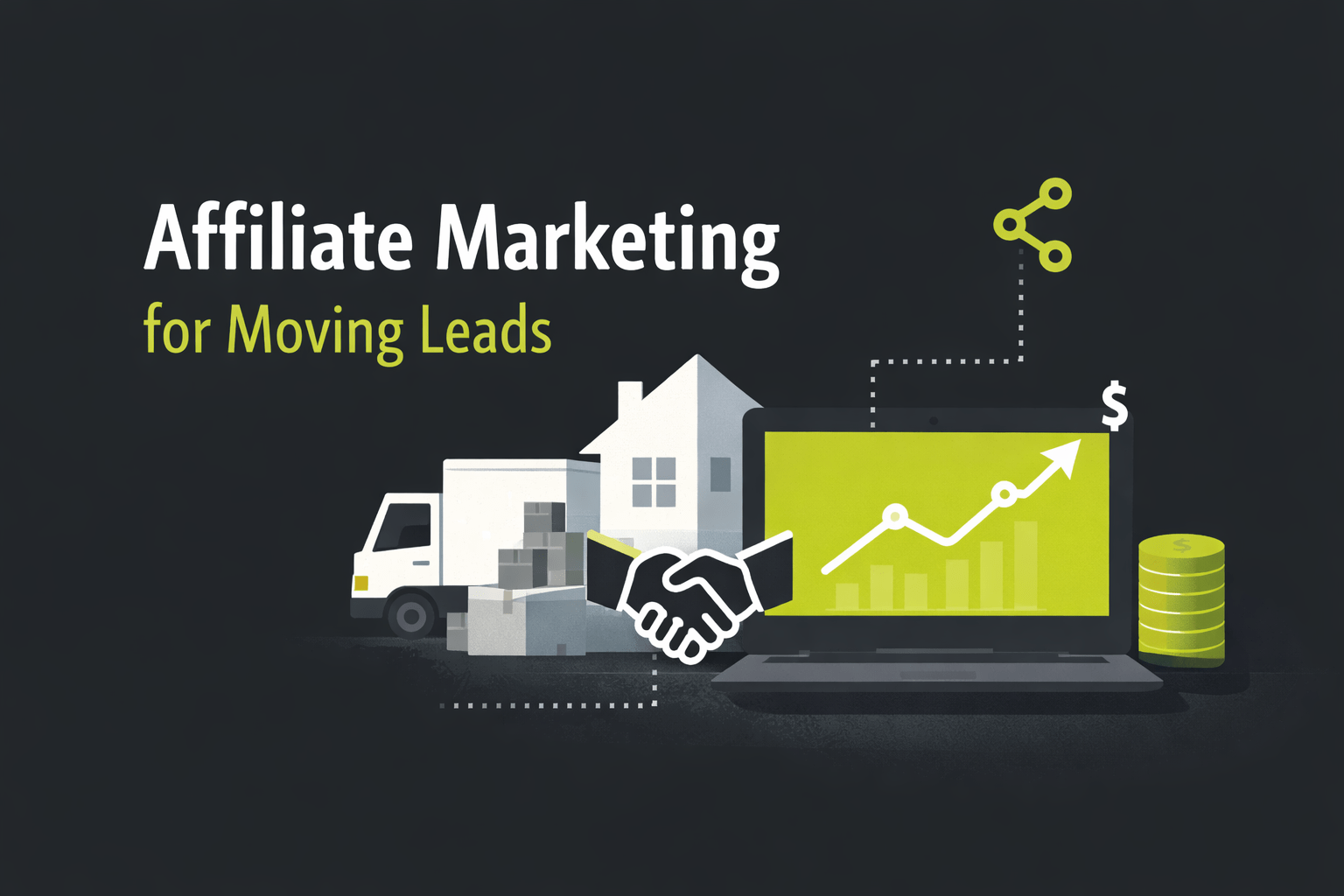
Understanding Affiliate Marketing for Moving Leads
If you’ve ever received a moving lead that came from a “top movers in [city]” blog, a relocation checklist website, or a local home services directory, you’ve already encountered affiliate marketing, whether you called it that or not. Affiliate marketing is one of the most common ways third-party publishers generate moving leads and monetize their traffic. For moving companies, it can be a powerful channel to expand reach, fill calendars in specific service areas, and diversify beyond relying solely on Google Ads or organic rankings.
But affiliate marketing can also be confusing (and risky) if you don’t understand how compensation models work, how leads are generated, and how to evaluate the quality of affiliate partners. In moving, the difference between a profitable affiliate partnership and a budget drain usually comes down to transparency, targeting, and conversion discipline.
At Best Moving Leads Providers, we support movers with lead generation strategies that help them scale responsibly, including working with publishers and third-party sources when it makes sense. This primer will break down what affiliate marketing is, how affiliate programs are structured, and how movers can benefit from the right partnerships.
What Is Affiliate Marketing in the Moving Industry?
Affiliate marketing is a performance-based marketing model where a third-party publisher promotes your business (or a lead offer) and earns compensation when a specific action occurs. That action might be a phone call, a quote request, a booked job, or sometimes even just a click—depending on the agreement.
In practice, affiliates in the moving space include:
- Local “moving guides” and city blogs
- Real estate content sites
- Apartment and renter resource sites
- Coupon and deal websites (less ideal for premium movers)
- Comparison sites that list movers
- Influencers or community pages in specific regions
- Media publishers running lead forms or call campaigns
Think of affiliates as external marketing partners who already have traffic and attention. Instead of you paying upfront for ads, you pay based on results.

Why Affiliate Marketing Matters for Moving Leads
The main advantage is distribution. Affiliates can reach audiences you may not capture efficiently through your own SEO or PPC—especially if they rank for informational or comparison keywords you’re not targeting yet.
Affiliate marketing can help movers:
- Expand lead volume without increasing internal content output
- Capture movers-shopping traffic from listicles and comparison pages
- Enter new suburbs or cities faster
- Supplement seasonal demand (slow months) with partner-driven leads
- Reduce risk compared to pure “awareness” ads, since many models pay for performance
However, the channel only works when your partner aligns with your target customer and when lead tracking is clean.
How Affiliate Programs Work: The Core Pieces
Most affiliate setups include four components:
1) The offer
This is what the affiliate promotes: “Get a moving quote,” “Compare moving companies,” “Request a callback,” or “Call for availability.”
2) The tracking mechanism
Tracking ties leads back to the affiliate source. Common methods:
- Unique tracking links (UTM tags)
- Dedicated landing pages
- Unique phone numbers (call tracking)
- Promo codes (less common for movers)
3) The conversion event
The “trigger” that generates payout:
- Lead submitted (form fill)
- Qualified phone call (over X seconds)
- Completed estimate appointment
- Booked move
- Revenue share based on job value
4) The payout model
This is where affiliate marketing gets nuanced. The payout model determines profitability and behavior—both for you and the affiliate.

Compensation Models Movers Will See (and What They Mean)
Affiliate marketing can be structured in several ways. Each model shifts risk differently.
Pay-per-click (PPC – not Google PPC)
In this model, you pay for clicks sent to your site or landing page.
Pros: Easy to track; affiliates like it.
Cons: High risk for movers; clicks don’t equal quotes; vulnerable to low-intent traffic.
For moving services, pay-per-click affiliate deals are usually only smart if you trust the publisher and have strong on-site conversion.
Pay-per-lead (PPL)
You pay when a lead submits a form (name/phone/move date, etc.) or completes a defined action.
Pros: Predictable lead volume; easier to budget; common in the moving space.
Cons: Quality varies; incentives may push affiliates toward quantity over quality unless you enforce rules.
This is the most common affiliate arrangement for moving leads, especially when paired with lead validation standards.
Pay-per-call (PPCall)
You pay when someone calls, often with a minimum call duration requirement (e.g., 60–120 seconds).
Pros: Calls tend to show higher intent; good for fast-booking local moves.
Cons: Requires strong call tracking; still can include price shoppers or misdials.
For movers, pay-per-call works well when you have a disciplined intake team and fast quoting.
Pay-per-booking or revenue share
You pay only when a job is booked—or you share a percentage of revenue.
Pros: Lowest risk; directly tied to outcomes.
Cons: Harder to manage; affiliates may be less willing unless you’re a strong brand and tracking is airtight.
This model is attractive for movers who can connect lead source to booked revenue in a CRM.
What Makes a Great Affiliate Partner for Moving Leads?
Not all publishers are equal. The best affiliate partners typically have:
Local or intent-matched audiences
A city-based resource site that attracts renters and homeowners in your service area is often better than a broad national coupon site.
Transparent traffic sources
You want to know: Are they using SEO? Paid search? Social? Email? Incentivized traffic? The traffic source impacts lead quality and compliance.
Content that builds trust
Affiliates who publish real moving guides, neighborhood resources, or comparison content often produce warmer leads than sites designed purely to capture form fills.
Willingness to follow quality rules
A professional affiliate partner is open to:
- Minimum data fields (move date, zip codes, move size)
- Call duration thresholds
- Geographic restrictions
- No-brand bidding rules (if applicable)
- Lead validation and dispute processes
If an affiliate refuses quality controls, that’s usually a red flag.

Quality Control: Protecting Your Budget and Brand
Affiliate leads can be profitable, but only when you define “qualified.” In moving, quality control should include:
- Service area rules: Only pay for leads inside your coverage zone
- Duplicate checks: Avoid paying for repeat submissions
- Lead validation: Confirm phone/email format, move date in the future, and basic move details
- Call qualification: Pay only for calls beyond a minimum duration (and exclude wrong numbers)
- Brand protection: Ensure affiliates don’t misrepresent your company, pricing, or offers
Also remember: affiliates are representing you indirectly. If their landing pages are misleading, it can damage trust before the lead even reaches your phone line.
How to Track Affiliate Performance the Right Way
Affiliate marketing succeeds or fails based on attribution. You need clear visibility into:
- Lead volume by affiliate
- Cost per lead / cost per qualified call
- Contact rate and estimate-set rate
- Close rate and revenue per lead source
The best setup is connecting tracking to your CRM, so you can judge affiliates by booked jobs—not just raw lead counts. If you can’t measure outcomes, you’ll end up paying for activity instead of profit.
This is where partnering with a lead generation expert matters. Best Moving Leads Providers helps movers evaluate lead channels and build conversion-focused systems—so affiliate leads don’t just arrive, they close.
Benefits of Partnering With Third-Party Publishers
When done correctly, affiliate partnerships can provide:
Faster market penetration
Affiliates already have rankings and audiences. You can appear in front of local searchers without waiting months for your own content to rank.
Diversification beyond Google Ads
If CPCs spike or your ad account has seasonal volatility, affiliate traffic can stabilize your pipeline.
Incremental leads during peak or slow seasons
You can scale affiliate spend when you need volume and tighten it when operations are full.
Trust transfer
If a respected local publisher recommends your brand, you inherit some of their credibility—especially in smaller communities.
How Best Moving Leads Providers Fits Into Affiliate Lead Growth
Affiliate marketing is one channel in a bigger growth mix. Many movers use it alongside PPC, SEO, referrals, and direct lead programs. At Best Moving Leads Providers, we focus on building predictable pipelines through exclusive and shared moving leads and marketing support that improves conversion across all channels. If you’re exploring affiliate partnerships, we recommend doing it with strong tracking and quality standards—so every lead source is evaluated by the metric that matters: booked revenue.

Conclusion: Affiliate Marketing Is Powerful When It’s Structured
Affiliate marketing for moving leads can be a smart way to expand reach and pay for results—if you understand the models and control quality. Start by choosing a compensation structure that matches your risk tolerance, vet publishers carefully, and insist on tracking that connects leads to real outcomes. When affiliates are aligned with your service area and customer type, they can become reliable partners that keep your schedule full without forcing you to depend on one marketing channel.
FAQs
Not exactly. Affiliate marketing is a performance partnership with publishers who promote your offer and earn commissions based on defined actions. Lead buying can include affiliates, but also includes direct lead providers and other channels.
Pay-per-lead and pay-per-call are common because they balance volume and trackability. Pay-per-booking or revenue share is best for risk control but requires stronger tracking and CRM integration.
Set qualification rules (service area, required fields, call duration), enforce lead validation, and review performance based on estimate-set and booked job rates—not just lead volume.
Yes, especially in local markets where niche publishers and community sites have strong local traffic. Start small, track tightly, and scale only what converts.
It depends. Many movers restrict “brand bidding” and require transparency about traffic sources. If affiliates run paid search, set clear rules to protect your brand and avoid competing against your own PPC campaigns.