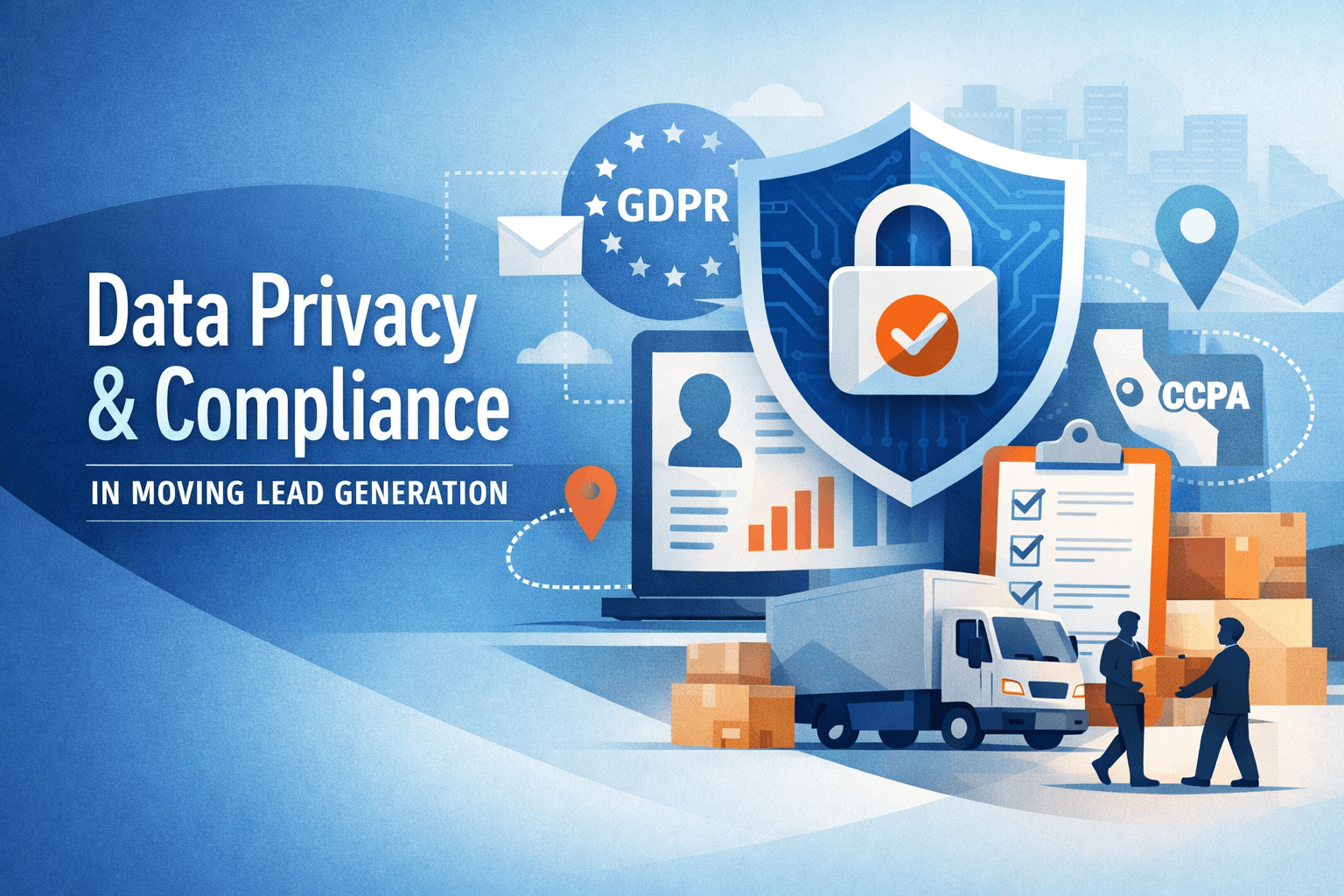
Data Privacy & Compliance in Moving Lead Generation
In today’s digital-first marketplace, lead generation is one of the most important growth engines for moving companies. But as movers compete for residential, long-distance, interstate, and commercial relocation leads, one issue has become impossible to ignore: data privacy and compliance.
Every quote request, contact form submission, SMS opt-in, and call-tracking workflow involves personal data. Names, phone numbers, email addresses, origin and destination addresses, move dates, and household details are not just marketing inputs. They are regulated information. For moving companies and lead providers alike, mishandling that data can create legal exposure, damage trust, and weaken long-term lead quality.
That is why compliance should never be treated as a box to check after campaigns go live. It should be built into the lead generation process from the start. For brands that want sustainable growth, compliant lead collection is not a limitation. It is a competitive advantage.
At Best Moving Leads Providers, we believe movers generate better results when they combine strong marketing performance with responsible data practices. Here is what moving companies need to know about privacy compliance in lead generation, especially when navigating regulations such as GDPR, TCPA, and related telemarketing requirements.
Why Data Privacy Matters in the Moving Industry
Moving leads are uniquely sensitive. A consumer requesting a moving estimate often shares detailed life logistics: where they live, where they are going, when they plan to move, and how best to contact them. In many cases, that data reveals timing, location, family changes, employment transitions, or financial considerations.
Because of that, movers cannot afford loose lead intake systems or vague consent language. Consumers increasingly expect transparency about how their data will be used, who will receive it, and how often they may be contacted. GDPR, for example, emphasizes principles such as lawfulness, fairness, transparency, purpose limitation, and data minimization, meaning businesses should only collect data that is necessary for a specific, disclosed purpose.
For moving companies, the message is simple: collect only what you need, explain why you need it, and handle it responsibly.

Understanding GDPR in Moving Lead Generation
The General Data Protection Regulation, or GDPR, is the European Union’s core privacy law. It applies to the processing of personal data and is technology-neutral, meaning it can apply whether data is stored digitally or in organized manual systems. It also includes rules for international data transfers outside the EU.
Many U.S.-based moving companies assume GDPR does not matter to them. That can be a mistake. If a mover or lead generation partner markets to, collects inquiries from, or tracks website visitors in the EU, GDPR considerations may come into play. Even when GDPR does not strictly apply, its standards offer a smart benchmark for ethical lead handling.
For movers, the most practical GDPR takeaways include:
Transparent Data Collection
Your forms should clearly explain what information is being collected and how it will be used. A vague “submit for more info” message is not enough. Consumers should understand whether they are requesting a quote from one mover, multiple movers, or a lead marketplace.
Lawful Basis and Consent
Under GDPR, personal data processing must have a lawful basis. In lead generation, consent is often central, especially for marketing communications. Businesses should avoid pre-checked consent boxes or confusing disclosures and instead use clear, affirmative opt-ins.
Data Minimization
Do not ask for excessive details at the first conversion point. If a name, phone number, email, ZIP codes, and move timeframe are enough to qualify a lead, avoid collecting unrelated data. Less unnecessary data means less compliance risk.
Retention and Security
GDPR also stresses that personal data should not be kept longer than necessary and should be protected appropriately. Lead databases should have access controls, reasonable retention schedules, and secure vendor systems.
TCPA Compliance: The Rule Movers Cannot Ignore
If GDPR shapes privacy expectations, TCPA shapes contact practices in the United States. The Telephone Consumer Protection Act restricts certain telemarketing calls and texts, particularly those involving autodialers, artificial voices, prerecorded messages, and mobile numbers without the required level of consent. The FCC states that telemarketing calls and texts made with these technologies generally require prior consent, and in some cases prior express written consent.
For moving companies, TCPA compliance is especially important because lead follow-up often happens quickly by phone and SMS. That speed helps conversion, but only if consent is documented properly.
What Movers Should Watch Closely
One of the most important compliance issues is how consent language appears on lead forms. If a consumer submits a moving quote request, the disclosure should state clearly that by submitting the form, they agree to receive calls or texts, when applicable, and from whom. Hidden disclaimers, tiny footer language, or broad consent statements create risk.
The FCC has also clarified consumer rights to revoke consent in any reasonable manner and requires callers to honor do-not-call and consent revocation requests within a reasonable time, not exceeding 10 business days.
In practical terms, movers should make it easy for prospects to opt out and should ensure that internal teams, CRMs, and automation tools stop outreach promptly after a revocation request.

Don’t Forget FTC Telemarketing Rules
TCPA is not the only rule in play. The FTC’s Telemarketing Sales Rule and National Do Not Call framework also affect how sales calls are handled. The FTC explains that the Do Not Call Registry allows consumers to opt out of most telemarketing sales calls, and legitimate telemarketers are expected to follow those rules.
For movers using outbound sales follow-up, this means compliance should include more than just collecting leads. It should also include call-list hygiene, suppression procedures, and accurate recordkeeping. A lead generation campaign is only as compliant as the follow-up system attached to it.
Best Practices for Compliant Moving Lead Collection
The strongest moving companies build compliance directly into their marketing workflows. That starts with cleaner systems, better disclosures, and smarter lead partnerships.
A compliant lead collection process should include clear website privacy notices, explicit consent language on quote forms, and documented proof of when and how a lead opted in. Movers should know the source of every lead, the exact wording shown at the point of submission, and whether that lead was exclusive or shared.
This is also why partner selection matters. Not all lead vendors follow the same standards. Working with a trusted provider like Best Moving Leads Providers helps reduce risk because compliant lead generation depends on transparent sourcing, proper consent practices, and accountable marketing operations. When movers buy leads without understanding how those leads were collected, they expose themselves to avoidable compliance problems.
Another smart step is reviewing every channel involved in lead generation, including landing pages, PPC campaigns, social forms, chat tools, SMS workflows, and call tracking. Compliance gaps often happen not in the main form, but in the supporting systems around it.
Compliance as a Growth Strategy
Too many movers think privacy rules slow down marketing. In reality, the opposite is often true.
When lead collection is transparent, contact permissions are clear, and outreach is respectful, conversion quality improves. Consumers are more likely to engage with companies they trust. Sales teams spend less time chasing bad or disputed leads. Brands reduce the risk of complaints, platform issues, and legal headaches.
Compliance also improves operational discipline. It forces companies to clean up databases, define lead sources, sharpen messaging, and build better follow-up processes. Those improvements do not just protect the business. They make marketing more efficient.

Conclusion
Data privacy and compliance in moving lead generation are no longer optional concerns reserved for large enterprises. They are essential for any mover that wants to scale responsibly in a competitive digital market.
GDPR reinforces the need for transparency, purpose limitation, and data minimization. TCPA and FTC telemarketing rules make it clear that outreach consent, opt-out handling, and calling practices must be taken seriously. Together, these regulations create a clear standard: collect data honestly, use it responsibly, and communicate with prospects lawfully.
For moving companies, the goal is not simply to avoid risk. It is to build a lead generation engine that earns trust while driving growth. Best Moving Leads Providers helps movers do exactly that by combining performance-focused marketing with responsible, compliance-aware lead generation practices.
FAQs
It can, especially if the company markets to or collects personal data from people in the EU. Even when it does not strictly apply, GDPR standards are a strong model for responsible data practices.
The biggest risk is contacting leads by call or text without proper consent documentation, especially when automated technology or prerecorded elements are involved.
Use clear disclosures, obtain affirmative consent where needed, explain who may contact the consumer, and keep records of the exact opt-in language tied to each submission.
Because movers may inherit risk from poorly sourced leads. A reliable partner helps ensure lead collection practices are transparent, documented, and aligned with current privacy and telemarketing expectations.