Best Practices for The First Call After a Moving Lead Comes In
When a new moving lead comes in, the first call you make can make or break the deal. Moving is one of the most time-sensitive services, and customers often reach out to multiple movers at once. That means the speed, tone, and structure of your first conversation are critical for converting that lead into a booked job.
At Best Moving Leads Providers, we’ve seen that movers who nail the first call close at a significantly higher rate than those who delay or stumble through it. In this blog, we’ll cover the best practices to ensure your first call sets the stage for success.
Why the First Call Matters So Much
- Leads are time-sensitive: Customers usually book the first mover who makes a good impression.
- It sets the tone: A smooth, professional call builds confidence and positions your company as reliable.
- You qualify the lead: The first call helps you filter serious prospects from low-quality inquiries.
- Speed = conversions: Movers who call back within 5 minutes of receiving a lead are far more likely to book the job.

Step 1: Respond Immediately
The first and most important rule is speed-to-lead.
- Call within 5 minutes of receiving the lead.
- If they don’t answer, leave a professional voicemail and send a quick SMS to confirm.
- Leads grow cold quickly—waiting even an hour can cut your chances in half.
Pro Tip: Use a CRM or automation tool to trigger instant call reminders and SMS confirmations.
Step 2: Prepare Before You Dial
Don’t call blindly—review the lead’s details so you sound prepared.
- Name, contact info, origin/destination, move date, and size of the move.
- If the lead came from your website, see what form fields they filled in.
- If it’s from a provider, check whether it’s exclusive or shared—this impacts your approach.
Being informed shows professionalism and helps you personalize the conversation.
Step 3: Nail the Introduction
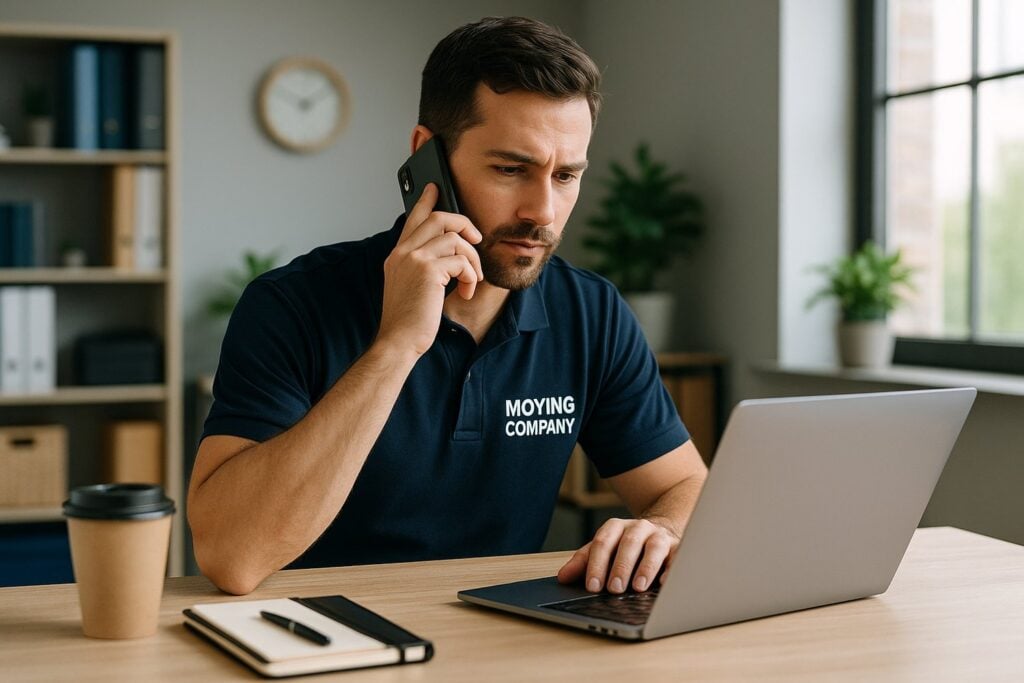
First impressions matter. Keep your greeting warm, professional, and confident.
Example:
“Hi [Customer Name], this is [Your Name] from [Company Name]. I just received your request about your upcoming move from [City] to [City]. I’d love to ask a few quick questions so we can get you an accurate quote. Do you have a few minutes now?”
This shows you’re attentive, prepared, and respectful of their time.
Step 4: Ask the Right Questions
The first call should feel like a conversation, not an interrogation. Ask questions that uncover needs and build trust.
Key questions include:
- When is your preferred moving date?
- What type of move is this (local, long-distance, international)?
- How large is your home (number of bedrooms, square footage)?
- Do you need packing services or just transport?
- Are there specialty items (piano, safe, antiques)?
- Will storage be required before or after the move?
These questions help you tailor the quote and position your company as attentive to details.

Step 5: Build Trust with Reassurance
Customers want more than numbers—they want peace of mind. Use the call to establish credibility.
- Mention that your company is licensed and insured.
- Highlight positive reviews or years of experience.
- Explain your process clearly, including how you protect belongings.
- Offer to send them a moving checklist or guide as a value-add.
Trust signals reduce skepticism and move the customer closer to booking.
Step 6: Present Pricing Transparently
When discussing cost, transparency is critical.
- Provide a range or ballpark estimate during the call, if possible.
- Explain the factors that impact final pricing (distance, weight, services).
- Offer to send a detailed written quote immediately after the call.
Customers often compare movers side-by-side. Clear pricing gives you an edge.

Step 7: Confirm Next Steps
Never end the first call without a clear action plan.
- Schedule a follow-up call, in-home estimate, or virtual survey.
- Confirm the customer’s preferred communication method (phone, email, SMS).
- If they’re interested, lock in their move date right away.
Example closing:
“Great, I’ll send your detailed estimate within the next hour, and I’ll follow up tomorrow to answer any questions. Does that work for you?”
Step 8: Follow Up Immediately
The conversation doesn’t end when you hang up.
- Send an email or SMS summarizing the call.
- Attach the quote, checklist, or other promised resources.
- Set reminders to follow up if the customer doesn’t respond within 24–48 hours.
Consistent follow-ups show reliability and keep you top-of-mind.

Common Mistakes to Avoid
- Calling too late (hours or days after the lead came in).
- Sounding unprepared (“Who is this again?”).
- Being too pushy—customers want helpful guidance, not aggressive sales tactics.
- Not listening—dominating the call without addressing the customer’s actual concerns.
- Failing to confirm next steps—leads left hanging often go cold.
Wrapping Up
Your first call after a moving lead comes in is your best chance to make a strong impression, qualify the opportunity, and move closer to a booking. By responding quickly, asking the right questions, building trust, presenting transparent pricing, and confirming clear next steps, you’ll dramatically increase your conversion rates.
At Best Moving Leads Providers, we connect movers with exclusive, high-quality leads that are ready to book. Pairing great leads with strong first-call practices is the fastest way to grow your moving business.
👉 Contact us today to get started with the best moving leads in the industry.