
Importance of ADA Compliance for Moving Companies
Are you unintentionally turning away potential customers because your website isn’t accessible? If your moving company’s website isn’t ADA-compliant, there’s a strong chance you are. Web accessibility ensures that everyone, including people with disabilities, can easily navigate, understand, and use your website. Without it, moving companies risk losing leads, damaging their reputation, and facing serious legal consequences.
ADA compliance is no longer optional in today’s digital landscape. For moving companies, accessible websites support better user experiences, expand market reach, and help protect the business from costly legal issues. Understanding why ADA compliance matters, and how to implement it, can give your company a meaningful advantage.
What Is ADA Compliance?
The Americans with Disabilities Act (ADA) is a civil rights law designed to prevent discrimination against individuals with disabilities. While it originally focused on physical spaces, ADA guidelines now apply to digital environments, including websites.
For moving companies, ADA compliance means ensuring that all users—regardless of physical, visual, auditory, or cognitive abilities—can access and interact with your online content. This includes service pages, contact forms, quote calculators, and booking tools.
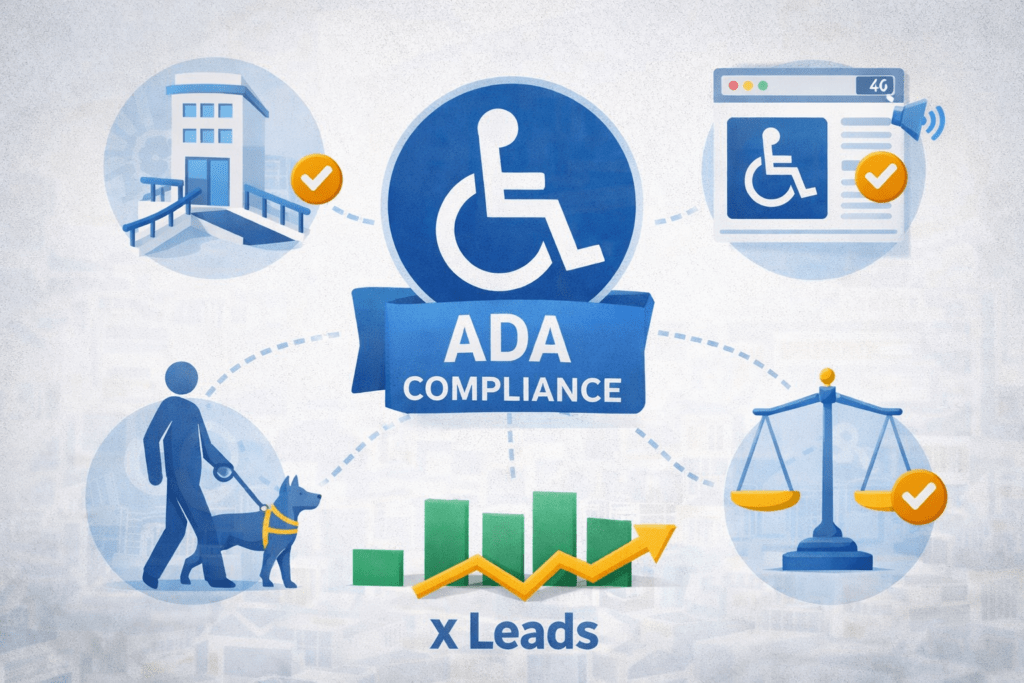
ADA compliance typically aligns with the Web Content Accessibility Guidelines (WCAG) 2.1. These guidelines are built around four core principles:
- Perceivable: Content must be presented in ways users can perceive, such as readable text and image descriptions
- Operable: Users must be able to navigate and interact using keyboards or assistive devices
- Understandable: Information and navigation should be clear and predictable
- Robust: Content must work reliably across browsers, devices, and assistive technologies
Together, these principles ensure your website is usable by everyone.
Why ADA Compliance Matters for Moving Companies
ADA compliance goes beyond legal requirements. It directly impacts how customers experience your brand and whether they choose to do business with you.
Reaching a More Inclusive Customer Base
Accessible websites allow more people to browse services, request moving quotes, and contact your company. Without accessibility features, users may struggle with unreadable text, missing image descriptions, or navigation barriers. ADA compliance ensures your services are available to all potential customers.
Building Reputation and Trust
Companies that prioritize accessibility demonstrate professionalism, responsibility, and inclusivity. Customers notice when businesses make the effort to serve everyone equally. This commitment builds trust, strengthens your brand, and encourages positive word-of-mouth.
Reducing Legal Risk
Website accessibility lawsuits have increased significantly in recent years. Businesses with inaccessible websites have faced legal action, fines, and reputational damage. ADA compliance helps protect moving companies from these risks and ensures long-term stability.
Improving User Experience for Everyone
Accessibility improvements often enhance usability for all visitors, not just those with disabilities. Clear navigation, readable fonts, and structured layouts make websites easier to use, increasing engagement and conversion rates.
Standing Out in a Competitive Market
Many moving companies still overlook accessibility. Making ADA compliance a priority sets your business apart and appeals to customers who value inclusive and responsible service providers.
Staying Ahead of Regulatory Trends
Digital accessibility regulations continue to evolve. Proactively addressing compliance now ensures your company stays prepared for future updates and avoids scrambling to meet new requirements later.

Steps Moving Companies Can Take Toward ADA Compliance
Achieving ADA compliance requires ongoing effort, but it’s manageable with the right approach.
Conduct an Accessibility Audit
Start with a full accessibility audit to identify barriers on your website. Audits highlight issues such as missing alt text, poor contrast, inaccessible forms, or navigation problems. This provides a clear roadmap for improvement.
Implement Key Accessibility Updates
Once issues are identified, implement essential changes such as adding descriptive alt text to images, enabling keyboard navigation, improving color contrast, and labeling forms clearly. These adjustments significantly improve usability.
Monitor Accessibility Continuously
ADA compliance isn’t a one-time fix. Every website update can introduce new accessibility challenges. Regular testing ensures your site remains compliant as content, features, and design evolve.
Use Accessibility Tools and Plugins
Accessibility tools can scan your website for issues, suggest improvements, and automate certain fixes. These tools help simplify ongoing compliance and maintain a user-friendly experience.
How a Digital Marketing Partner Can Help
Working with a knowledgeable digital marketing partner can make ADA compliance far more manageable. Beyond accessibility, agencies often support SEO for movers and broader digital growth strategies.
A professional partner can assist with:
- Conducting detailed accessibility audits
- Implementing technical and design changes to meet ADA standards
- Monitoring ongoing compliance as your site evolves
- Aligning accessibility improvements with SEO and conversion goals
This support ensures your website remains inclusive, compliant, and optimized for lead generation.

Prioritize Accessibility to Grow Your Moving Business
ADA compliance is a smart moving business decision, not just a legal safeguard. An accessible website expands your reach, strengthens trust, improves user experience, and reduces risk. For moving companies looking to grow sustainably, accessibility should be part of a long-term digital strategy.
By conducting audits, implementing key updates, and maintaining compliance over time, your company positions itself as inclusive, professional, and forward-thinking. At Best Moving Leads Providers, we help moving companies build digital foundations that attract more customers, convert more leads, and support long-term success, accessibility included.