
Keyword Research for Movers: SEO Trends for 2026
Keyword research for moving companies is no longer just “pick a city + movers near me” and call it a day. In 2026, search behavior is shifting fast: Google is answering more queries directly in the results, AI summaries are reducing clicks for informational searches, and local customers are searching with more context (“movers for townhomes with stairs,” “packing help only,” “same-week availability”). The movers who win organic leads won’t be the ones with the most keywords—they’ll be the ones whose content matches real intent and is structured so search engines (and AI systems) can confidently cite it.
At Best Moving Leads Providers, we see the same pattern across markets: movers who build pages around situations and outcomes—not just services—earn more qualified local traffic and convert at a higher rate. Here’s what to focus on for 2026.
What’s Changing in Search for 2026
AI Overviews and the rise of “zero-click” visibility
Google’s AI-generated summaries (AI Overviews) and other SERP features increasingly answer questions without requiring a click, especially for informational queries. Multiple industry analyses and publisher research have reported meaningful click-through-rate reductions when AI summaries appear, which changes what “ranking” is worth.
For movers, this means you should still publish informational content—but you need to structure it to earn visibility inside summaries, and then pair it with strong local/service pages that capture purchase-ready searches.

“People-first” content and E-E-A-T signals matter more
Google continues to emphasize helpful, reliable, people-first content and the importance of experience and trust signals (E-E-A-T). For moving companies, that translates into clear policies, real photos, credible service details, and content that sounds like it was written by someone who has actually handled real moves.
Local intent is getting more specific
Local SEO isn’t only about proximity and citations anymore. Reviews, service relevance, and clarity about what you do (and where) play a bigger role in how customers choose from map results—especially as search becomes more “answer-driven.”
Emerging Keyword Themes for Movers in 2026
Rather than chasing a single “hot keyword,” focus on clusters that reflect how people actually plan moves today.
1) Scenario-based searches (the new “near me”)
Customers increasingly search for movers based on their situation, not just geography. Examples include:
- “apartment movers” / “3rd floor apartment movers”
- “townhome movers” / “stairs heavy furniture movers”
- “condo movers with elevator reservation”
- “move-in/move-out movers” (especially around leases)
These queries are gold because they reveal constraints. Your content should answer: access planning, parking, elevator procedures, protection, and timing.
2) “Labor-only” and partial-service intent is growing
A big intent shift is customers wanting help with parts of a move:
- “loading and unloading help”
- “moving labor only”
- “packing help near me”
- “unpackers near me”
- “furniture moving within house”
Build a dedicated “labor-only” page (if you offer it), plus supporting FAQs that explain minimum hours, what customers provide, and what you bring.
3) Speed and availability keywords
Busy households and renters often search for urgency:
- “same day movers”
- “last minute movers”
- “next day movers”
- “weekend movers near me”
If you target these, your operations must match. Don’t optimize for “same-day” if you can’t reliably deliver—focus on “fast quotes,” “quick scheduling,” and realistic availability windows.
4) Trust and risk-reduction keywords
As competition rises, customers search for reassurance:
- “licensed and insured movers” (wording varies by location)
- “movers with furniture protection”
- “reliable movers” / “professional movers”
- “moving company reviews [city]”
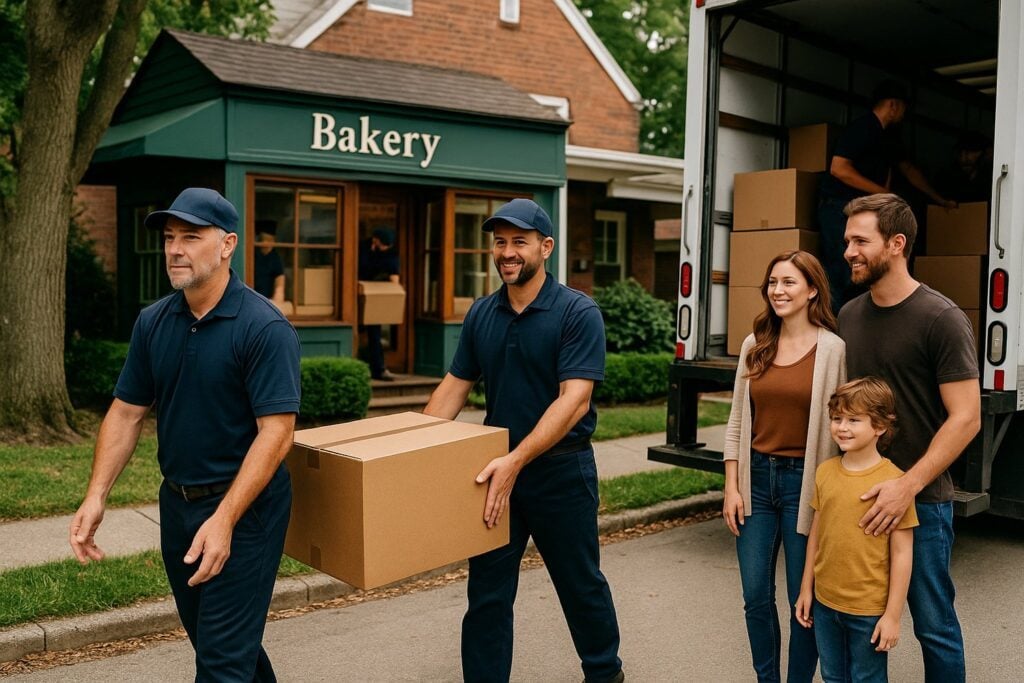
You’ll win these by showcasing proof: reviews, real job photos, clear damage policy language, and a professional estimate process—then supporting it with schema and on-page structure that makes it easy for search engines to interpret.
5) Bundled needs: storage, junk, specialty items
Customers increasingly combine services:
- “moving and storage”
- “short-term storage during move”
- “movers who move pianos” / “safe movers”
- “white glove moving”
- “junk removal before moving” (partner content works well here)
These keywords often convert well because they imply higher complexity and higher ticket sizes.
How Search Intent Is Shifting (and How to Match It)
In 2026, successful mover SEO aligns with four dominant intents:
Immediate booking intent: “local movers [suburb],” “moving company near me,” “get moving quote.”
Your job: high-converting service pages, clear CTAs, fast-loading pages, strong reviews.
Comparative intent: “best movers in [city],” “top-rated movers,” “movers cost [city].”
Your job: comparison-friendly content, transparent process, what’s included, and credibility elements.
Planning intent: “how many boxes for a 2 bedroom,” “moving checklist,” “how far in advance to book movers.”
Your job: concise, structured answers that can be cited in AI Overviews, plus internal links to services. AI summaries often show for informational queries, so structure is key.
Problem-solving intent: “movers for narrow driveway,” “how to move a sofa upstairs,” “elevator move rules.”
Your job: practical, experience-led content with clear steps and photos.

How to Optimize Your Website for 2026 SEO
Build pages around keyword clusters, not single keywords
Instead of creating thin pages for every keyword variation, build robust pages that cover a topic comprehensively. For example, one strong “Apartment Moving” page can naturally include elevator moves, stairs, COI requirements, parking plans, and protection methods—capturing dozens of long-tail searches.
Structure content to be “AI-citable”
Because AI-driven results prioritize clarity and structure, format key sections with:
- Short definitions near the top
- Scannable subsections (“What’s included,” “What affects price,” “How to prepare”)
- FAQ sections that answer common questions directly
This aligns with how AI systems and rich results extract information.
Strengthen local relevance signals
Create location/service pages that reflect real coverage (neighborhoods, suburbs, service radius) and embed trust signals: photos from local jobs, review snippets, and details about local constraints (parking rules, building types). Support this with a strong Google Business Profile and review strategy, since local visibility is increasingly shaped by relevance and authenticity.
Don’t skip technical basics
Fast load times, clean mobile UX, clear conversion paths, and schema (LocalBusiness, Service, FAQ where appropriate) remain foundational—especially as SERPs get more competitive and more “answer-like.”
A Practical Keyword Research Workflow for Movers
Start with what you already own: Google Search Console queries, Google Business Profile “queries,” call transcripts, and estimate form language. Then expand using autocomplete, “People also ask,” competitor service pages, and seasonal patterns (end-of-month, summer peak, school calendars). Your goal is to map keywords into clusters that match services and scenarios—and create content that answers them better than anyone else in your market.

Win 2026 SEO by Owning Intent, Not Just Keywords
SEO for movers in 2026 is about visibility across the entire journey—from planning and comparison to booking. AI summaries may reduce some informational clicks, but they also reward brands that publish the clearest, most helpful answers and prove real-world experience. When you build cluster-based pages, structure content for easy extraction, and reinforce trust locally, you’ll capture more qualified searches and convert them into booked moves.
And if you want to balance long-term SEO with immediate lead flow, Best Moving Leads Providers helps movers combine strong marketing fundamentals with exclusive and shared moving leads, so your calendar stays full while your organic footprint grows.
FAQs
Prioritize scenario-based and service-combination keywords (apartment moves, labor-only, moving + storage, last-minute availability) alongside core local intent terms.
Yes, but write them to be highly structured and citable, and use them to funnel visitors to service pages with clear calls-to-action.
Create pages for real service areas you actively serve, focusing on quality and uniqueness (local details, photos, FAQs) rather than mass-produced thin pages.
Chasing broad “movers near me” rankings without building trust and intent match—especially for apartments, labor-only moves, and other high-converting scenarios.