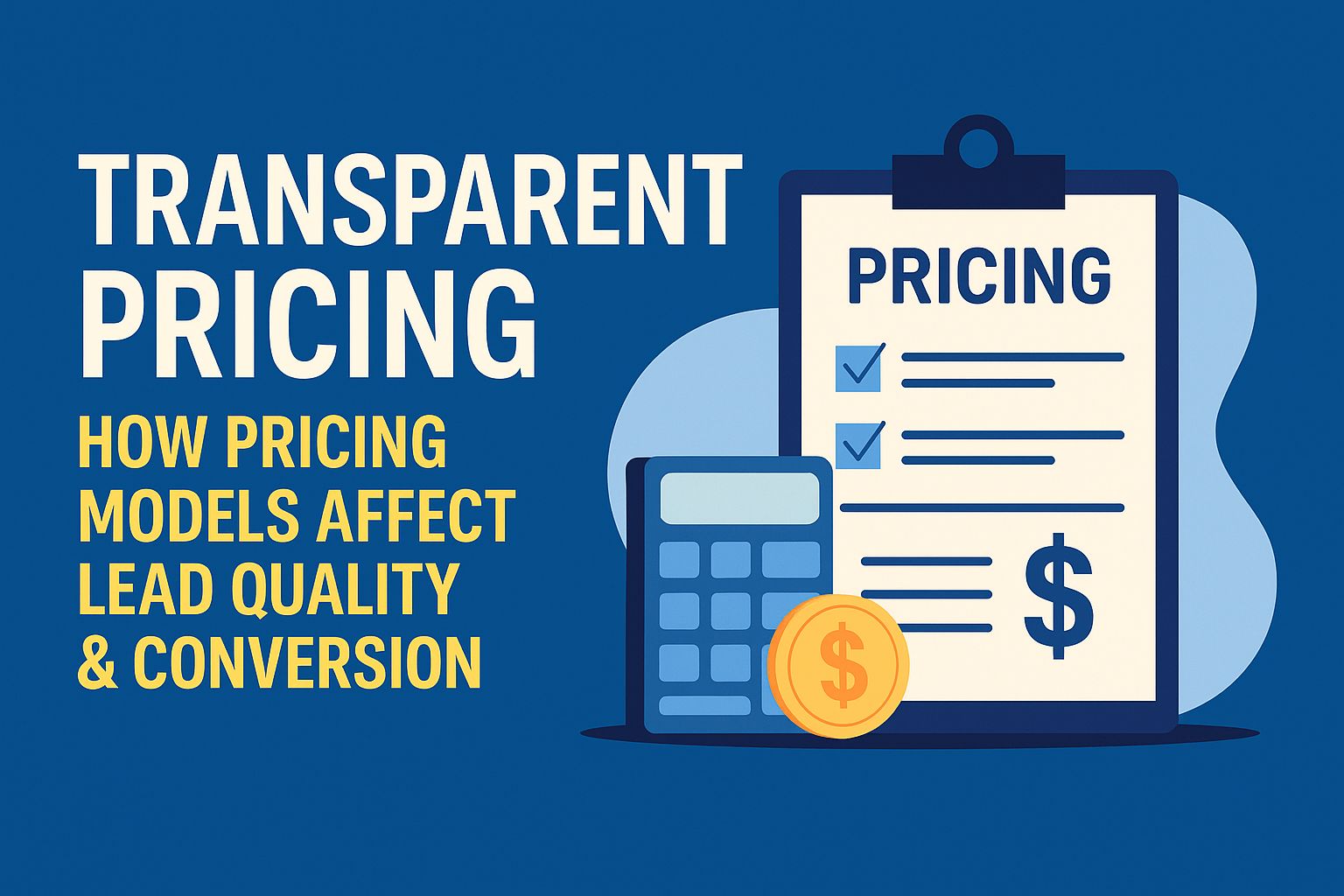
Transparent Pricing: How Pricing Models Affect Lead Quality & Conversion
In the moving industry, pricing isn’t just about covering costs—it’s one of the most powerful tools you have to attract, qualify, and convert leads. Customers shopping for movers often compare multiple quotes, and the way you structure and present your pricing can directly influence whether they choose you—or move on to a competitor.
At Best Moving Leads Providers, we’ve seen firsthand how pricing strategies affect both lead quality and conversion rates across the industry. Let’s break down the different pricing models movers use, how transparency impacts trust, and what you can do to maximize your booking rates.
Why Pricing Transparency Matters in Lead Generation
When customers request moving quotes, they’re often in a high-stress situation. They’re juggling timelines, budgets, and uncertainty. Pricing is not just a number—it’s a signal of your credibility, professionalism, and reliability.
Transparent pricing:
- Builds trust quickly in a competitive market.
- Reduces objections during sales calls.
- Filters out unqualified leads who aren’t a good fit.
- Increases close rates by aligning expectations early.
On the other hand, vague or inconsistent pricing creates friction, erodes trust, and can waste time on unqualified leads.

Common Pricing Models in the Moving Industry
1. Hourly Rate
Many local movers charge by the hour, with different rates depending on crew size and truck type.
- Pros: Simple, scalable, and easy to communicate.
- Cons: Customers often worry about hidden delays or inflated hours.
Impact on Leads: Hourly pricing attracts budget-conscious leads, but without transparency on minimums, travel time, and potential add-ons, conversion rates may drop.
2. Flat-Rate Pricing
Flat rates are popular for long-distance moves or small jobs with predictable scope.
- Pros: Customers love the predictability. Flat rates reduce anxiety and build confidence.
- Cons: Movers risk underestimating job complexity if details aren’t accurate.
Impact on Leads: Flat rates attract higher-quality leads who value certainty. They’re more likely to convert, but only if your quoting process is detailed and accurate.
3. Weight-Based Pricing
Long-distance and interstate moves often use weight-based pricing, where costs depend on the shipment weight.
- Pros: Industry standard for long hauls; scales well with volume.
- Cons: Customers find it confusing—few know exactly how much their belongings weigh.
Impact on Leads: While common, this model often raises suspicion among consumers. Providing visual explanations and tools for weight estimation can improve lead trust.
4. Hybrid Models
Some movers blend hourly, flat-rate, and weight-based models depending on the job.
- Pros: Flexible and adaptable to many job types.
- Cons: Can confuse customers if not explained clearly.
Impact on Leads: Hybrid models can work well if supported with transparent quotes and customer education. Without that, leads may feel overwhelmed.
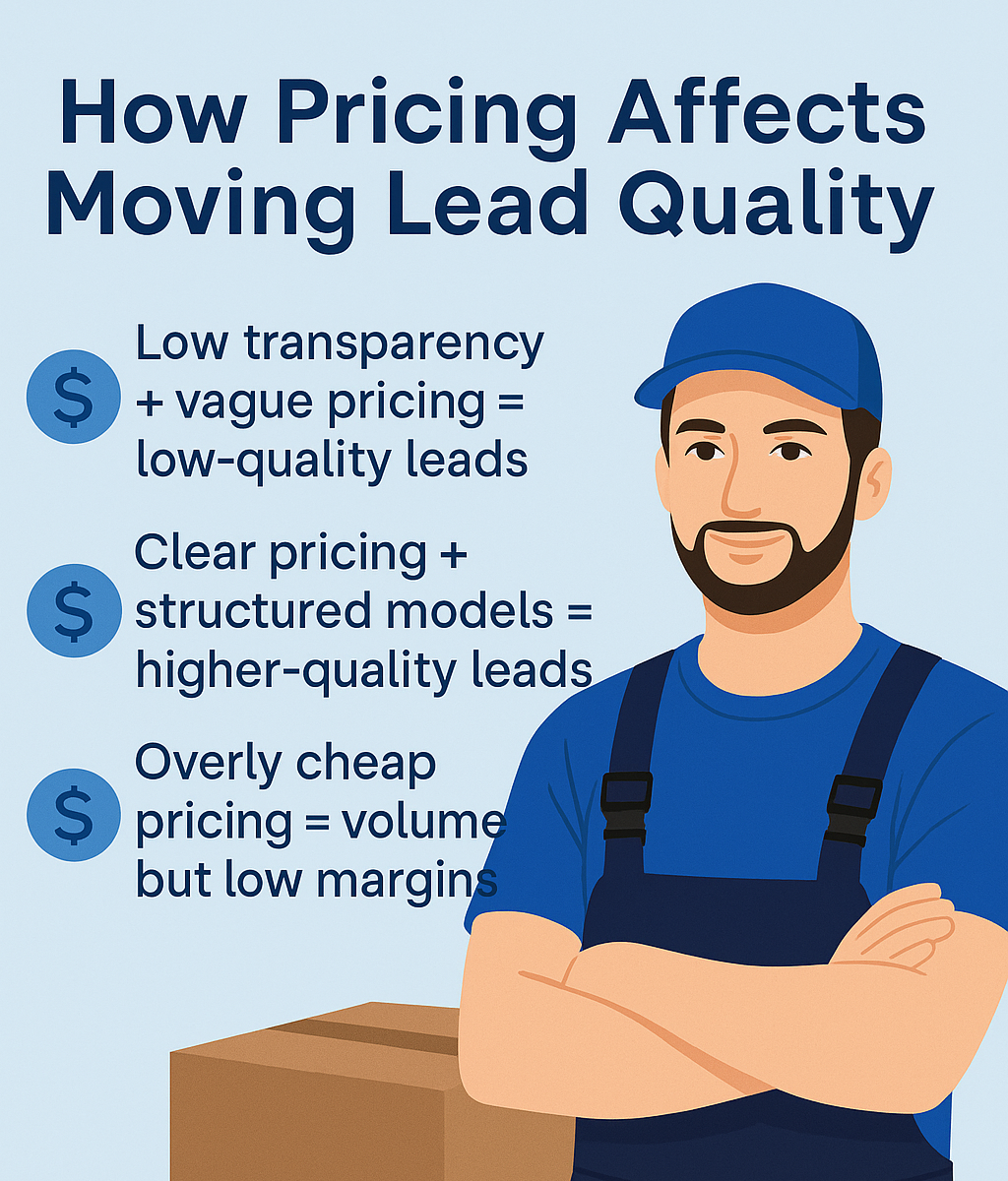
How Pricing Affects Lead Quality
Not all leads are equal, and your pricing model can influence the type of customer you attract.
- Low transparency + vague pricing = low-quality leads. These customers are shopping around and often ghost after initial quotes.
- Clear pricing + structured models = higher-quality leads. Customers who know what to expect are more serious about booking.
- Overly cheap pricing = volume but low margins. Attracts bargain-hunters, who may churn or leave poor reviews if expectations aren’t met.
- Fair, transparent pricing = better alignment. Attracts leads who value trust and service, not just cost.
How Pricing Influences Conversion
Even once you’ve generated a lead, your pricing presentation heavily impacts conversions.
- Clarity wins. A transparent breakdown (labor, truck fee, supplies, additional services) converts far better than a lump-sum number.
- Options convert. Offering “Good, Better, Best” packages lets customers self-select and reduces sticker shock.
- Education matters. Explaining why costs vary (distance, stairs, specialty items) reassures leads that pricing is fair.
- Speed-to-quote is key. The first company to send a clear, transparent quote often wins the job.
Best Practices for Transparent Pricing
To improve both lead quality and conversion rates, consider these steps:
- Offer instant online quotes. Even if estimates are approximate, they set expectations and capture serious leads.
- Show sample move scenarios. Post example pricing for common moves (e.g., “2-bedroom apartment, local move: $X–$Y”).
- Use visuals. Infographics or checklists that explain how pricing works simplify complex models.
- Address hidden costs upfront. Mention travel time, fuel, stairs, packing supplies—don’t let customers discover them later.
- Highlight your value. Instead of competing on price alone, emphasize insurance, professionalism, and service quality.

Wrapping Up
Transparent pricing isn’t just a sales tactic—it’s a lead qualification and conversion tool. The clearer you are with prospects, the more trust you build, the higher-quality leads you attract, and the better your close rates become.
At Best Moving Leads Providers, we connect movers with high-quality, exclusive leads that value transparency and trust. If you’re ready to grow your moving business with leads that convert, contact us today and let’s get started.