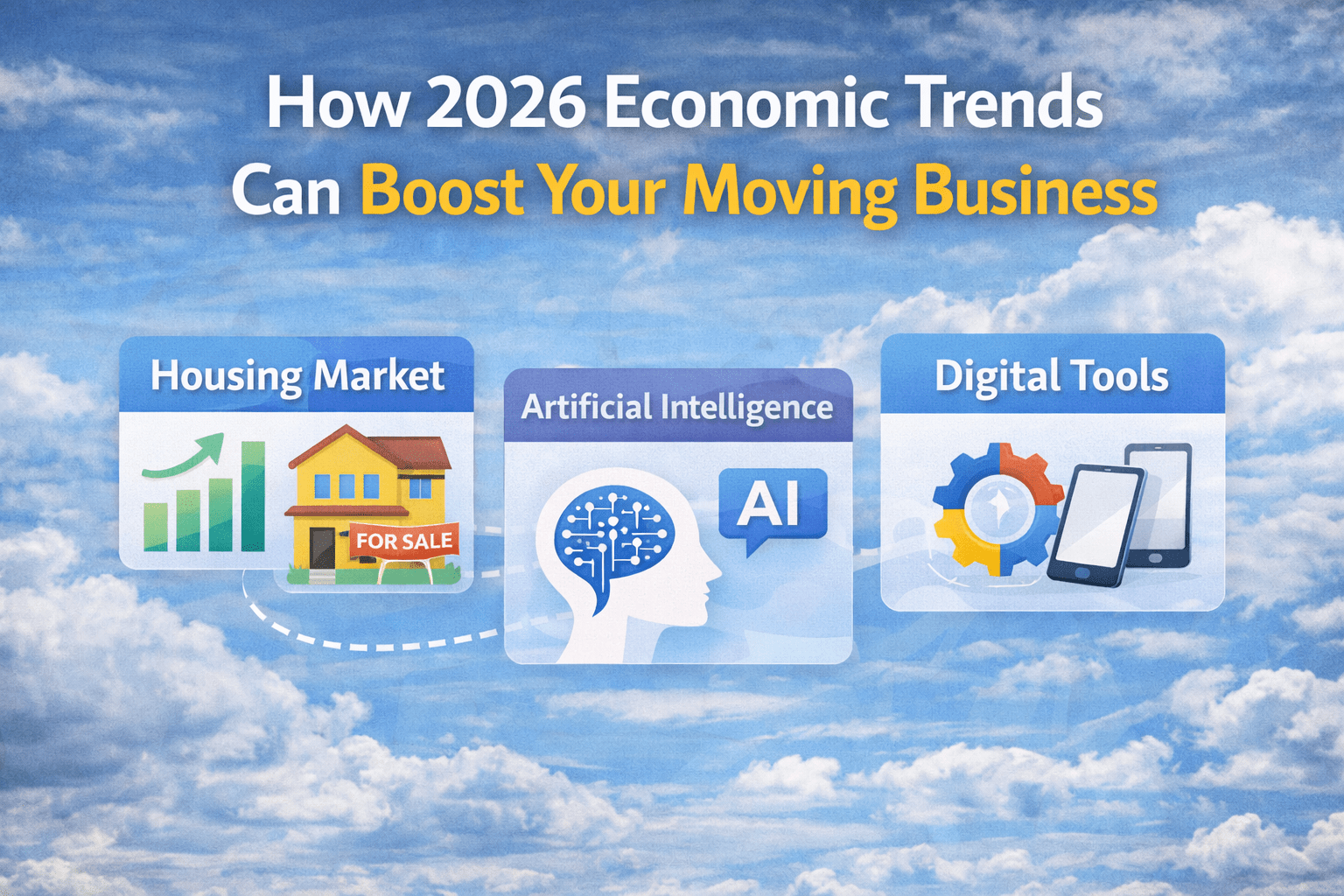
How 2026 Economic Trends Can Boost Your Moving Business
As we enter 2026, a shifting economic landscape offers both challenges and opportunities for service-oriented businesses—especially moving companies. From consumer spending patterns to housing market dynamics and technological adoption, economic trends this year can shape demand, competitive advantage, and profitability. Understanding and responding to these trends strategically will help moving companies expand their reach, optimize operations, and capture high-value customers in both local and long-distance markets.
In this in-depth blog, we’ll explore key economic trends expected in 2026 and explain how they can be leveraged to boost your moving business, from strengthening revenue to improving marketing effectiveness and operational efficiency.

General Economic Growth: A Foundation for Demand
Steady Growth in the U.S. and Global Economy
Economic forecasts for 2026 suggest that the global economy will continue to grow, albeit at a moderate pace. The United Nations predicts global growth of around 2.7% in 2026, supported by stable consumption and resilient services sectors.
Meanwhile, the U.S. economy is projected to grow at around 2.2% in 2026, reflecting sustained consumer activity, fiscal support, and continued innovation investments.
Why This Matters for Movers
Economic growth means more employment, more household moves, and more business relocations. When the economy expands steadily, consumer confidence improves, encouraging families and businesses to make relocation decisions. For moving companies, this translates to:
- Higher volume of local and long-distance moves
- Increased business relocations as companies expand
- More ancillary revenue from packing, storage, and specialty services
Even moderate GDP growth signals that fewer consumers are delaying large purchases like home relocations and business investments—both of which benefit moving companies.
Housing Market Trends: Everything Is Connected
Steady But Subdued Housing Activity
According to Realtor.com’s 2026 housing forecast, the market is expected to remain steady, though not at an exceptionally high pace, with average mortgage rates hovering around 6.3%.
Opportunity Insight
Even if housing turnover is not booming, steady demand still drives moving activity. Here’s why this matters:
- Homeowners planning moves aren’t always driven by market spikes; lifestyle changes, job relocations, and family needs create consistent moving demand.
- Stable housing markets allow moving companies to target niche segments like downsizing seniors, first-time homebuyers, rentals, and long-distance buyers relocating for remote work.
Smart movers use these predictable patterns to refine seasonality forecasts and ensure marketing and staffing align with actual demand curves rather than short-term spikes.

Productivity and Technology Trends: Lower Costs, Higher Efficiency
AI and Digital Tools Are Driving Productivity
Despite broader economic uncertainty, investments in artificial intelligence (AI) and digital tools are fueling productivity growth. Reports show U.S. worker productivity jumped significantly in late 2025, a trend likely to shape business strategies in 2026.
Practical Impacts for Moving Companies
Productivity increases mean businesses are better positioned to do more with less—an essential advantage in industries with tight margins like moving. Movers can benefit by:
- Adopting AI-enhanced scheduling and routing tools to reduce fuel and labor costs
- Using automated quoting systems and chatbots to reduce administrative workload
- Leveraging advanced CRM and dispatch systems to increase responsiveness
Integrating technology doesn’t just streamline operations—it improves customer experience, a crucial competitive differentiator.
Inflation and Interest Rate Trends: Consumer Budget Implications
Cooling Inflation and Policy Outlook
Economic analyses indicate inflation may continue easing in 2026, especially in advanced economies, allowing central banks more flexibility.
How This Benefits Moving Businesses
Lower inflation and potentially lower interest rates translate into:
- Greater consumer purchasing power, enabling more relocations
- Increased likelihood of home purchases and refinances
- More business expansion plans involving relocation
While mortgage affordability remains a concern for some buyers, overall easing price pressures can support broader relocation activity when consumers feel financially comfortable making major decisions.

Housing Supply and Seasonal Demand Shifts
Hindered Supply Doesn’t Halt Relocation
Even though housing inventory remains relatively tight, it doesn’t prevent moves; it changes the nature of demand. People relocate between rentals, upsize due to family expansion, switch to remote-friendly cities, or downsize in retirement. This diversity of moving reasons means demand remains resilient.
Movers can capture this by:
- Tailoring marketing for life-stage segments (students, retirees, remote workers)
- Promoting moves that aren’t tied to home purchases
- Offering flexible services like partial packing or temporary storage
Labor Market Conditions: Skilled Workforce Availability
Labor Trends in 2026
While job growth slowed in late 2025, unemployment remained relatively low at around 4–4.5%, with employers cautiously hiring.
Leveraging Labor Conditions
Movers should focus on:
- Training, retention, and career pathways to build a reliable workforce
- Using flexible or seasonal staffing during peak moving seasons
- Investing in retention tools to reduce turnover costs
A stable labor market allows moving companies to plan ahead, avoid disruptions, and maintain quality during busy periods.
Migration and Remote Work Trends: New Demand Patterns
Remote Work Continues to Influence Moves
Remote work remains a defining trend of the post-pandemic economy, with many workers relocating for lifestyle rather than job imperative. Coupled with economic growth, this means:
- Rising intercity and long-distance relocation activity
- Increased demand for packing and logistics support as families move further
- Millennials and Gen Z buyers relocating to lower-cost regions
Movers can tap into this by tailoring messaging and services to tech workers, remote professionals, and relocation incentive recipients.

Consumer Confidence and Spending Behavior
Confidence Driving Big Decisions
While consumer caution remains in certain markets, growth and employment stability translate into confidence for big life decisions like moving or upgrading housing. Research suggests that when people feel secure about their financial future—even in a moderate growth environment—they spend more on essential services.
For movers, this combo means:
- Opportunities to upsell premium services
- Higher conversion rates on leads
- More demand for advanced planning packages
Strategic Positioning Through Economic Awareness
Why Economic Trend Awareness Matters
Economic trends are not just data points—they’re signals for strategy. Movers who anticipate shifts can:
- Adjust service offerings to match consumer priorities
- Allocate marketing spend more effectively during seasonal and economic cycles
- Plan capacity and labor needs based on forecast demand patterns
Staying informed helps moving companies stay nimble in a competitive environment.
Economic Tailwinds for Digital Marketing and Lead Generation
Smarter Digital Spend in 2026
As economic growth continues and digital transformation accelerates, moving companies should double down on:
- Localized SEO strategies to capture house hunters and renters
- Targeted PPC campaigns for long-distance moves
- Content marketing tied to relocation trends
Economic resilience means more users are searching online for moving solutions. That’s a lead generation opportunity movers should maximize.

Turning 2026 Trends Into Business Growth
The economic outlook for 2026 isn’t about explosive expansion—but moderate, sustainable growth with strategic opportunities. For moving companies, this environment can deliver:
- Stronger lead flow from stable housing and relocation demand
- Better operational efficiencies through technology adoption
- Higher customer confidence and willingness to invest in premium services
By understanding macroeconomic trends and aligning your business strategy accordingly—from marketing to workforce planning and service innovation—your moving company can not only survive but thrive in 2026.
Economic context matters. And in 2026, moving companies well-positioned to read the trends and adapt will enjoy both increased visibility and long-term customer loyalty.