Branded vs. Non-Branded Keywords: Which Work Best for Movers?
Search Engine Optimization (SEO) is one of the most powerful tools for growing your moving company online — but only when it’s done strategically. The foundation of every successful SEO and PPC campaign lies in choosing the right keywords.
Understanding the difference between branded and non-branded keywords is essential for optimizing your marketing efforts. When used effectively, these two keyword types help you target the right audience, improve your visibility on Google, and generate more high-quality moving leads.
Why Your Keyword Choice Matters
The keywords you target determine who finds your moving company and how they perceive your services. The right strategy helps you:
- Reach homeowners actively searching for movers
- Improve your search rankings and online visibility
- Drive consistent, relevant traffic
- Increase conversions and moving bookings
Skipping proper keyword research can lead to wasted ad spend and missed opportunities, especially in a competitive industry like moving. Knowing the distinction between branded and non-branded keywords ensures that your marketing dollars go where they matter most.

Defining Branded and Non-Branded Keywords
When planning your SEO and PPC campaigns, you’ll come across two major keyword types. Both serve unique purposes in your growth strategy.
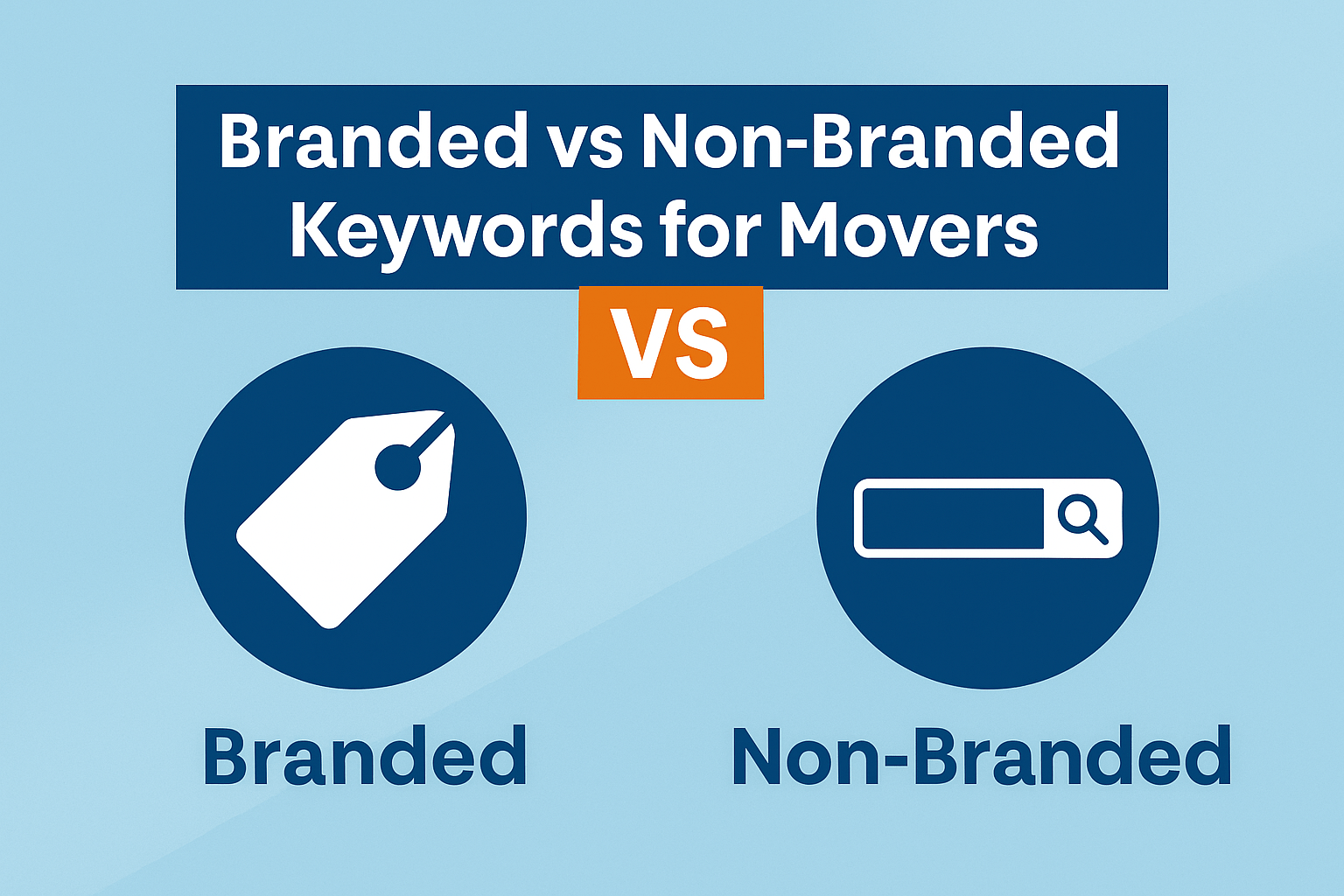
Branded Keywords
Branded keywords include your company’s name or unique branded terms — for example:
- “Best Moving Leads Providers”
- “Best Moving Leads Providers reviews”
- “[Your Moving Company Name] moving quotes”
These searches show that users already know your business and are intentionally seeking you.
Branded keywords typically indicate strong brand recognition and trust. They often convert at a higher rate because users already have familiarity or intent to book. Ranking for your branded terms ensures loyal customers can find you easily and helps prevent competitors from stealing your traffic through paid ads.
Key benefits of branded keywords:
- Lower competition and lower cost-per-click (CPC)
- Higher conversion rates
- Greater trust and customer loyalty
- Reinforced brand recognition
Non-Branded Keywords
Non-branded keywords describe your services but do not include your company’s name. For example:
- “local moving companies near me”
- “long-distance movers”
- “affordable packing and moving services”
- “moving company SEO”
These searches represent a broader audience — people looking for movers but not yet committed to a specific company. Targeting non-branded keywords allows your business to attract new potential customers who may never have heard of you before.
Key benefits of non-branded keywords:
- Higher search volume and visibility
- Expanded reach to new audiences
- Opportunities to convert users early in the buying journey
- Stronger organic ranking potential across related searches

Branded vs. Non-Branded: Which Performs Better?
Both keyword types serve different purposes in your marketing funnel. Let’s break down how each performs based on four key criteria — visibility, competition, cost, and conversions.
| Criteria | Branded Keywords | Non-Branded Keywords |
|---|---|---|
| Visibility | Limited to people who know your brand | Broader audience reach |
| Competition | Low (unique to your business) | High (many companies targeting) |
| Cost (CPC) | Usually cheaper | Often more expensive |
| Conversions | Higher — intent-driven | Lower — early research stage |
Summary:
Use branded keywords to protect your brand identity, convert loyal customers, and lower ad costs. Use non-branded keywords to expand your visibility and attract new leads. The best results come from a balanced mix of both.
Understanding Search Behavior for Moving Services
People use different search terms based on where they are in their decision-making process. For example:
- Informational searches (early stage): “how to choose a moving company”
- Transactional searches (ready to act): “book local movers near me”
- Branded searches (final stage): “Best Moving Leads Providers contact”
By analyzing these patterns, you can tailor your keyword strategy to target users at every stage of the funnel — from awareness to booking.
Examples of high-performing non-branded keywords for movers:
- “top-rated long-distance movers”
- “moving quotes in [City]”
- “licensed movers near me”
- “professional packing and storage services”

How to Refine Your Keyword Strategy
A strong keyword strategy combines research, monitoring, and continuous optimization. Here’s how to get started:
1. Use SEO and Keyword Tools
Leverage tools like Ahrefs, SEMrush, and Google Keyword Planner to analyze search volume, competition, and trends.
2. Balance Both Keyword Types
Branded keywords strengthen your authority, while non-branded terms expand your reach. Use both to cover every customer touchpoint.
3. Optimize Your Website Content
Integrate target keywords naturally into your headlines, meta descriptions, blogs, and landing pages. Avoid keyword stuffing, focus on clarity and user intent.
4. Track Keyword Performance
Use Google Search Console or analytics dashboards to monitor ranking changes, click-through rates, and conversions from each keyword group.
5. Refresh and Update Regularly
Search trends change. Review your keyword strategy quarterly and adjust your campaigns based on performance and seasonality.
Brand Bidding 101: Protecting Your Brand in PPC
In competitive markets, other moving companies might bid on your brand name in Google Ads — meaning their ad could appear when someone searches for your business.
To protect your leads and brand reputation:
- Run PPC ads on your branded keywords
- Use ad copy emphasizing authenticity (e.g., “Official Site,” “Licensed Movers”)
- Monitor competitor activity regularly
Brand bidding ensures that you dominate the results page for your own company name and don’t lose clicks to competitors.

Finding the Perfect Balance for Maximum Impact
So, which works best for movers?
Both branded and non-branded keywords are vital. Branded keywords convert your warm leads into customers, while non-branded ones attract new prospects and grow awareness.
A balanced strategy helps you:
- Dominate local search results
- Protect your brand from competitors
- Improve cost efficiency
- Drive consistent, high-quality traffic year-round
Whether you’re optimizing SEO content or running PPC ads, using both keyword types ensures your moving company reaches the right people at the right time, and keeps your bookings flowing.
Final Takeaway
Keyword strategy is the backbone of every successful moving company marketing campaign. By blending branded and non-branded keywords effectively, you can expand your reach, strengthen brand recognition, and drive more high-intent leads directly to your site.
If you’re looking to improve your keyword strategy and generate consistent moving leads, Best Moving Leads Providers can help you refine your campaigns and achieve better results with every click.