
Top 2026 Digital Marketing Trends for Moving Companies
In the moving industry, standing still means falling behind. With rapidly evolving tech, changing customer expectations and shifting demand—any company relying on outdated marketing will get left behind.
For moving companies to grow in 2026, they need to embrace fresh strategies that connect with today’s audiences while preparing for tomorrow’s. Here are the top digital marketing trends for 2026 you should act on now to stay ahead.
1. AI-Powered Personalization Becomes Standard
Artificial intelligence is no longer optional, it’s becoming the backbone of marketing workflows. In 2026, marketers expect AI to handle everything from content creation to targeting and ad adaptation.
What this means for movers:
- Use AI to analyze your website and CRM data to identify which moving-services pages convert best—and then tailor ad creative accordingly.
- Automate messaging: send personalized quotes or follow-ups triggered by customer behavior (e.g., “checked our long-distance move page 3 times → send special offer”).
- Optimize ads dynamically: for example, platforms like Meta are reportedly working toward fully automating ad creation and targeting by 2026.
By integrating AI into your workflows, you’ll deliver more relevant customer experiences and gain operational efficiency.
2. Short-Form & Interactive Video Dominates
Video has already been a key part of digital marketing, but in 2026 the emphasis shifts to short, interactive, mobile-first content.
For your moving business:
- Create 15-30 second clips of your crews packing, loading, or handing over keys — these build trust quickly.
- Use live-streams or “day in the life” videos on social channels to show behind-the-scenes reliability.
- Embed interactive elements—polls, swipe up, quizzes (“What size move are you doing today?”)—to keep viewers engaged.
- Optimize videos for multiple platforms (Instagram, TikTok, YouTube Shorts) and ensure they are vertical format and mobile-friendly.
This kind of content appeals to modern consumers who scroll fast and expect value in seconds.

3. Voice & Visual Search + Generative Engine Optimization (GEO)
Search is evolving beyond typed keywords. Voice queries and image-based search are gaining traction, and large-language-model-driven platforms are beginning to impact how users discover services.
Actionable steps for movers:
- Optimize your site for conversational search queries: e.g., “Who moves one-bedroom apartments in Chandigarh next week?”
- Include high-quality images and alt-text for your moving process, team photos and trucks—so visual search can pick you up.
- Monitor mentions of your business in AI-answer engines (like chatbots or assistants) and aim to appear as trusted sources.
By preparing for the future of search, you’ll capture leads earlier in the decision cycle.
4. Privacy-First, First-Party Data & Trust Marketing
With regulations tightening and users more aware of data privacy, brands that respect data earn trust—and business.
Why it matters for movers:
- Collect first-party data (site visitors, leads, existing customers) and use it to nurture repeat business.
- Be transparent with how you use data—this builds credibility in a trust-based industry like moving.
- Position your marketing around reliability, professionalism and transparency—not just price.
Trust isn’t a bonus; in 2026 it’s a requirement.

5. Hyper-Local & Niche Targeting in a Slower-Moving Market
Population growth is slowing in many regions, meaning fewer large relocations and increased competition for jobs. As a result, movers must refine their targeting. You’ll see more focus on: renters, urban moves, single-room relocations, assisted-living moves, etc.
Strategy adjustments:
- Target micro-areas or ZIP-codes rather than broad regions.
- Create niche service offerings (e.g., “Apartment moves under 1000 sq ft”, “Senior relocation specialists”) and market them directly.
- Use data to identify segments with higher conversion rates rather than blanket targeting.
When demand shrinks, precision becomes your greatest advantage.
6. Omnichannel Experience & Seamless Integration
Customers expect a consistent experience across website, social, chat, calls, email and mobile. Omnichannel isn’t optional—it’s table-stakes.
For your business:
- Ensure your website, quoting tool, live chat, phone system and CRM are integrated.
- Use unified dashboards so every lead is tracked seamlessly no matter how they arrived (ad, walk-in, call, chat).
- Make the booking process as easy on mobile as desktop—mobile accounted for ~58% of traffic recently.
A seamless journey = higher lead conversion + fewer drop-outs.

7. Influencer, Creator & Community Marketing
Influence marketing is no longer just for big brands. For moving companies, partnering with creators in home-improvement, rental living, real-estate or lifestyle niches adds authenticity and reach.
How you can leverage it:
- Collaborate with a local real-estate YouTuber to film a move with you — the creator’s audience sees your business in action.
- Use micro-influencers (1k–10k followers) in your service area to share packing tips and mention your brand.
- Run community-focused campaigns (e.g., “Move for good” events, local sponsorships) — building long-term trust and referrals.
In 2026, personal endorsement plus community relevance equals competitive advantage.
8. Purpose-Driven Marketing & Sustainable Practices
Modern consumers care about values and ethics. Moving companies that highlight sustainable practices, local community involvement or customer-centric missions will stand out.
For your brand:
- Use eco-friendly packaging or fuel-efficient vehicles and tell the story.
- Highlight how you support local charities or reduce waste.
- Share stories of how you made moving easier for someone or helped a charity relocation.
Purpose sells. It builds emotional connection that converts leads into loyal customers.
9. Programmatic Advertising & Automation
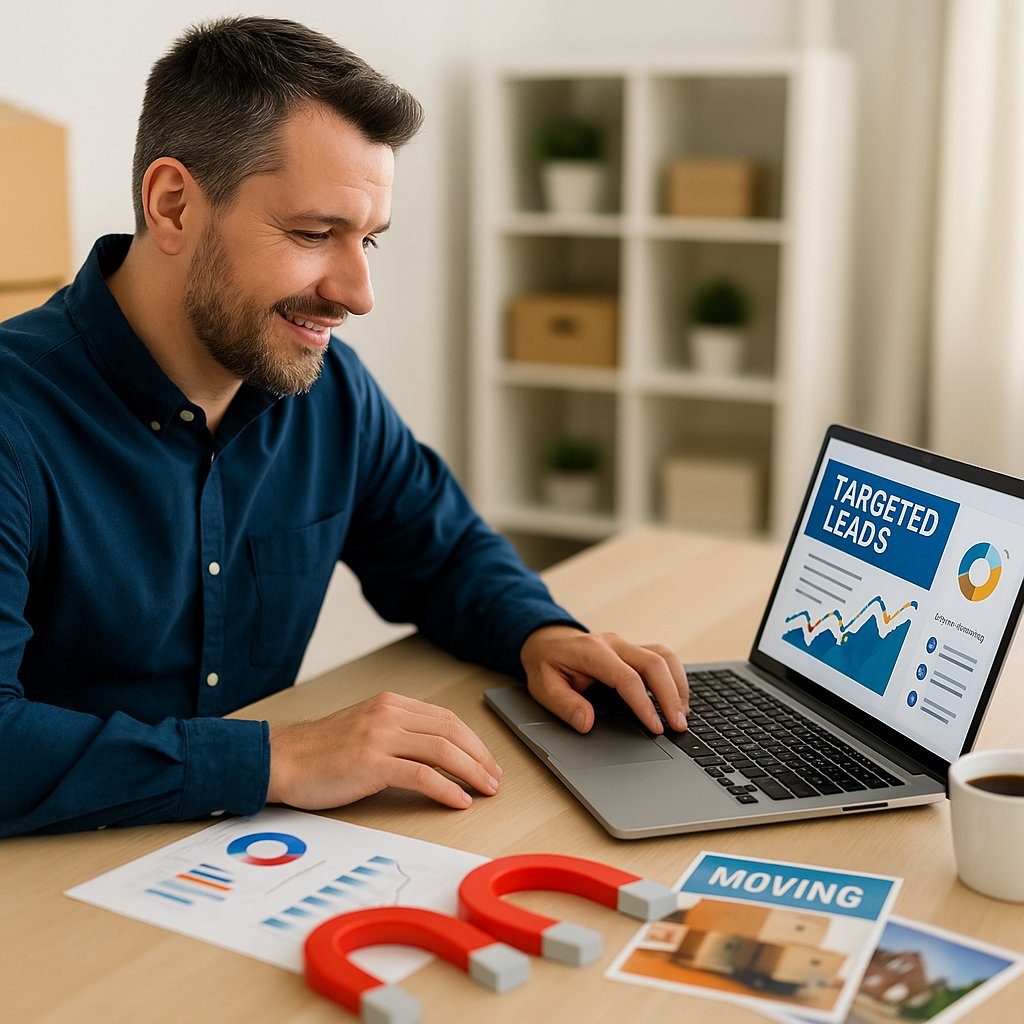
Automation in ad buying, targeting and creative generation is becoming more accessible and expected.
What movers should do:
- Use programmatic platforms to run ads targeting moving-related queries or user behaviour (e.g., “just signed lease”, “house sold”).
- Test and optimize creatives automatically rather than manually changing every detail.
- Use automation to manage dull tasks (budget allocation, ad rotation, dynamic creative) and focus your team on strategy.
As ad costs rise, automation gives you efficiency and scale.
10. Analytics, Adaptation & Continuous Learning
Finally, one of the most critical trends: being data-driven and agile. The marketing environment changes fast — you must track, learn and adapt. Research shows investment in owned media and events is rising in 2026.
For moving companies:
- Track lead sources (ads, chat, direct traffic), booking conversion and customer lifetime value.
- Monitor engagement on new formats (short-form video, live chat, AI tools).
- Be prepared to pivot: if one channel underperforms, shift budget quickly.
- Stay updated on new technologies (AR, voice/video search, generative AI) and experiment with pilot campaigns.
The movers who win in 2026 are those who learn quickly and evolve even faster.

Final Thoughts: Prepare Now, Dominate Tomorrow
2026 isn’t just another year—it’s a tipping point for digital marketing in the moving industry. The companies that adopt smart strategies now will dominate their markets tomorrow.
From AI-driven personalization, short-form video, voice & visual search, privacy-first data practices, to niche targeting, omnichannel execution, creator partnerships, purpose-led branding, automation, and data agility — you have a full roadmap ahead.
At Best Moving Leads Providers, we help moving companies implement these trends in real-world campaigns that deliver leads, bookings and growth. If you’re ready to get ahead of the competition and prepare for the next era of moving, contact us today for cutting-edge lead strategies and marketing implementation.