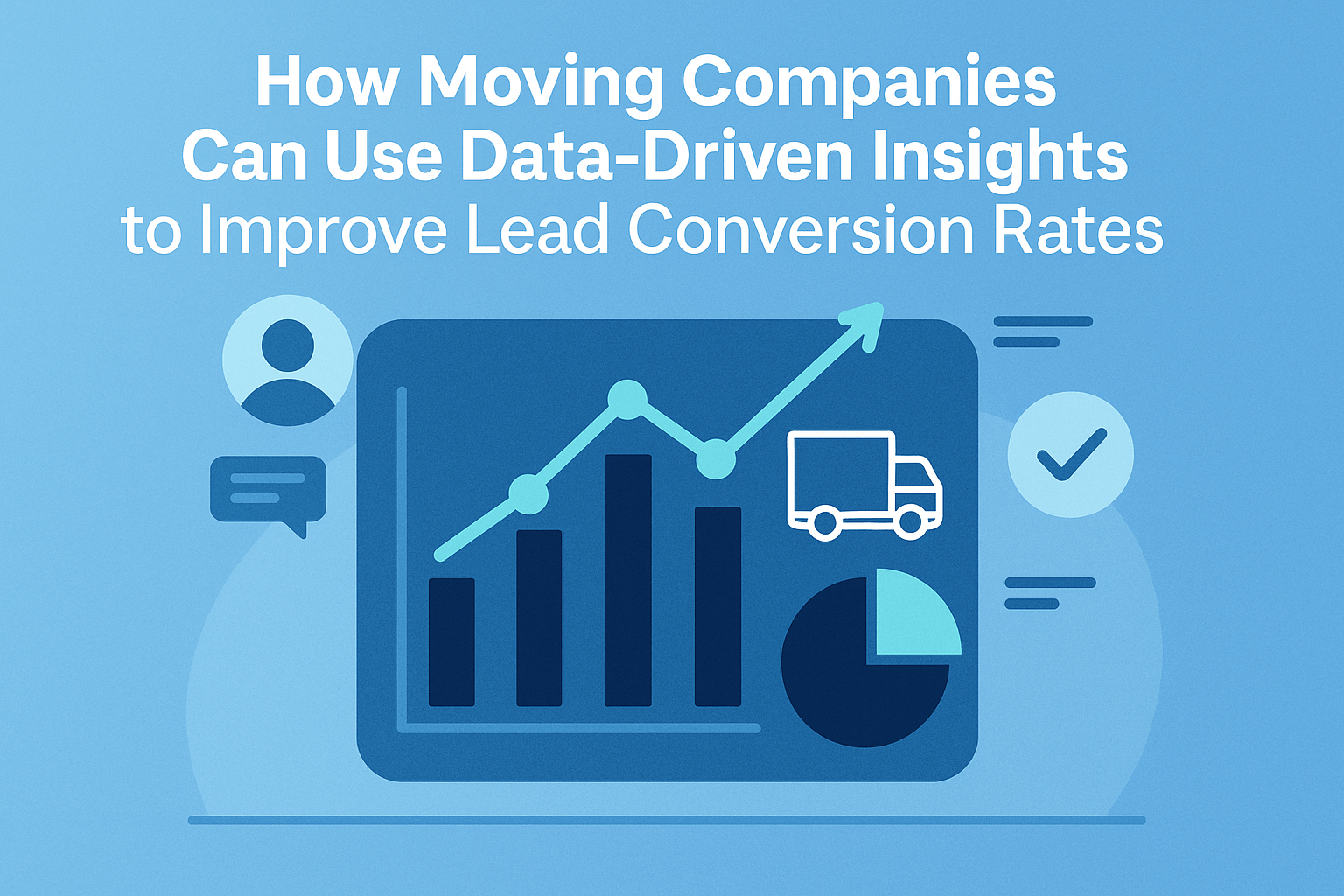
How Moving Companies Can Use Data-Driven Insights to Improve Lead Conversion Rates
For moving companies, generating leads is only half the battle. The real challenge lies in converting those leads into paying customers. Many movers buy leads in bulk, spend money on ads, or rely on referrals, but without the right systems in place, they often waste valuable opportunities. This is where data-driven insights come into play.
By using data strategically, movers can identify patterns, improve sales strategies, and dramatically increase conversion rates. In this guide, we’ll explore how moving companies can leverage data at every stage of the customer journey to close more deals and grow their business.
Why Data Matters in Lead Conversion
In the past, moving companies relied on instinct, experience, or trial-and-error to figure out how to handle leads. While intuition is valuable, it often leads to inconsistent results. Data, on the other hand, provides concrete evidence about what works and what doesn’t.
- Data reveals which leads are worth pursuing and which are less likely to convert.
- It shows how quickly sales reps should respond and the best channels to reach customers.
- It uncovers trends in customer behavior, such as when people are most likely to book.
By analyzing these insights, movers can shift from guesswork to a proven system that consistently drives conversions.

Step 1: Tracking the Right Lead Data
The first step in becoming data-driven is collecting the right information. Too many moving companies track only basic details like name, phone number, and move date. While necessary, this alone won’t help improve conversions.
Key Data Points to Track:
- Source of the Lead – Did it come from Google Ads, Facebook, referrals, or a lead provider?
- Lead Type – Local move, long-distance move, or commercial relocation.
- Response Time – How long did it take your team to make first contact?
- Follow-Up Attempts – Number of calls, texts, and emails made.
- Conversion Outcome – Booked, declined, no response, or already hired another mover.
When this information is tracked consistently, patterns start to emerge.
Step 2: Using Analytics to Identify High-Value Leads
Not all leads are created equal. Some are just browsing, while others are ready to book immediately. By applying analytics, movers can separate high-value opportunities from time-wasters.
How Analytics Helps:
- Lead Scoring Models – Assign scores to leads based on factors like distance, budget, or move urgency.
- Channel Performance Reports – Compare conversion rates from Google Ads vs. Facebook vs. third-party providers.
- Customer Profiles – Analyze which types of customers (families, students, corporate relocations) convert most often.
With this data, movers can invest more in the lead sources that deliver results while avoiding wasted spend.

Step 3: Optimizing Response Time with Data
Response time is one of the most critical conversion factors. Data consistently shows that leads contacted within five minutes are several times more likely to convert than those contacted after an hour.
Example:
- Leads contacted in under 5 minutes: 40% higher conversion rate.
- Leads contacted after 30 minutes: 80% less likely to book.
By measuring average response times across the team, movers can identify bottlenecks and implement automation — such as instant text confirmations or auto-dialing — to ensure no opportunity is missed.
Step 4: Personalizing Follow-Ups Based on Insights
Data doesn’t just tell movers when to follow up; it also shows how. For example:
- If data shows that customers in urban areas prefer texts over calls, movers can shift communication strategies.
- If long-distance leads respond better to detailed email estimates, sales reps can adjust their follow-up approach.
This level of personalization builds trust and makes leads feel understood, which increases the likelihood of conversion.

Step 5: Refining Sales Team Performance with Metrics
Data can also be used to improve the performance of the sales team. Movers should measure not just how many calls are made, but how effective each rep is at closing deals.
Key Metrics to Track:
- Call-to-Quote Ratio – How many conversations lead to estimates?
- Quote-to-Booking Ratio – How many estimates convert into jobs?
- Individual Close Rates – Who on your team is converting best, and why?
By identifying top performers, companies can replicate their techniques across the entire team.
Step 6: Predictive Insights for Smarter Decisions
Beyond analyzing past performance, movers can use predictive analytics to forecast future outcomes. For example:
- Anticipating seasonal demand surges (like summer moving season).
- Predicting which lead sources will perform best in a specific city.
- Estimating conversion probabilities before even making the first call.
This allows moving companies to allocate resources, adjust budgets, and prepare staffing levels more accurately.

Practical Tools Movers Can Use
To implement a data-driven approach, movers should consider adopting technology that simplifies tracking and analysis.
- CRM Systems: Tools like HubSpot, Zoho, or specialized moving CRMs can centralize lead data.
- Analytics Platforms: Google Analytics and ad dashboards reveal channel performance.
- Call Tracking Software: Tracks which phone calls came from which campaigns.
- Automation Tools: Enable instant responses and follow-up sequences.
By integrating these tools, movers can build a seamless data ecosystem that continuously improves conversion rates.
Final Thoughts
Data is no longer optional in the moving industry. It has become a key to scaling efficiently and staying competitive. By tracking the right metrics, analyzing customer behavior, and using predictive insights, moving companies can stop wasting time on unqualified leads and start focusing on the opportunities that actually drive revenue.
The movers who embrace a data-driven approach will consistently book more jobs, close more deals, and grow faster than those still relying on guesswork.
The future of lead conversion isn’t about calling more leads, it’s about calling the right leads at the right time with the right message. And data makes that possible.