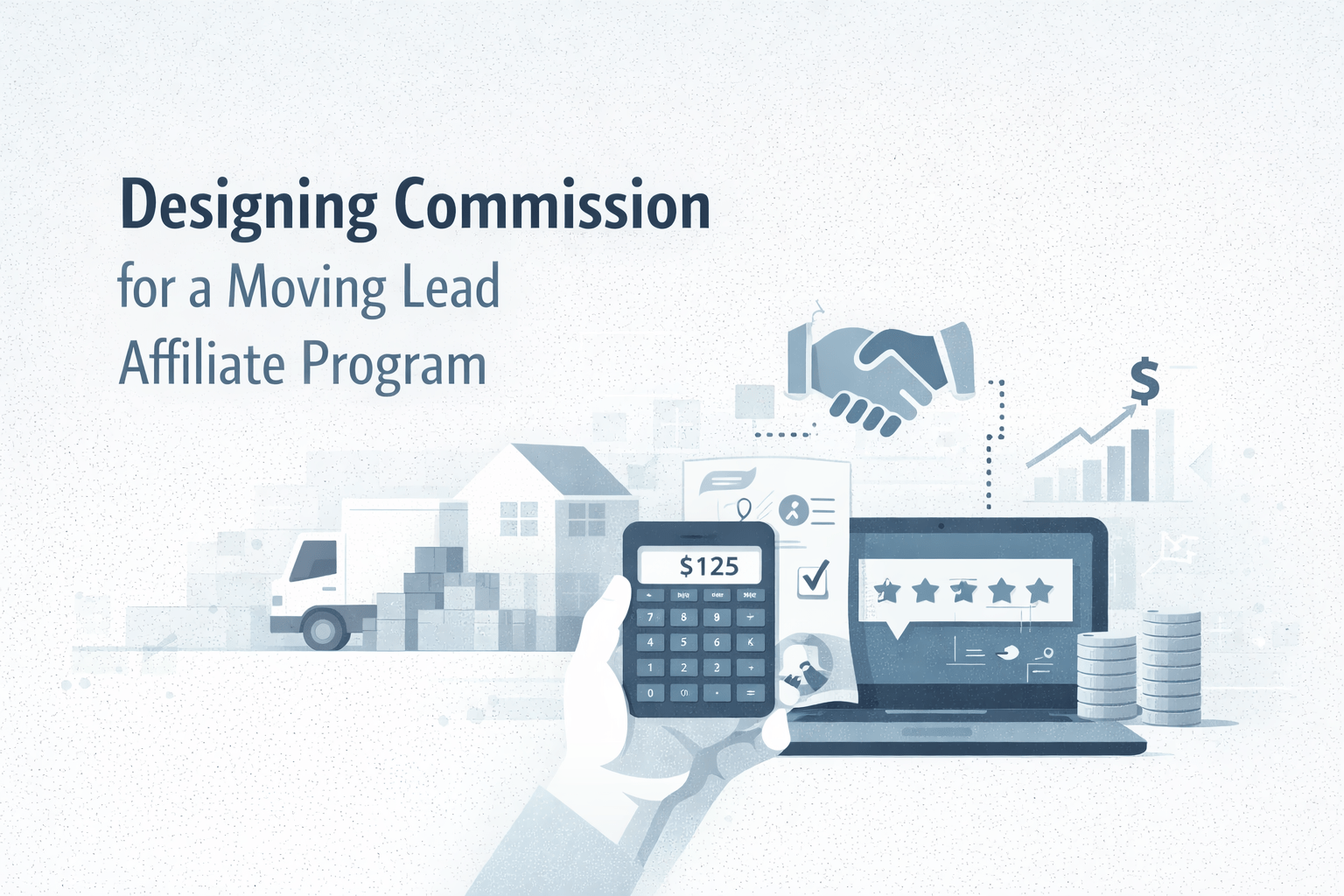
Designing Commission Structures for a Moving Lead Affiliate Program
If you’re building an affiliate program to generate moving leads, the commission structure is the engine. Set it up correctly, and affiliates will send you consistent, high-quality opportunities that book into real revenue. Get it wrong, and you’ll either overpay for low-intent leads or underpay so much that no serious publisher wants to work with you.
The tricky part is that moving is not like ecommerce. You don’t have a simple “add to cart” and instant sale to track. Your sales cycle involves calls, estimates, schedule availability, and job completion. That’s why commission design in the moving industry must balance three goals:
- Attract affiliates with an offer they can monetize
- Protect your margins so campaigns remain profitable
- Incentivize quality (booked moves), not just volume (raw leads)
At Best Moving Leads Providers, we work with movers and marketers who want scalable lead systems that don’t collapse under poor-quality traffic. This guide breaks down payout models you can use, how to match payouts to move value, and incentive structures that motivate affiliates to send better leads over time.
Start With Your Unit Economics (Before You Pick a Payout Model)
Before you set any commission numbers, define what a lead is worth to your business.
A simple framework:
- Average revenue per booked job (by service type)
- Gross margin after labor, fuel, trucks, and packing materials
- Close rate from lead to booked move
- No-show/cancellation rate
- Average cost to generate leads from other channels (Google Ads, LSA, broker leads)
Example thinking (not fixed numbers): if your average booked local move is worth X in revenue and your margin is Y%, then you can afford a lead cost that leaves room for overhead and profit. If your close rate is 20%, then your cost-per-lead must be low enough that 5 leads don’t exceed what you can sustainably pay to acquire one job.
Affiliate programs become profitable when commission design starts from economics, not from what “sounds fair.”
The Core Payout Models for Moving Lead Affiliate Programs
Affiliate commissions generally fall into a few main models. Most successful programs use one model as the base and add performance bonuses to push quality.
1) Pay-Per-Lead (PPL)
You pay a fixed amount for each qualified lead the affiliate sends.
Best for: movers who want predictable acquisition costs and faster affiliate adoption.
How to structure it for quality
A PPL program only works if “qualified lead” is clearly defined. Requirements often include:
- Service area match (zip codes you cover)
- Valid phone number and email
- Move date within an acceptable window
- Move type and size captured (apartment/house, bedrooms, etc.)
- Duplicate lead rules (no repeats within X days)
Pros
- Simple for affiliates to understand
- Predictable budgeting for you
- Easy to scale volume
Cons
- Can incentivize quantity over quality if validation is weak
- Affiliates may chase cheap traffic sources that don’t book
Pro move: Use tiered PPL rates: higher payouts for leads with complete details (move date, size, addresses) and lower payouts for minimal data leads.
2) Pay-Per-Call (PPCall)
You pay when the affiliate drives a phone call meeting defined criteria (e.g., minimum duration).
Best for: movers who close well on the phone and want higher-intent inquiries.
Key qualification controls
- Minimum call duration (often 60–120 seconds)
- Exclude wrong numbers and spam
- Time-of-day restrictions (so calls occur when you can answer)
- Geo-validation (caller location or stated pickup location)
Pros
- Calls often have higher intent than forms
- Strong fit for local movers where speed wins bookings
- Easier to filter low-quality “clickers”
Cons
- Requires reliable call tracking
- Some calls are “price-only” shoppers
- Quality varies by affiliate traffic source
Pro move: Pay more for longer calls or calls that reach a live agent (not voicemail).
3) Percentage of Revenue (Revenue Share)
You pay affiliates a percentage of the revenue from the jobs they generate.
Best for: movers with strong CRM tracking and clear attribution.
Pros
- Aligns incentives with booked revenue
- Protects you from paying for non-booking leads
- Encourages affiliates to send leads likely to close and spend more
Cons
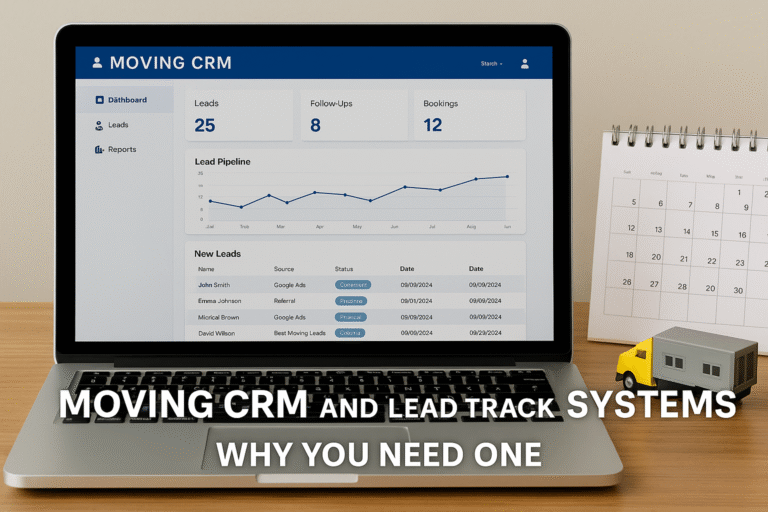
- Requires clean tracking from lead → booking → job completion
- Slower payouts (affiliates may wait weeks)
- Harder to sell to smaller affiliates who need faster cash flow
Pro move: Pay a small “lead stipend” plus a smaller revenue share. That reduces affiliate cash-flow pain while keeping incentives aligned with real outcomes.
4) Pay-Per-Booking (Cost Per Acquisition / CPA)
You pay a flat fee only when a move is booked (or completed).
Best for: movers who want to tightly control risk.
Pros
- High efficiency and low waste
- Easy to calculate profitability
- Great for mature programs with proven attribution
Cons
- Hard for affiliates to accept without trust and tracking
- Requires a strong sales process on your side
- Disputes can arise (“we sent the lead, why wasn’t it booked?”)
Pro move: Define booking clearly: booked and deposit paid, or booked and job completed. The stricter you are, the more you’ll need to compensate affiliates with higher payouts to keep them motivated.
5) Hybrid Models (Most Practical for Movers)
Many moving affiliate programs succeed with hybrid models, such as:
- Lower PPL + bonus for booked jobs
- PPCall + revenue share for completed moves
- Base monthly sponsorship + performance payout
Hybrid structures let you balance predictability and performance alignment.
Designing Tiered Commissions to Incentivize Quality
If you want affiliates to prioritize quality, build tiers. A flat payout is easy to exploit. Tiers reward partners who send bookable leads.
Here are tier concepts that work well in moving:
Tier by lead completeness
- Basic lead (name/phone + zip): lower payout
- Enhanced lead (move date + size + addresses): higher payout
Affiliates will optimize their forms and traffic to earn the higher tier.
Tier by geography or profitability zone
Not all service areas have the same cost structure. You can pay:
- Higher commission for premium zip codes or dense areas (less travel time)
- Lower commission for distant zones that reduce margins
This protects your operations while still scaling.
Tier by move type
If long-distance moves produce higher revenue, pay higher commissions for:
- Interstate or long-distance requests
- Packing add-ons
- Storage-related moves
Affiliates will emphasize those offers in their content.
Tier by performance outcomes
Once tracking is mature, pay more when:
- Leads reach an “estimate set” milestone
- Leads become booked jobs
- Booked jobs exceed a revenue threshold
This is the closest you can get to paying for results without scaring off affiliates with “bookings only.”
Bonus Incentives That Motivate Affiliates (Without Blowing Your Budget)
Affiliates love predictable upside. Bonuses can increase loyalty and drive effort—especially from content publishers who can feature you more prominently.
Smart bonus ideas:
- Volume bonus: extra payout after X qualified leads per month
- Quality bonus: extra payout if close rate exceeds a benchmark
- Seasonal bonus: higher payout during slow season to keep pipelines steady
- New-market bonus: incentive for affiliates who generate leads in a new city you’re expanding into
- Exclusive placement bonus: higher payout if you’re the only mover promoted in a given page/category (when appropriate)
Bonuses should be structured so you only pay more when you’re making more—either via volume that actually converts or outcomes that prove quality.
Guardrails: Preventing Fraud and Low-Quality Incentives
Commission structures can accidentally encourage the wrong behavior. Common risks include:
- Incentivized traffic that submits fake forms
- Duplicate submissions
- Misleading “bait” offers that create angry callers
- Affiliates bidding on your brand terms and cannibalizing your PPC
Protect your program with:
- Lead validation rules and automated filtering
- Clear compliance terms (no brand bidding unless approved)
- Geographic restrictions
- Call recording (where legal) for quality auditing
- Dispute and clawback policies for invalid leads
A strong affiliate program is as much about rules and enforcement as it is about payouts.
Payment Timing and Terms: The Often-Ignored Lever
Affiliates care about cash flow. Movers care about confirmed value. Your payment terms should balance both.
Common structures:
- Net 15 or Net 30 payouts for qualified leads/calls
- Holding periods for booking-based payouts (to reduce cancellations)
- Monthly reconciliation reports for transparency
If you run a revenue-share program, consider partial payouts at milestones:
- A small payout when the estimate is scheduled
- The remainder when the job is completed
This keeps affiliates motivated while keeping you protected.
How Best Moving Leads Providers Supports Affiliate-Driven Growth
Affiliate marketing can be a strong source of moving leads, but commission design only works if you have the right tracking, qualification standards, and conversion process behind it. Best Moving Leads Providers helps movers build predictable pipelines through exclusive and shared moving leads and marketing support that improves close rates—so every channel performs better. If you’re building an affiliate program, pairing it with disciplined lead handling and performance reporting is what turns commissions into profit.
Conclusion: Commission Structures Should Reward Outcomes, Not Just Activity
The best affiliate commission structures in the moving industry do two things at once: they’re simple enough for affiliates to adopt, and they’re smart enough to reward quality over volume. Start with your unit economics, choose a base payout model that matches your tracking maturity, and add tiers and bonuses that push affiliates toward bookable, profitable leads.
When affiliates win and you win, the relationship scales. That’s the goal—not just “more leads,” but a channel that reliably produces booked moves without eroding your margins.