The Future of AI-Powered Pay-Per-Call for Movers
For moving companies, pay-per-call has already proven itself as one of the most valuable lead generation models available. A live phone conversation often signals stronger intent than a form fill, a casual website visit, or a social media click. When a prospect is ready to talk, ask questions, and discuss their move in real time, the path to conversion becomes much shorter.
But the future of pay-per-call is not just about generating more calls. It is about making those calls smarter.
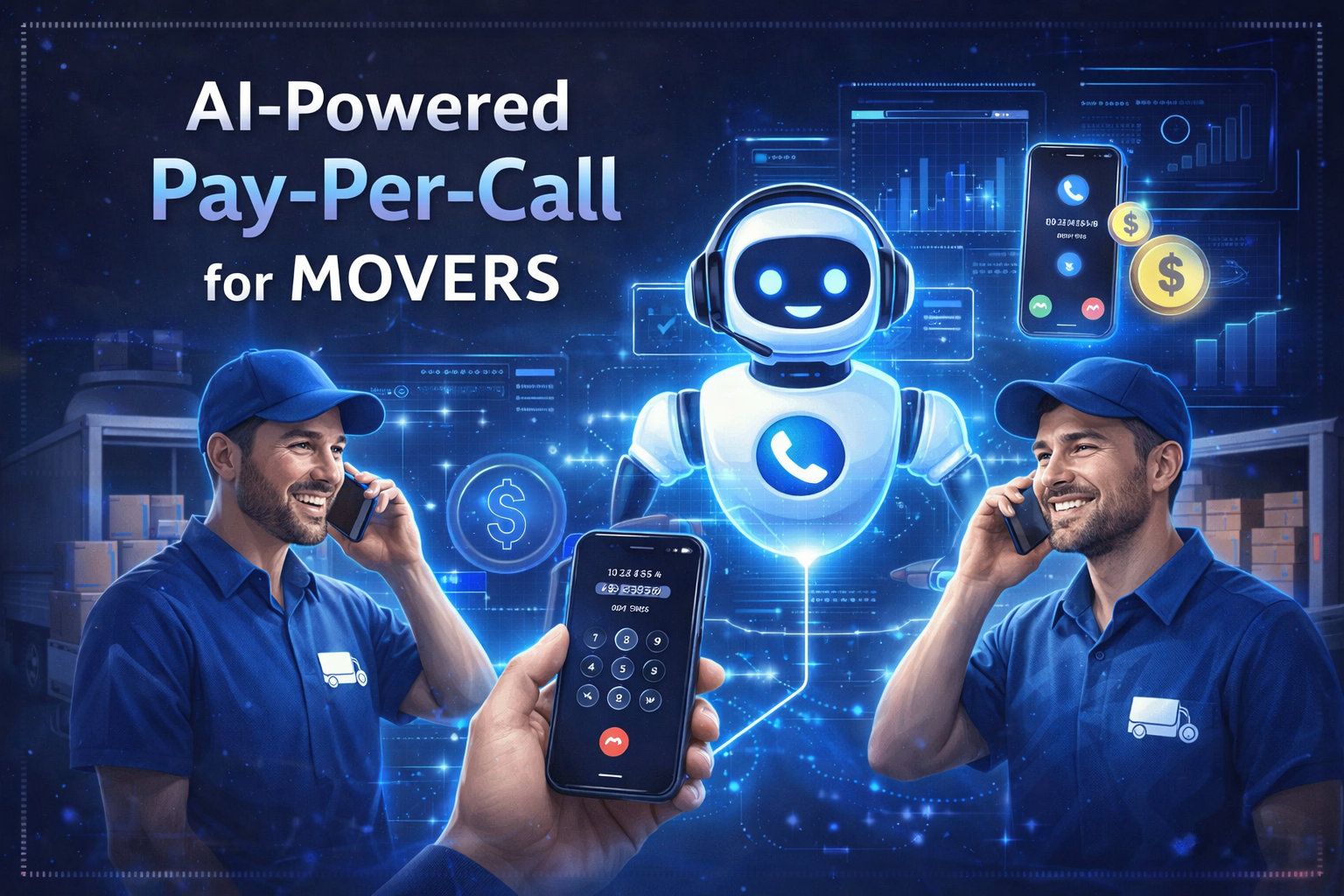
Artificial intelligence is beginning to reshape how moving businesses handle live transfer campaigns, from the moment a call is routed to the way conversations are analyzed after they end. Over the next several years, AI-driven call routing, voice analytics, and predictive lead scoring are likely to become central tools for movers that want better efficiency, stronger close rates, and more value from every inbound opportunity.
At Best Moving Leads Providers, we see AI-powered pay-per-call as the next major evolution in moving lead generation. The companies that adopt these tools strategically will not just answer more calls. They will qualify better opportunities faster, improve sales performance, and build more intelligent live transfer systems from end to end.

Why Pay-Per-Call Is a Strong Fit for AI Innovation
The moving industry is a natural environment for AI-enhanced call marketing. Every live transfer lead contains layers of valuable information: move type, location, urgency, budget signals, service needs, emotional tone, and buying intent. Traditionally, much of that information depends on how well a call rep listens, how accurately notes are entered, and how consistently leads are followed up afterward.
That process still matters, but it leaves room for missed opportunities.
AI changes the equation by making live transfer campaigns more data-driven. Instead of relying only on human judgment in the moment, moving companies can begin using intelligent systems that evaluate calls in real time, route them based on fit, and analyze patterns that improve performance across the full campaign.
For movers, this means better decisions during and after every conversation. It also means a shift away from treating each call as an isolated event. With AI, every call becomes a source of insight that can improve the next one.
AI-Driven Call Routing Will Become More Precise
One of the most important developments in the future of pay-per-call is smarter call routing. Today, many live transfer systems route calls based on basic criteria such as location, availability, time of day, or broad campaign settings. That works, but it is often too simplistic for the complexity of moving leads.
AI-driven routing has the potential to become much more nuanced.
Instead of sending calls to the next available rep or a general sales queue, future systems will likely evaluate factors such as move distance, service type, lead urgency, language preference, past caller behavior, and even the probability of conversion based on initial call signals. A local apartment move may be routed differently than a long-distance family relocation. A commercial move inquiry may go directly to a specialist. A high-intent lead asking for same-week service may be prioritized over lower-urgency inquiries.
This kind of intelligent routing can improve both customer experience and sales efficiency. The caller reaches the right person faster, and the moving company spends less time filtering mismatched leads manually.
For businesses running high-volume live transfer campaigns, this will be especially valuable. Better routing means better use of sales talent, faster response alignment, and fewer wasted handoffs.

Voice Analytics Will Change How Movers Understand Calls
Voice analytics is another area likely to transform pay-per-call lead generation for movers. In the past, call review has usually been manual. Managers listen to recordings, evaluate rep performance, and try to identify patterns through sampling. That approach can work, but it is time-consuming and incomplete.
AI-powered voice analytics makes it possible to extract far more value from every conversation.
These tools can identify keywords, objection patterns, tone shifts, emotional cues, interruptions, talk-to-listen ratios, and buying signals across large numbers of calls. Instead of guessing why certain calls convert and others do not, movers can begin to see clearer trends. They may learn that callers asking about storage are more likely to book when certain information is introduced early. They may discover that leads discussing tight timelines respond better to a different pitch structure. They may notice that calls with stronger empathy language correlate with higher close rates.
This kind of visibility can improve both training and campaign strategy. Sales teams can refine scripts based on real call data, not assumptions. Marketing teams can identify which traffic sources generate stronger conversations. Managers can coach more effectively because they are working from clearer evidence.
For moving companies, voice analytics could become one of the most important tools for improving live transfer ROI.
Predictive Lead Scoring Will Help Prioritize Better Opportunities
Not every live transfer lead has the same value. Some callers are ready to book quickly. Others are still exploring options. Some fit your ideal service area and job type. Others are poor matches that drain sales time.
This is where AI-driven lead scoring is likely to play a much larger role in the future.
By analyzing call content, caller behavior, move characteristics, historical outcomes, and CRM data, AI systems can assign a quality score to leads more accurately and more quickly than traditional manual tagging. A call discussing a specific move date, confirmed service area, large household inventory, and urgency may score much higher than a vague inquiry with weak buying intent.
That score can then shape what happens next. High-scoring leads can be escalated for rapid follow-up, prioritized by experienced closers, or moved into premium nurture sequences. Lower-scoring leads can still be handled professionally, but with workflows that better match their likelihood to convert.
For movers, this kind of prioritization matters because sales time is limited. When teams know which live transfer leads deserve immediate attention, close rates can improve without simply increasing call volume.
At Best Moving Leads Providers, we believe lead generation is no longer just about quantity. The future belongs to movers that can identify, route, and respond to the best opportunities with greater precision.

AI Will Improve Rep Coaching and Sales Consistency
Another major shift ahead is how AI will support coaching for call handlers and sales teams. In many moving companies, rep performance varies widely. Some team members naturally build trust, handle objections well, and qualify leads effectively. Others struggle to maintain consistency.
AI can help close that gap.
By analyzing large sets of recorded calls, future systems will likely identify patterns linked to successful outcomes and turn those insights into coaching recommendations. Managers may receive alerts when a rep talks too much, fails to confirm key details, skips a critical trust-building step, or misses a buying signal. They may also see which phrases, tones, and call structures are associated with stronger conversion rates.
This can make training far more practical. Instead of vague advice like “build more rapport,” coaching can become tied to specific moments in real conversations. That leads to better improvement and a more consistent customer experience across the team.
For live transfer campaigns, consistency is critical. When every incoming call is expensive and high-intent, small differences in call handling can have a major impact on profitability.
AI May Create More Personalized Caller Experiences
As AI systems evolve, pay-per-call experiences may also become more personalized before the live rep even joins the conversation. In the near future, intelligent systems could gather pre-call context, interpret speech quickly, and adapt the opening flow based on what the caller appears to need.
For example, a caller asking about a long-distance move from one state to another could be identified and tagged immediately. A prospect calling after business hours could receive a smarter AI-assisted intake experience that preserves momentum until a rep follows up. Someone showing urgency and strong buying signals could be fast-tracked to priority handling.
This does not mean human reps disappear. In moving, human trust still matters too much for that. But it does mean AI can shape the experience around the rep, making every conversation more informed and more relevant from the first seconds.
That level of personalization will likely become a competitive advantage, especially for movers handling multiple lead types and service categories.

Better Attribution Will Improve Campaign Decisions
AI is also likely to improve how movers evaluate the performance of pay-per-call campaigns. Many businesses still judge live transfer efforts by simple counts such as number of calls, average duration, or booked jobs. Those metrics matter, but they do not always reveal the full picture.
With AI, attribution can become more sophisticated. Moving companies may be able to connect source quality, conversation quality, lead score, rep performance, and final sale outcomes more clearly. This helps answer better questions. Which campaign sources are producing the most bookable calls? Which call traits are linked to long-distance jobs versus local jobs? Which transfer partners are generating stronger revenue, not just more volume?
Those insights can help movers spend smarter. Instead of increasing budgets blindly, they can optimize toward the sources and call patterns that actually produce profitable business.
The Human Element Will Still Matter Most
Even with all of these advances, the future of AI-powered pay-per-call for movers is not about replacing people. It is about making people more effective.
Moving is an emotional purchase. Customers are often stressed, rushed, uncertain, and protective of their belongings. They want reassurance, empathy, and real answers. AI can support that process with routing, analytics, and prioritization, but human conversation will remain at the center of conversion.
The most successful moving companies will be the ones that combine both strengths. They will use AI to handle complexity, improve speed, and surface better insights, while relying on trained sales professionals to build trust and close the opportunity.
That balance is what will define the next stage of live transfer success.
Conclusion
The future of AI-powered pay-per-call for movers is about far more than automation. It is about smarter routing, deeper voice analytics, more accurate lead scoring, stronger coaching, and better campaign intelligence. These tools will help moving companies respond faster, prioritize better leads, and improve conversion across the entire live transfer funnel.
For movers investing in pay-per-call, this evolution matters. The companies that embrace AI strategically will gain a real advantage in efficiency and performance, not because they replace the sales conversation, but because they strengthen every part of it.
Best Moving Leads Providers helps moving companies stay ahead by combining high-quality lead generation with forward-looking marketing strategy. As AI continues to shape live transfer campaigns, movers that adapt early will be in a stronger position to capture better calls, convert more opportunities, and scale with greater confidence.