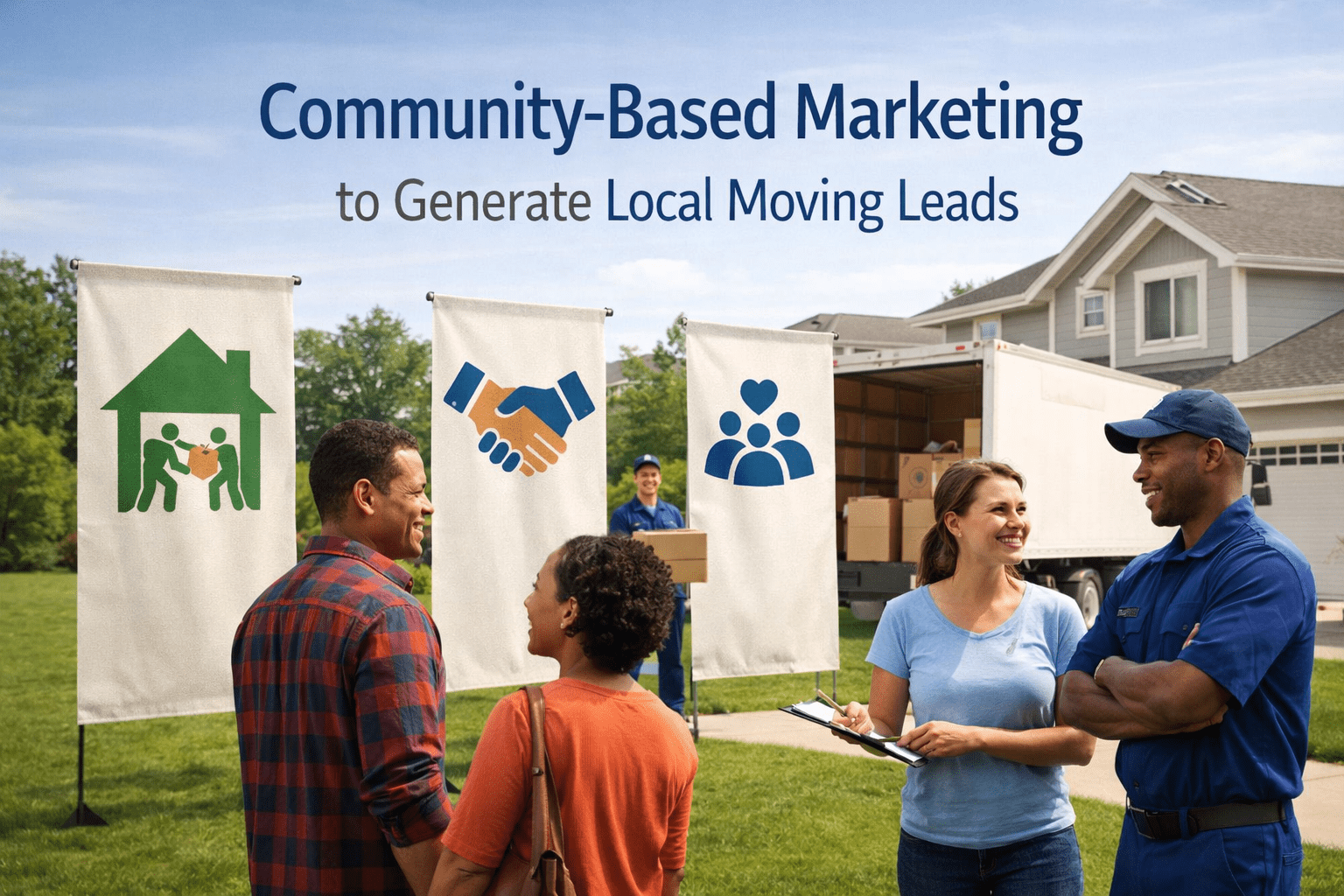
Community-Based Marketing to Generate Local Moving Leads
When moving companies talk about “marketing,” the conversation usually jumps straight to Google ads, SEO, or buying leads. Those channels absolutely work, especially when they’re managed well. But there’s another lead generation engine that many movers overlook because it feels slower, harder to measure, or “old school”: community-based marketing.
The truth is, local moving jobs don’t just come from search bars. They come from neighborhoods. From conversations at schools and churches. From real estate offices and storage managers. From community events where your brand becomes familiar long before someone needs to move. If your company can become the mover people recognize and trust in your service area, you’re not just generating leads, you’re building a reputation that feeds your schedule for years.
At Best Moving Leads Providers, we work with movers across a wide range of markets. The companies with the strongest long-term pipelines usually don’t rely on one channel. They combine online visibility with community presence so they show up everywhere a local move decision is made. This guide breaks down practical, repeatable ways to turn local involvement into real moving leads.
Why Community-Based Marketing Works for Movers
Moving is a high-trust purchase. Customers aren’t just buying transportation, they’re handing over their home, their valuables, and their peace of mind. That’s why brand familiarity is powerful. When someone has seen your logo at a youth sports field, heard your name from their Realtor, or watched you sponsor a neighborhood event, you’re no longer “a random mover.” You’re “the company I’ve seen around.”
Community marketing works because it reduces risk in the customer’s mind. It also creates multiple referral paths, which matters because many local moves happen quickly. When a customer needs a mover in 10 days, they don’t want to research 12 companies. They want a confident choice.
The other advantage: community-based marketing often produces leads that convert at a higher rate than cold traffic. A referral from a real estate agent or property manager comes pre-trusted. A neighbor recommendation after seeing your sponsorship banner is warmer than a click from a generic ad.

Start With a “Neighborhood Presence” Strategy
Before you sponsor anything or show up to events, define what “community” means for your business.
Think in terms of micro-areas: specific suburbs, neighborhoods, school districts, or towns that you want to own. It’s better to be well-known in three neighborhoods than invisible across twenty.
Once you have your target areas, build a presence plan:
- Which events do those residents attend?
- Which local businesses influence moving decisions?
- Which organizations have recurring calendars (sports leagues, schools, nonprofits)?
- Which neighborhoods have high turnover (apartments, military areas, new construction)?
Community-based marketing becomes much easier when it’s focused. Your goal isn’t to be everywhere. Your goal is to be remembered in the places where moves are most likely.
Participate in Local Events That Match Your Ideal Customer
Not every event is worth your time. The best events for movers are the ones with homeowners, renters, and families, people who move more often and make purchase decisions locally.
High-impact event types for movers
Community festivals, farmers markets, seasonal fairs, charity runs, school fundraisers, neighborhood block parties, and chamber of commerce meetups tend to attract the right audience. If your market has “home and garden” expos, those can also perform well because attendees are already thinking about home projects, upgrades, and transitions.
The key is to choose events where you can do more than put up a banner. Look for opportunities to talk to people, collect contact information, and offer something useful.
How to show up without looking salesy
People don’t attend events hoping to be pitched moving services. But they do appreciate help. Your booth or presence should be built around value:
- A “Moving Prep Checklist” handout (simple, branded, genuinely useful)
- A quick “packing tips” demo (how to protect TVs, dishes, artwork)
- A giveaway that makes sense for movers (tape gun, moving labels, box cutter, mini tool kit)
- A raffle for a “free packing kit” or “$150 off labor” (with an email/phone entry)
When you offer something practical, you’re not interrupting—you’re contributing.
Capture leads the right way
If you attend an event, don’t rely on “maybe they’ll remember us.” Capture information in a friendly, low-friction way:
- QR code that links to a short form: name, email, neighborhood, moving timeframe
- A giveaway entry form that collects contact details and permission to follow up
- A sign-up for “monthly moving tips + local specials”
You’re building a local list. Even if someone isn’t moving this month, they may be moving this year—or they may refer a neighbor.

Sponsorships That Actually Generate Moving Leads
Sponsorships are one of the most underused marketing levers for movers because many companies treat them like donations rather than lead sources. You can sponsor and still generate measurable business—if you choose wisely and activate the sponsorship properly.
Sponsorships that fit moving companies
Youth sports teams, school events, PTA programs, local charity initiatives, neighborhood HOA events, and community cleanups are usually a good fit. These groups often have built-in communication channels: newsletters, email lists, flyers, and social posts. That’s where sponsorship value comes from—not just the banner.
Turn sponsorship into visibility
When you sponsor, ask for benefits that support lead generation:
- Your logo on event emails and newsletters
- A mention in announcements or social posts
- A booth/table option at least once per season
- Inclusion in printed programs or neighborhood welcome packets
Then reinforce it on your side:
- Post about the sponsorship on your social channels
- Add photos and community posts to your Google Business Profile
- Run a “community partner” page on your website
- Mention your local involvement in estimates (“We sponsor the Maple Ridge youth league—small world!”)
The repetition is what makes the sponsorship work. People need to see your brand more than once before it sticks.
Partnerships With Local Businesses That Influence Moves
If you want consistent neighborhood leads, partnerships are where the real compounding happens. A single strong partner can send you move opportunities month after month.
Real estate agents and brokerages
Realtors are one of the most direct sources of moving leads because they work with people in transition. But most agents already have movers “they know.” Your job is to become the mover they trust.
Approach this like relationship-building, not a one-time pitch:
- Offer a “closing week move plan” handout the agent can give clients
- Provide a dedicated scheduling line for their referrals
- Offer priority booking windows during peak season
- Give agents something that makes them look good: reliability, punctual crews, and clean communication
A simple way to stand out is to create a “Realtor Referral Kit” that includes brochures, moving checklists, and a clear referral process. Then follow up monthly—lightly, professionally, consistently.
Property managers, leasing offices, and HOAs
Apartments and townhome communities generate a steady stream of local moves. Leasing offices hear “Do you know a mover?” constantly. If you become their preferred vendor, you can build a pipeline that’s less dependent on ad spend.
What property partners care about:
- On-time arrival and fast completion
- No damage to walls, elevators, hallways
- Insurance documentation and professional conduct
- Minimal disruption to other residents
Offer them a “move-day compliance” sheet: how your crew protects floors, handles parking, and manages elevators. Make it easy for them to recommend you with confidence.

Storage facilities and junk removal
Storage managers interact with people moving in and out constantly. Junk removal companies and cleaning companies also get asked for mover recommendations. These partners often have less competition than Realtors, and can produce surprisingly consistent referrals.
The best partnerships are reciprocal. Refer them business when you can, and you’ll become more than “another vendor.”
Create a Local “Welcome” Ecosystem
One of the smartest community-based strategies is getting into the places new residents look first. New movers often receive neighborhood packets or see local business directories when they relocate.
Consider:
- HOA welcome packets
- New resident mailers
- Local “Welcome to the neighborhood” programs
- Chamber of commerce directories
- School/PTA sponsor lists
- Neighborhood Facebook groups (participate respectfully, not spammy)
When you’re present in those channels, you’re essentially meeting customers at the moment they’re most likely to move.
Make Community Marketing Measurable
A common objection is: “How do I know it’s working?” You can track community marketing without overcomplicating it.
Use simple tracking methods:
- A unique QR code for each event or partner (linked to a dedicated landing page)
- A “partner/referral” dropdown on your quote form
- A unique phone extension or call tracking number for certain campaigns
- Ask every caller: “Who referred you?” and log it consistently
Community marketing is not always instant, but when you measure it, you’ll see patterns—certain partners or events will clearly outperform others.
Combine Community Presence With Lead Programs for Consistent Growth
Community-based marketing builds your brand and referral network. Lead programs and digital marketing can fill gaps and scale faster. The strongest moving companies do both.
That’s where Best Moving Leads Providers fits in. If you’re building community partnerships and also want a predictable flow of local opportunities, combining your community strategy with exclusive or shared moving leads can create a balanced pipeline, brand-driven trust on one side, immediate demand on the other.
The goal isn’t to “pick one.” It’s to build a marketing mix that doesn’t collapse when one channel slows down.

Conclusion: Become the Mover Your Community Recognizes
Community-based marketing isn’t about being flashy. It’s about being present—consistently—in the real places where local decisions are made. When your company becomes familiar in the neighborhoods you serve, leads become easier to generate, easier to convert, and less reliant on constant ad spend.
Start small: one or two events, a few strategic sponsorships, and three partnership conversations per month. Show up with value, follow up with professionalism, and track what works. Over time, you’ll build something most moving companies never achieve: a brand that your community trusts by default.