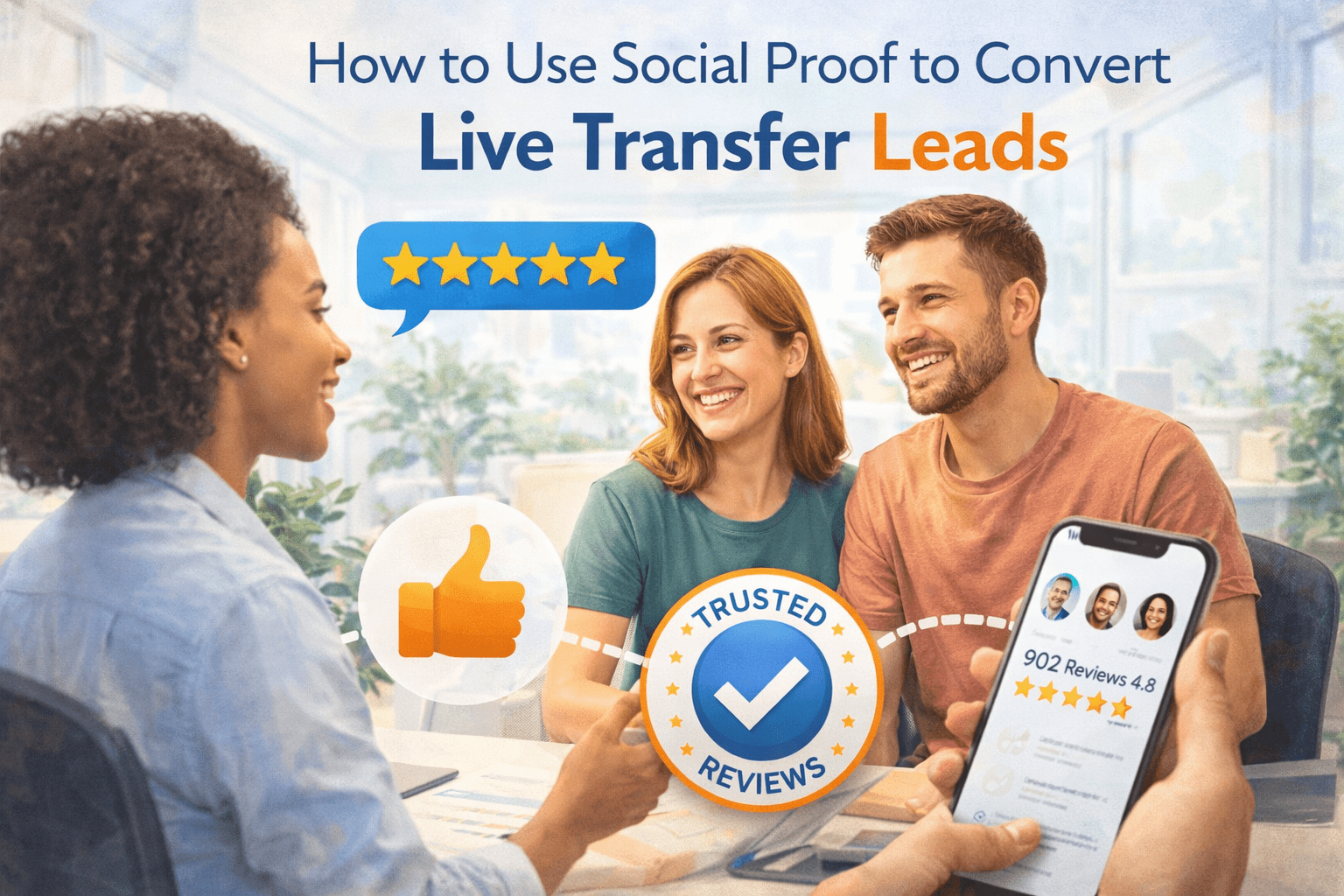
Leveraging Social Proof to Convert Live Transfer Leads
Live transfer leads can be some of the most valuable opportunities in moving lead generation. Unlike cold form fills or passive website visits, these prospects are already engaged. They have taken action, shown interest, and agreed to be connected with a moving company in real time. That urgency creates strong potential, but it also creates pressure. Once the call begins, your team has only a short window to build trust, reduce hesitation, and move the prospect toward the next step.
That is where social proof becomes a major conversion advantage.
In the moving industry, prospects often make decisions under stress. They are comparing timelines, pricing, availability, and reliability while also worrying about their belongings, schedules, and budgets. During a live transfer call, they are not just listening for information. They are looking for reassurance that your company is credible, experienced, and safe to hire. Testimonials, case studies, ratings, and review-driven messaging help provide that reassurance at exactly the right moment.
At Best Moving Leads Providers, we know that generating live transfer leads is only half the equation. The real growth comes from converting those calls into booked jobs. Social proof plays a critical role in that process because it gives prospects confidence when it matters most.

Why Social Proof Matters So Much in Pay-Per-Call Lead Generation
Live transfer leads are high-intent, but they are not automatically high-trust. A caller may be interested in moving services, yet still feel uncertain about which company to choose. In many cases, they are speaking with more than one mover, comparing options quickly, and trying to avoid making a bad decision.
That makes trust the central issue.
Social proof works because it answers the unspoken question behind almost every live transfer conversation: “Why should I trust this company with my move?” A strong answer is rarely just a list of services. It is evidence that other customers have already trusted you and had a positive experience.
This matters even more in moving than in many other industries. Customers are allowing a company to handle personal belongings, enter their home, manage tight schedules, and navigate a stressful life transition. Claims alone are not enough. Proof matters.
When used well, social proof reduces perceived risk. It tells the caller that your company has done this successfully before, that people like them were satisfied, and that choosing you is a safer decision than choosing an unknown competitor.
What Social Proof Looks Like During a Live Transfer Call
Social proof is not limited to your website. It can and should become part of the conversation itself. During a pay-per-call interaction, the best social proof is woven naturally into the sales flow rather than delivered as a scripted brag.
A well-trained rep might reference customer satisfaction by saying that many recent clients appreciated the company’s communication, careful handling, or ability to stay on schedule. That feels more believable than vague phrases like “we’re the best movers in town.”
Case-study style examples can be especially powerful. If a caller is planning a long-distance move, your rep can mention a similar relocation your team handled successfully. If the caller is worried about stairs, timing, or packing fragile items, a brief real-world example can ease that concern immediately. The point is not to overwhelm the prospect with stories. It is to make your experience feel relevant to their situation.
Ratings also matter. If your company has strong review scores on major platforms, that can be mentioned confidently during the call. A prospect who hears that many customers have rated the company highly often feels more comfortable continuing the conversation. It signals consistency and public credibility.

Testimonials Help Humanize the Sales Conversation
Testimonials are one of the most effective forms of social proof because they sound like the voice of the customer rather than the voice of the business. During a live transfer call, that distinction matters.
A moving prospect may remain skeptical when a sales rep says the company is reliable or professional. But when they hear that previous customers specifically praised on-time arrivals, careful packing, courteous crews, or stress-free long-distance coordination, the message lands differently. It feels earned.
The best testimonials for pay-per-call conversion are specific. A generic comment like “great service” has limited power. A more detailed testimonial about protecting furniture, managing a last-minute move, or handling a difficult apartment access situation is much more persuasive because it mirrors real customer concerns.
These testimonials can be used in multiple ways throughout the call funnel. Reps can reference them verbally. Follow-up texts can include a review highlight. Email confirmations sent after the call can feature testimonials that reinforce trust. Each of these touchpoints helps move the prospect closer to a decision.
At Best Moving Leads Providers, we often stress that trust-building should not start and stop on the landing page. It must continue through the lead handoff and into the live conversation itself.
Ratings and Reviews Create Instant Credibility
When a live transfer lead is connected to your company, the caller often knows very little about you. That means your reputation needs to become clear quickly. Ratings and reviews help do that fast.
High review volume signals experience. Strong average ratings signal consistency. Both can influence how a prospect interprets the rest of the conversation. Even a brief mention that your company is highly rated by many customers can lower resistance early in the call.
This is especially important for leads coming through paid channels. Pay-per-call prospects may not have spent much time researching your website beforehand. They may be evaluating you in real time. Review-based credibility helps bridge that gap.
It also supports objection handling. If a caller hesitates because they are unsure about reliability, professionalism, or quality of service, strong public feedback becomes a useful reassurance point. Instead of arguing with the objection, your rep can point to the experience of previous customers.
That approach is more persuasive because it shifts the conversation from sales pressure to third-party validation.

Case Studies Make Your Experience Feel Relevant
Testimonials and ratings build trust broadly, but case studies make trust feel specific. They help a prospect think, “This company has handled a move like mine before.”
That is extremely valuable in the moving industry because no two moves feel identical to the customer. One person is concerned about a cross-country timeline. Another is worried about fragile antiques. Another needs storage coordination during a delayed closing. When a live transfer rep can reference similar situations, the caller feels understood.
A case study does not need to sound formal during a phone conversation. It can be as simple as describing a recent move with comparable conditions and explaining how your team handled it successfully. The key is relevance. The more closely the example matches the caller’s concerns, the more powerful it becomes.
This technique also helps your team shift from generic selling to consultative selling. Instead of focusing only on price or availability, you demonstrate practical experience. That creates more confidence and often leads to higher-quality conversations.
Social Proof Should Be Built Into the Entire Call Journey
One common mistake is treating social proof as a website-only feature. In reality, it should appear throughout the full live transfer process.
The landing page or call source may establish the first layer of trust with review snippets, star ratings, and customer success messaging. The live transfer rep then reinforces that trust by referencing testimonials, similar move scenarios, and reputation points during the call. After the call, your follow-up messages can continue the pattern with review highlights, links to success stories, or short proof-focused email content.
This consistency matters because conversion rarely depends on one sentence alone. It comes from repeated signals that your company is credible, experienced, and trusted by others.
For moving businesses investing in live transfer leads, this is especially important. Pay-per-call leads can be expensive, and every missed opportunity hurts ROI. A stronger trust-building system helps protect that investment by increasing the number of calls that turn into estimates, appointments, or bookings.
Training Sales Reps to Use Social Proof Naturally
Even the best reviews and case studies lose impact if they are delivered poorly. Reps should be trained to use social proof naturally and conversationally, not in a forced or robotic way.
That means understanding which testimonials match which types of callers. It means listening for key concerns and responding with relevant proof rather than memorized lines. It also means knowing when to bring up ratings, how to reference real customer experiences, and how to sound confident without overselling.
The best sales teams do not dump proof on the caller all at once. They use it strategically. If the caller worries about timing, they reference customer feedback about punctuality. If the caller is nervous about item protection, they mention real examples of careful handling. If the caller questions legitimacy, they reference review strength and repeat business.
This makes the conversation feel personalized and credible, which is exactly what high-intent prospects need.
Why Social Proof Improves Close Rates
At its core, social proof works because it reduces decision anxiety. Moving customers are often afraid of choosing poorly. They worry about hidden issues, bad service, damaged belongings, and unreliable communication. The more uncertainty they feel, the harder conversion becomes.
Social proof reduces that uncertainty.
It provides emotional reassurance and practical evidence at the same time. The caller hears that others had the same concerns, chose your company, and were glad they did. That lowers resistance, shortens the trust-building process, and makes the next step feel safer.
For live transfer leads, where timing and confidence are everything, this can directly influence close rates. The company that sounds trustworthy usually has a major advantage over the company that only sounds available.

Conclusion
Using social proof to convert live transfer leads is one of the smartest ways for moving companies to improve pay-per-call performance. Testimonials humanize your brand. Ratings and reviews create instant credibility. Case studies make your experience feel relevant to the caller’s specific situation. Together, they turn a high-intent conversation into a more confident buying decision.
For movers, this is not just about sounding impressive. It is about reducing doubt in the moments that matter most. Live transfer calls move quickly, and prospects often decide based on trust as much as price. The companies that win more of these leads are usually the ones that make prospects feel secure, understood, and confident enough to move forward.
Best Moving Leads Providers helps moving companies generate and convert better leads through stronger positioning, better funnel strategy, and practical sales-focused marketing. When social proof is used intentionally throughout the live transfer process, it becomes more than a reputation asset. It becomes a direct conversion tool.