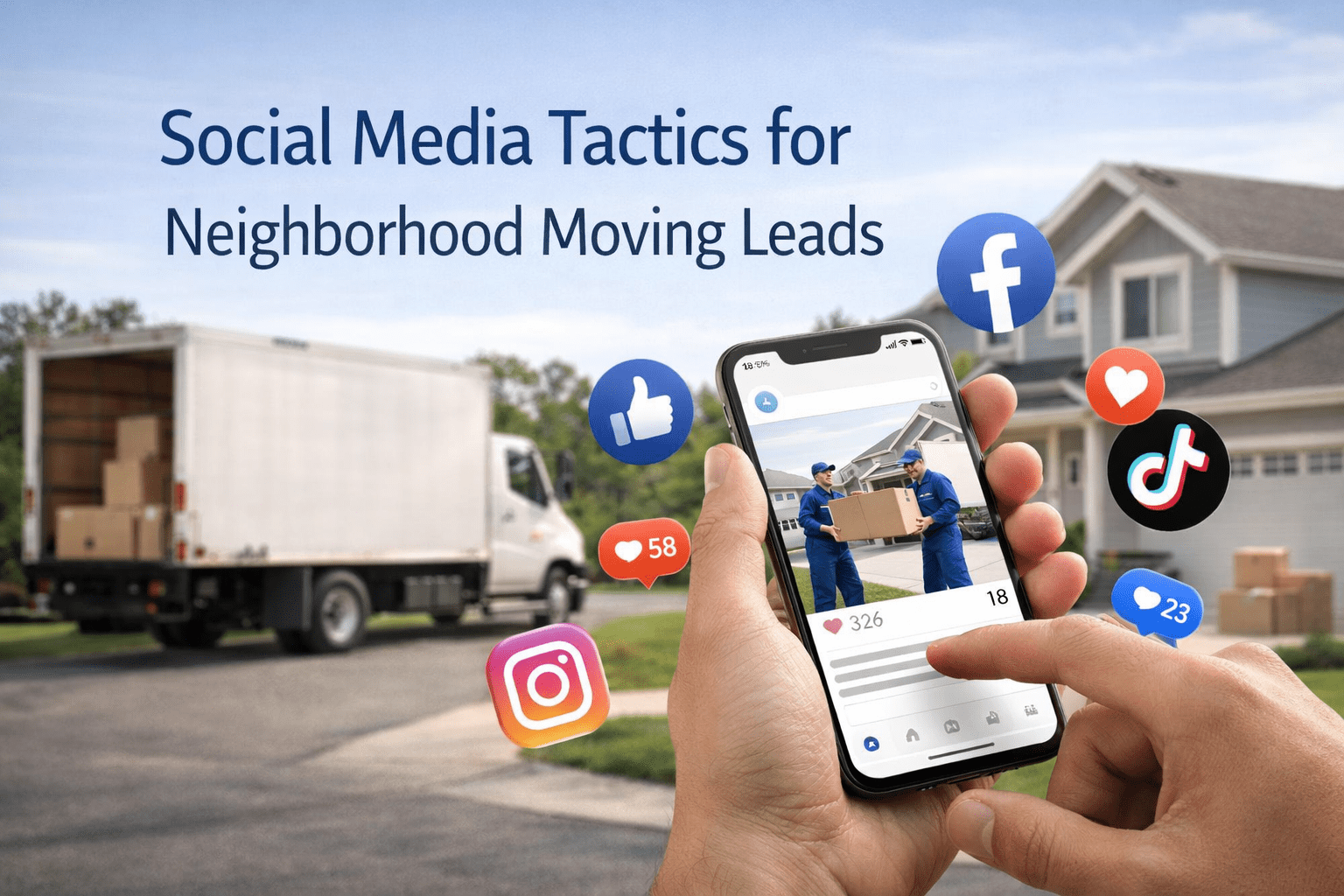
Social Media Tactics for Neighborhood Moving Leads
Most movers treat social media like a branding channel: a few photos of trucks, a couple of “we’re available this weekend” posts, and the occasional customer review graphic. That’s fine, but it misses the real opportunity. Facebook and Instagram, especially at the neighborhood level, can produce consistent moving leads when you pair hyper-local targeting with localized creative and a fast response process.
Local moves are emotional and time-sensitive. People care about trust, convenience, and whether you’ll show up on time without damaging their home. Social platforms let you communicate that trust visually, right inside the communities where people live, scroll, and talk to neighbors. Done right, you can build demand in specific zip codes, around apartment clusters, and inside high-turnover suburbs, without paying for clicks from people 40 miles away.
At Best Moving Leads Providers, we see social media work best when movers stop thinking “general marketing” and start thinking “neighborhood demand capture.” This guide lays out the tactics that convert.
Why Social Media is Ideal for Neighborhood Leads
Google captures “I need a mover right now.” Social media often captures “I’m planning a move” and “I’m considering options.” That difference matters because it gives you a chance to influence the decision earlier.
Facebook and Instagram also offer targeting options that map cleanly to moving behavior:
- People in specific zip codes and neighborhoods
- People near apartment communities or new construction zones
- People likely in “life transition” moments (new job, new home, relationship status changes—used carefully and ethically)
- Lookalike audiences based on past customers or leads
And unlike many ad channels, social lets you show proof quickly: photos, short videos, reviews, crew professionalism, packing methods, and home protection.
Build a Hyper-Local Foundation Before You Run Ads
Before you spend money, tighten the basics. Social ads amplify what’s already there. If your profile looks inactive, inconsistent, or untrustworthy, your lead costs go up.
Your foundational checklist:
- Updated Facebook Page and Instagram profile with service area clearly stated
- Consistent branding: logo, colors, crew photos, truck photos
- A clean “Request a Quote” flow: landing page or instant form
- Recent posts showing real jobs (not stock photos)
- A pinned post that explains your process and what makes you different
When someone clicks your ad, they will check your page. Treat that page like a storefront.
The Neighborhood Targeting Strategies That Work
1) Radius targeting around high-turnover zones
Start with a tight radius around places where moves cluster:
- Apartment complexes and townhome communities
- New construction developments
- College areas (if you serve students)
- Military housing zones (if relevant)
For movers, a 1–3 mile radius can outperform broader targeting because it keeps your message relevant and reduces wasted spend.
2) Zip code targeting for premium neighborhoods
If you want higher-ticket moves, target zip codes with:
- Larger homes
- Higher owner-occupancy
- Active real estate turnover
Pair those areas with creative that speaks to premium expectations: floor protection, wrapping, punctual arrival windows, and professional crews.
3) Exclusion targeting to protect your budget
If you don’t serve certain areas (or they’re unprofitable due to drive time), exclude them. Social platforms will spend your budget wherever they can find impressions, your job is to keep that spending inside profitable zones.
4) Retargeting local engagers
One of the best “neighborhood” plays is retargeting people who:
- Watched your videos
- Clicked your website
- Engaged with your Instagram profile
- Sent you a message in the past
These are warm audiences. Even a small retargeting budget can produce leads at a lower cost than cold campaigns.
Localized Creative: The Difference Between “Seen” and “Booked”
Neighborhood ads fail when they look generic. The best social ads feel like they were made for a specific area.
Show the neighborhood, not just the truck
Use photos and short clips that look local:
- Your crew in front of recognizable neighborhood styles (townhomes, split-levels, modern condos)
- Packing and protection inside real homes
- Loading footage that shows care and organization
- A short “day in the life” video from a move in that suburb
Even if viewers don’t recognize the exact street, they recognize the type of home, and that creates immediate relevance.
Use localized language
Instead of “Affordable Moving Company,” try:
- “Moving in [Suburb Name] this month? We know these neighborhoods.”
- “Apartment move in [Area]? We handle stairs, elevators, and tight parking.”
- “Weekend moves in [Town]? Fast quotes, professional crews.”
You’re not just telling people you serve the area—you’re proving you understand it.
Lead with proof, not promises
Moving ads that convert typically include:
- A real review quote (short and readable)
- A “protective” visual: blankets, wrap, floor runners
- A credibility marker: years in business, insured, trained crew (only if true)
- A clear offer: “Free quote in 10 minutes” or “Same-week availability” (only if you can deliver)
Generic discounts alone don’t build trust. Proof builds trust.
The Campaign Types Movers Should Run
Campaign 1: Instant Quote Lead Ads (High Conversion)
Facebook/Instagram lead forms reduce friction. People can request a quote without leaving the app, which often increases conversion rates.
To improve lead quality:
- Add a question about move date (dropdown options: 0–7 days, 8–21 days, 22+ days)
- Ask move size (studio/1BR/2BR/house)
- Ask pickup zip code (or neighborhood)
- Confirm contact preference (call/text/email)
Then route those leads into a fast response system. Social leads go cold quickly.

Campaign 2: Click-to-Message (High Intent)
Click-to-message ads (Messenger/Instagram DMs) work well for local movers because people like quick answers:
- “Do you have availability Saturday?”
- “How much for a 2-bedroom?”
- “Do you wrap furniture?”
Use a structured script or automated FAQ reply to collect essentials (date, addresses, size), then transition to a call or formal quote.
Campaign 3: Local Video View Campaign (Low Cost Warm Audience)
A short local video—30–45 seconds—can generate cheap views and build a retargeting pool. Then you retarget those viewers with lead ads or message ads.
This is a strong play in competitive suburbs where cold lead ads are expensive. You warm up the neighborhood first, then convert.
The Follow-Up System That Makes Social Leads Profitable
Social ads don’t fail because “Facebook doesn’t work.” They fail because the mover doesn’t respond fast enough or doesn’t convert well.
Your non-negotiables:
- Respond within 5–15 minutes during business hours
- Text + call combo for lead form submissions
- A simple quote process that doesn’t require five phone calls
- Confirmation messages and reminders to reduce no-shows
If you’re buying attention, you must have a system that catches it.
This is also where combining social campaigns with a structured lead pipeline helps. Many movers partner with Best Moving Leads Providers to stabilize volume (exclusive and shared leads) while they build social audiences and neighborhood awareness. The companies that scale fastest don’t depend on one channel, they build multiple “pipes” feeding the same follow-up process.
Budgeting and Testing: Keep It Local and Controlled
You don’t need a huge budget to win neighborhoods. You need disciplined testing.
A practical approach:
- Start with 2–3 neighborhoods or zip codes
- Run two creatives per area (one video, one photo carousel)
- Test two offers (fast quote vs. small discount vs. free packing kit)
- Let results run long enough to learn, then shift budget to winners
When you find a neighborhood that converts, increase spend gradually. The goal is to “own” a few areas rather than spray money across an entire metro.
Conclusion: Turn Social Media Into a Neighborhood Lead Engine
Facebook and Instagram can be more than brand awareness—they can become a predictable local lead source for movers who treat them like a neighborhood channel. When you combine hyper-local geotargeting with creative that feels native to a suburb or community, you earn attention from the right people. When you pair that attention with fast follow-up and a clean quote experience, you turn scrolling into booked jobs.
If you want to strengthen your pipeline further, Best Moving Leads Providers supports movers with exclusive and shared moving leads plus marketing support designed to improve conversion, not just volume. The best results come when social media, local reputation, and lead generation all work together.
FAQs
Yes, especially for neighborhood targeting. They work best when paired with localized creative and fast follow-up to capture demand before competitors do.
Lead forms usually convert more volume with less friction. Message ads can deliver higher intent conversations. Many movers run both and compare cost per booked job.
Often 1–3 miles around apartment clusters or specific neighborhoods works well. For premium suburbs, zip code targeting can be effective. Avoid broad metro targeting unless you have a large budget.
Real crew photos, packing/protection visuals, short job-site videos, and review snippets. People book movers they trust—not just the cheapest option.
Improve local relevance (tight geotargeting, localized language), test creative frequently, retarget engaged users, and respond quickly so leads don’t go cold.