How to Create Loyalty Programs for Repeat Moving Clients
Most moving companies focus heavily on new customer acquisition. That makes sense because people do not move every week. However, many movers miss an important opportunity: repeat business. A satisfied customer may move again in the future, refer family members, recommend your company to coworkers, or use your services for storage, packing, auto transport, or commercial relocation.
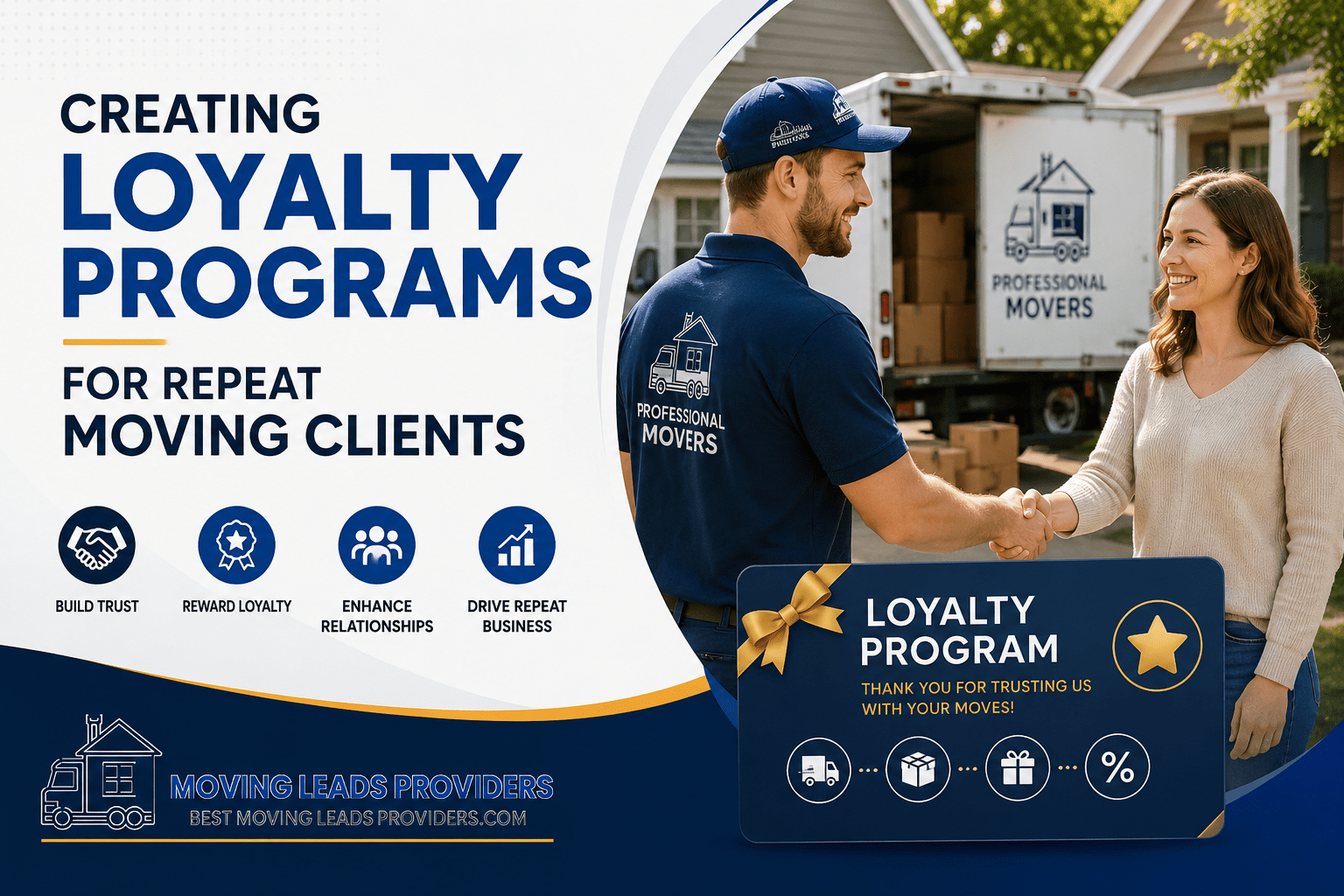
A loyalty program helps you stay connected with past customers instead of treating every move as a one-time transaction. When designed properly, it can increase repeat bookings, generate referrals, improve customer retention, and lower your long-term lead acquisition costs.
For moving companies, loyalty does not always mean points and discounts. It means giving past customers a reason to remember you, trust you again, and recommend you when someone else needs moving help.
Why Loyalty Matters in the Moving Industry
Moving is a trust-based service. Customers are allowing your team to handle their belongings, enter their homes, and support them during a stressful transition. If you deliver a smooth experience, that trust becomes valuable.
Even if a customer does not need another move soon, they may know someone who does. They may also need related services later, such as packing, storage, furniture delivery, junk removal, or auto transport. A loyalty program keeps your company visible after the job is complete.
Repeat and referral customers can also be easier to convert than cold leads. They already know your brand or have received a recommendation from someone they trust. That can shorten the sales cycle and improve booking rates.
Define What Loyalty Means for Your Business
Before creating a loyalty program, decide what customer behavior you want to encourage. Some moving companies want more repeat residential moves. Others want referrals. Some want to increase add-on services. Others want long-term relationships with commercial clients, real estate agents, apartment communities, or property managers.
Your loyalty program should match your business model.
For residential movers, loyalty may focus on repeat moves, family referrals, or discounts on future services. For commercial movers, it may include preferred pricing, priority scheduling, or annual relocation support. For companies offering auto transport or storage, loyalty can encourage customers to use multiple services through the same provider.
The goal is to reward behavior that creates long-term value.
Offer Meaningful Rewards
A loyalty program only works if the reward feels useful. Generic discounts can help, but they are not the only option. Moving customers often value convenience, priority, and peace of mind just as much as savings.
Possible rewards include:
- Discount on a future move
- Referral credit for friends or family
- Free or discounted packing materials
- Priority scheduling during busy seasons
- Reduced storage fees for returning customers
- Free packing consultation
- Add-on service credit for auto transport or junk removal
- Commercial client preferred rates
The reward should be simple to understand. If customers have to read a long list of restrictions, they may not engage. Keep the offer clear and easy to redeem.
Create a Referral-Friendly Loyalty Program
Referrals are one of the strongest loyalty opportunities for movers. A happy customer may not need another move soon, but they can still send new business your way.
A referral program can offer value to both the past customer and the new customer. For example, the referring customer may receive a cash reward, service credit, or gift card after the referred move is completed. The new customer may receive a small discount or free add-on.
This creates a clear incentive for both sides.
The referral process should be easy. Customers should not have to call your office and explain a complicated code. A simple referral link, short form, or clear email instruction can make the process smoother.
After a successful move, your follow-up email can say:
“Know someone planning a move? Refer them to us and receive a thank-you reward after their move is completed.”
This keeps the message simple and direct.
Use Post-Move Follow-Up to Introduce the Program
The best time to introduce a loyalty program is shortly after a successful move. At this moment, the customer experience is fresh. If your team did a good job, the customer is more likely to leave a review, refer someone, or remember your company.
A post-move workflow can include a thank-you email, review request, loyalty program invitation, and referral offer. This does not need to be aggressive. The tone should be appreciative and helpful.
For example:
“Thank you for trusting us with your move. We would be happy to help again in the future. As a returning customer, you can access preferred benefits on your next move or refer a friend who needs moving help.”
This type of message turns a completed move into the beginning of a longer relationship.
Segment Past Customers for Better Offers
Not every past customer should receive the same loyalty message. A local apartment mover, a long-distance customer, and a commercial relocation client may all have different future needs.
Segmenting your customer list allows you to send more relevant offers. Local moving customers may respond well to referral credits or future move discounts. Long-distance customers may appreciate storage or auto transport offers. Commercial clients may value priority scheduling and account-based pricing.
Segmentation can be based on:
- Move type
- Move date
- Service used
- Customer location
- Referral history
- Review status
- Add-on services purchased
- Commercial or residential category
The more relevant the offer, the more likely the customer is to engage.
Include Add-On Services in Your Loyalty Strategy
A loyalty program can also help increase revenue beyond the original move. Customers who trusted you once may be open to related services if they understand what you provide.
For example, a customer who booked a long-distance move may later need auto transport. A family using storage may need another delivery service. A business that moved one office may need help with future expansions.
Your loyalty communication can introduce these services naturally. Instead of only saying “Book your next move,” you can say, “As a returning customer, you may qualify for preferred support on packing, storage, auto transport, or future relocation services.”
This broadens the value of your past customer database.

Make the Program Easy for Your Team to Manage
A loyalty program should not create confusion for your sales or operations team. If rewards are tracked manually with no clear process, customers may receive inconsistent information.
Use your CRM to track loyalty status, referral sources, rewards, past moves, and follow-up dates. Sales reps should be able to see whether a customer is returning, who referred them, and what benefit applies.
Clear internal rules matter. Your team should know when a reward is earned, how it is applied, and who is responsible for confirming it. A simple program that is easy to manage will usually perform better than a complicated one that nobody follows consistently.
Promote Loyalty Without Sounding Pushy
Customers do not want to feel like they are being sold immediately after a move. The loyalty message should feel like a benefit, not a demand.
Use language that focuses on appreciation:
“Thank you for choosing us.”
“We would be happy to help again.”
“Here is a benefit for returning customers.”
“Refer someone who needs moving help and receive a thank-you reward.”
This keeps the relationship positive. The customer should feel valued, not pressured.
Measure Loyalty Program Performance
To know whether your loyalty program is working, track the right numbers. Useful metrics include repeat bookings, referral leads, referral conversion rate, reward redemptions, review volume, customer lifetime value, and revenue from past-customer campaigns.
You should also compare the cost of loyalty rewards against the value of booked jobs. If a small referral reward brings in a profitable move, the program may be well worth the cost.
Over time, you can adjust rewards, messaging, and timing based on what performs best.
How Best Moving Leads Providers Supports Moving Company Growth
At Best Moving Leads Providers, we help moving companies connect with prospects who are actively looking for moving services. Our solutions include local moving leads, long-distance moving leads, commercial moving leads, international moving leads, auto transport moving leads, live transfer leads, SEO for movers, PPC for movers, and online reputation management.
A loyalty program can strengthen your growth by helping you get more value from past customers. But to keep your pipeline full, you also need a steady flow of new opportunities. When strong lead generation is combined with customer retention and referral systems, your moving company can build a more reliable path to long-term revenue.

Final Thoughts
A loyalty program gives moving companies a practical way to turn satisfied customers into repeat clients, referral sources, and long-term brand advocates. The best programs are simple, relevant, easy to redeem, and supported by a clear follow-up process.
By rewarding repeat business, encouraging referrals, and staying connected after the move, your company can reduce wasted marketing effort and build stronger customer relationships.
If your moving business wants more high-quality leads and better long-term growth, Best Moving Leads Providers can help. Contact us today to learn how our moving leads and marketing solutions can support your company.