Using Geofencing Moving Ads to Target Residential Areas
Most moving companies rely on broad targeting when running ads—entire cities, large zip code clusters, or wide service areas. While this approach can generate leads, it often sacrifices precision.
The reality is simple: not every neighborhood produces the same quality or volume of moving jobs.
Some apartment complexes have constant tenant turnover. Certain suburban communities see frequent upgrades and relocations. Specific neighborhoods generate higher-value long-distance moves. If your marketing treats all areas equally, you are leaving opportunity—and efficiency—on the table.
This is where geofencing comes in.
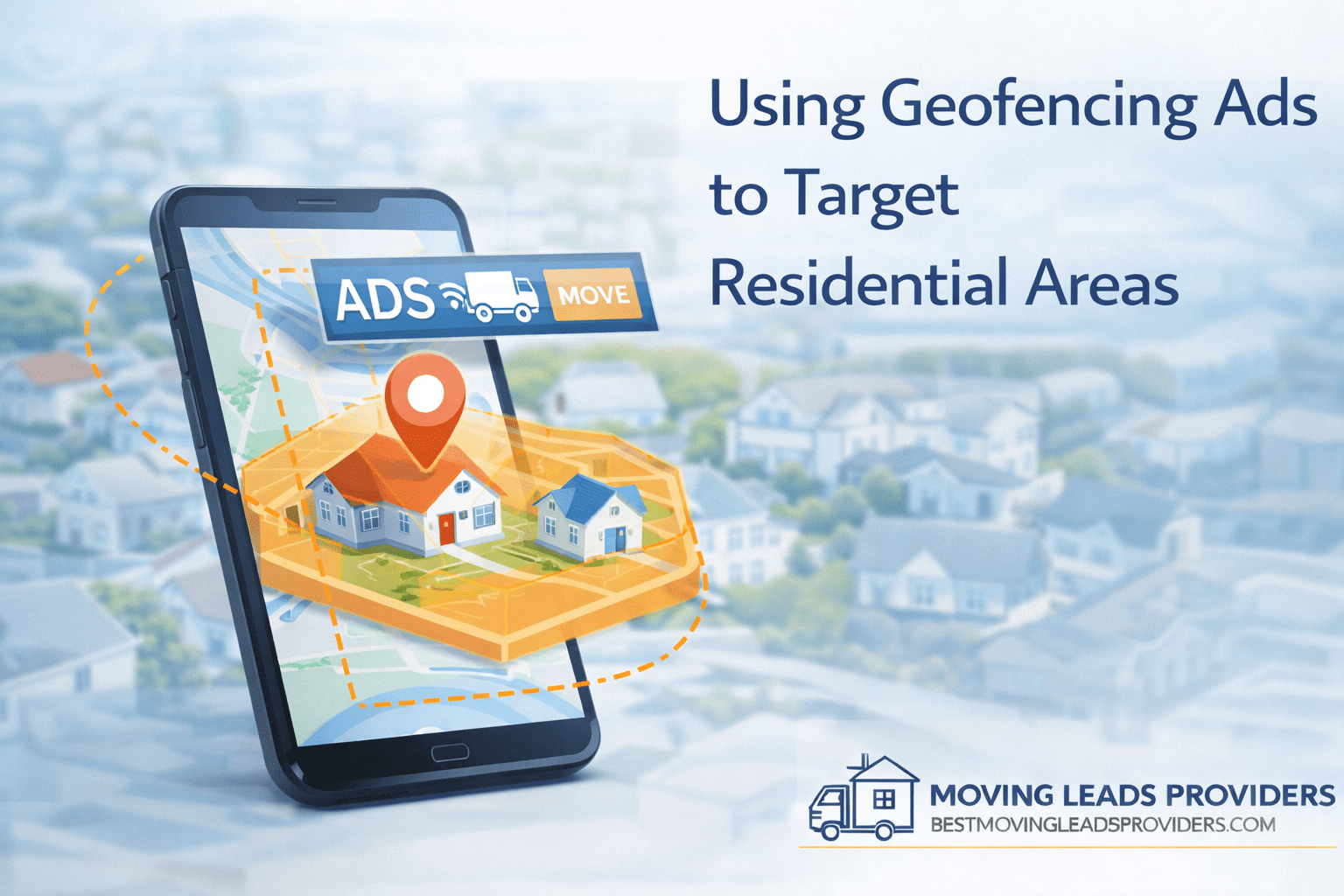
Geofencing allows moving companies to target ads to highly specific geographic zones—down to individual apartment complexes, residential communities, or defined neighborhoods. Instead of marketing everywhere, you focus your budget where moving activity is most likely to happen.
At Best Moving Leads Providers, we view geofencing as a powerful precision tool. When used correctly, it can significantly improve lead quality, reduce wasted ad spend, and create a stronger local presence.
What Geofencing Actually Means in Moving Marketing
Geofencing is a form of location-based advertising that uses virtual boundaries around specific areas. When a user enters or is within that defined zone, they can be served targeted ads on their mobile device.
For moving companies, this means you can:
- Target residents within a specific apartment complex
- Focus on neighborhoods with high turnover
- Reach users near competing properties or leasing offices
- Deliver ads based on real-world location behavior
Unlike traditional digital targeting, which often relies on broad demographics or search intent, geofencing connects your marketing directly to physical locations.
This creates a more contextual and timely form of advertising.
Why Residential Targeting Works So Well for Movers
Moving is inherently tied to location. People do not randomly decide to move—they are influenced by leases, property changes, life events, and housing transitions.
Certain residential areas naturally generate more moving activity:
- Large apartment complexes with frequent lease cycles
- Student housing communities with seasonal turnover
- Growing suburban neighborhoods with active real estate movement
- Urban high-rises with consistent move-in and move-out schedules
By focusing on these environments, you are placing your brand directly in front of people who are more likely to need your services. This is not just about local visibility, it is about relevance.
Identifying High-Value Areas to Target
Before setting up any geofencing campaign, the most important step is choosing the right locations.
Analyze Your Existing Jobs
Start with your own data. Look at where your past jobs have come from.
Which neighborhoods generate the most bookings? Which apartment complexes produce repeat moves? Where do your highest-value jobs originate?
This historical insight provides a strong foundation for targeting.
Look for High Turnover Properties
Apartment communities with frequent tenant turnover are ideal for geofencing. These properties often have a steady flow of move-ins and move-outs throughout the year. Luxury apartments, student housing, and centrally located urban buildings tend to perform particularly well.
Consider Local Market Dynamics
Different areas behave differently. Some neighborhoods may produce smaller, quick-turn jobs, while others generate larger, more complex moves.
Align your targeting with your business model. If you specialize in premium services, focus on higher-income residential areas. If you prioritize volume, target dense apartment clusters.
At Best Moving Leads Providers, this alignment between targeting and business goals is what transforms campaigns from average to highly profitable.

Setting Up a Geofencing Campaign That Converts
Once you have identified your target areas, the next step is building a campaign that actually drives results.
Define Precise Boundaries
Geofencing works best when it is specific.
Instead of targeting an entire zip code, draw boundaries around individual apartment complexes or tightly defined neighborhoods. The more precise your targeting, the more relevant your ads will be.
Craft Location-Specific Messaging
Generic ads will not perform well in a geofenced campaign.
Your messaging should feel tailored to the area:
- “Moving out of [Community Name]? We’ve got you covered.”
- “Fast, reliable movers for [Neighborhood] residents.”
- “Stress-free apartment moves in your building.”
This level of specificity increases engagement and builds immediate relevance.
Optimize for Mobile Experience
Geofencing primarily reaches users on mobile devices. That means your landing pages, contact options, and overall experience must be mobile-friendly.
Click-to-call functionality, quick quote forms, and fast-loading pages are essential. A slow or complicated experience will quickly lose the advantage that geofencing creates.
Combining Geofencing with Other Lead Channels
Geofencing is most effective when it is part of a broader strategy—not a standalone tactic.
Reinforce with Search and Local SEO
A user might see your geofenced ad but still search for your company later. Strong local SEO and paid search presence ensure that you appear again when they do.
This reinforces trust and increases conversion likelihood.
Pair with Property Manager Partnerships
If you are already building relationships with apartment complexes or property managers, geofencing can amplify those efforts.
You are not only being recommended, you are also visible digitally within the same community.
Retarget Interested Users
Users who interact with your geofenced ads can be retargeted later with additional messaging. This keeps your brand top-of-mind throughout their decision-making process.
At Best Moving Leads Providers, we consistently emphasize multi-channel alignment. The best results come when different strategies support each other.
Budgeting and Scaling Geofencing Campaigns
Geofencing does not require massive budgets to be effective. In fact, its precision often makes it more cost-efficient than broad targeting.
Start Small and Test
Begin with a few high-potential locations. Monitor performance, engagement, and lead quality. Identify which areas generate the best results before expanding.
Scale Based on Performance
Once you find successful zones, gradually increase your coverage. Add similar properties or neighborhoods with comparable characteristics.
This creates a scalable system based on proven data—not guesswork.
Monitor Lead Quality, Not Just Volume
As with any lead generation strategy, quality matters more than quantity.
Track how geofenced leads perform compared to other channels. Look at conversion rates, job value, and overall ROI. This ensures that your campaign remains focused on profitable growth.
Common Mistakes to Avoid
Geofencing can be highly effective, but only when executed properly.
One common mistake is targeting areas that are too broad. This reduces relevance and wastes budget.
Another issue is using generic messaging. Without location-specific language, your ads lose their impact.
Some companies also fail to align geofencing with their service capabilities. Targeting areas outside your efficient service range can create operational challenges.
Finally, ignoring performance data limits growth. Continuous optimization is essential for long-term success.

Final Word
Geofencing offers moving companies a smarter way to reach local leads, by focusing on where moving activity actually happens.
Instead of spreading your budget across an entire city, you can target specific apartment complexes, neighborhoods, and residential zones with precision. This leads to better engagement, higher-quality leads, and more efficient marketing spend.
When combined with strong messaging, mobile optimization, and a broader lead generation strategy, geofencing becomes a powerful tool for growth.
At Best Moving Leads Providers, we help moving companies go beyond traditional marketing approaches. By integrating advanced targeting strategies like geofencing into a larger system, businesses can generate more consistent, high-quality leads.
In a competitive market, precision is not just an advantage, it is a necessity.