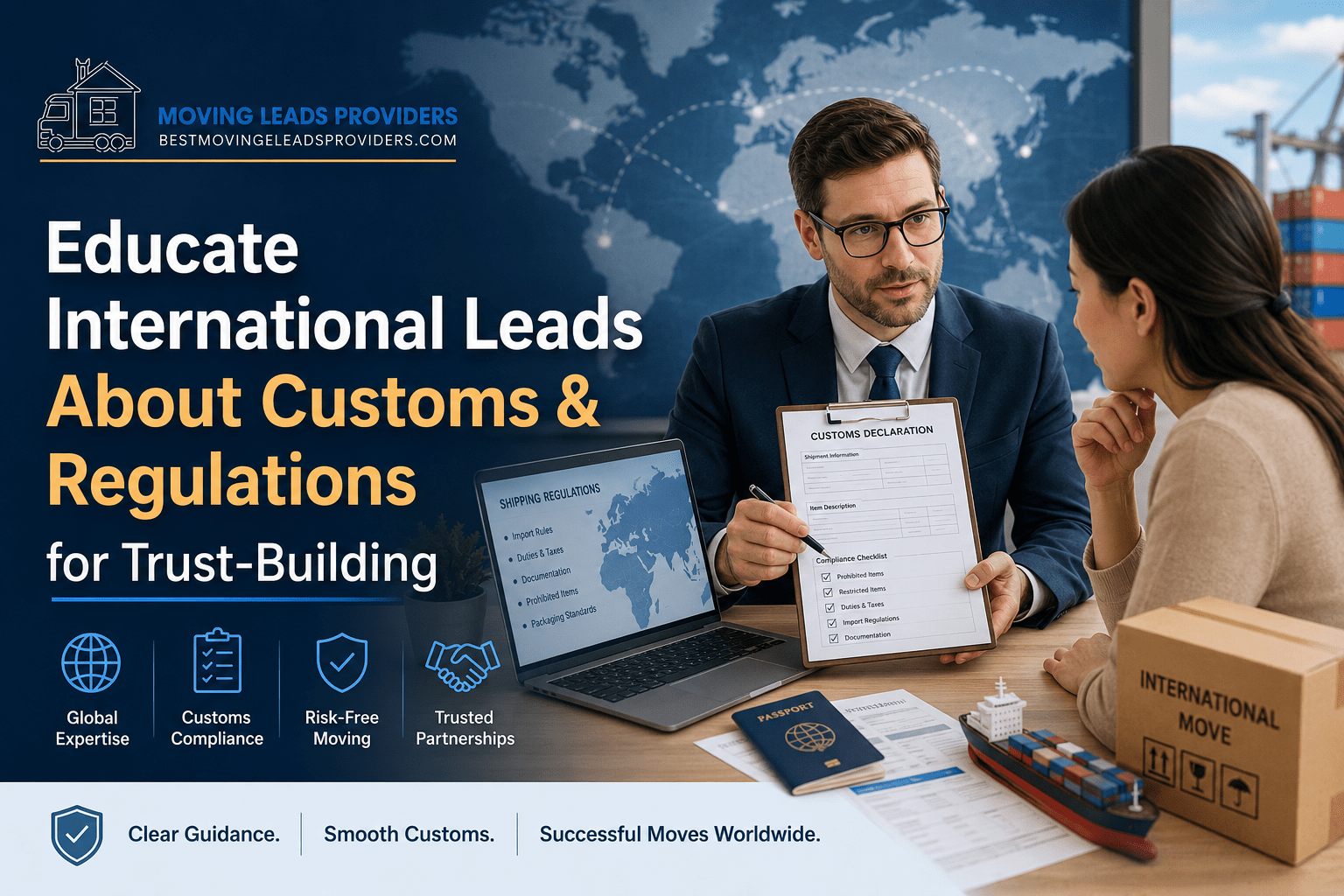
Why Educate International Leads About Customs & Regulations
International moves are an entirely different game from local or long-distance relocations. When a household crosses borders, the moving company isn’t just transporting boxes, it’s going through a maze of customs declarations, prohibited items lists, duty calculations, port regulations, and country-specific paperwork that can confuse even seasoned travelers. For most international leads, this complexity is intimidating, and that intimidation is precisely where moving companies either win the customer’s trust or lose them to a competitor who explains things better.
At Best Moving Leads Providers, we work with movers who serve international clients every day, and the pattern is clear: the companies that close the most international jobs are not always the ones with the lowest prices. They are the ones who position themselves as educators — walking the customer through customs and regulatory expectations long before the truck pulls up. This article breaks down how your moving company can turn customs and compliance into a powerful trust-building asset, and how doing so creates the kind of confidence that converts leads into long-term customers.
Why International Customers Need Education Before They Commit
When someone is preparing to ship their life across an ocean, their anxiety level is dramatically higher than that of a typical local mover. They are weighing job relocations, family adjustments, currency differences, and the very real fear that their belongings could get held up at a foreign port for weeks. They search online for movers, but they also search for answers — what can I bring into Germany, what does Australia restrict, how much will I pay in duty when my container lands in Dubai?
Moving companies that publish helpful, accurate information about these questions get found. More importantly, they get trusted. The lead that arrives in your inbox after reading your customs guide is significantly warmer than a lead from a generic quote form. They already see you as an authority. That perception is half the sale.
This is why educational content paired with quality international moving leads creates such a strong revenue engine. When the lead reaches you already partially educated by your content, your sales conversation shifts from selling a service to confirming a relationship that has already started forming.

The Core Topics Every International Mover Should Cover
Customs and regulations span an enormous range of details, but a few categories repeatedly appear in customer questions. Addressing these clearly on your website, in email follow-ups, in pre-move consultations, and across your sales scripts, gives your moving business a distinct advantage in the international segment.
Import and Export Documentation
The first category is import and export documentation. Most international shipments require a detailed inventory, often in the destination country’s language or in English, with declared values for every item. Some countries require additional forms such as a bill of lading, certificates of origin, work permits for the owner, or visa copies. When a moving company can clearly explain which forms apply to which destination, customers feel guided rather than overwhelmed. They stop comparing you to other movers on price alone and start trusting you on competence.
Prohibited and Restricted Items
The second category is prohibited and restricted items. Every country maintains its own list. Australia is famously strict about wood, food, and plant-based products. The United Kingdom restricts certain meat and dairy. The United Arab Emirates restricts religious materials, alcohol in certain emirates, and used goods without proper documentation. Canada limits the import of firearms and some plants. India levies high duties on used appliances. These differences are not trivia — they are deal-makers. A customer who learns from your blog that their family heirloom artwork needs special documentation to enter Italy will remember which company explained it to them.
Duties, Taxes, and Exemptions
The third category is duties, taxes, and exemptions. Many countries grant returning citizens or new residents a one-time duty exemption on household goods, provided the goods are used, owned for a minimum period (often six months to a year), and shipped within a specific window of arrival. Explaining how a customer can legitimately qualify for these exemptions saves them money and earns their loyalty. A short, well-written guide explaining the difference between commercial imports and personal household goods can be one of the most valuable assets your moving company publishes.
Port Handling, Inspections, and Clearance Timelines
The fourth category is port handling, inspections, and clearance timelines. Customers often imagine that once the ship docks, their belongings appear on their doorstep within days. In reality, customs inspections, quarantine checks, port congestion, and inland transport can add weeks. When your company sets expectations honestly upfront, complaints during the move drop dramatically, and the resulting positive reviews fuel future lead generation. This is exactly the type of reputation work our online reputation management services help international movers strengthen over time.

How to Prepare Shipments So Customs Becomes a Non-Issue
Educating customers is only half the job. The other half is making sure the shipment itself is prepared in a way that minimizes friction at the border. Your professionalism during the packing and documentation phase becomes the customer’s story when they recommend you to others.
Begin every international move with a thorough pre-move survey, ideally on-site or via video. This survey is not just for pricing — it is the foundation of an accurate inventory. Each carton should be numbered, labeled with a brief description, and tied to a master inventory list with declared values. When customs officials at the destination open a single box and find the contents match the manifest, the entire shipment moves through faster. When they find discrepancies, every other box becomes suspect.
Packing materials matter too. Many countries require that wood crates and pallets be heat-treated and stamped according to ISPM 15 standards to prevent the spread of pests. Movers who use compliant materials by default avoid costly delays and demonstrate professionalism that price-driven competitors often skip.
For high-value items, electronics, antiques, and artwork, photograph everything before packing. Maintain digital copies of the customer’s passport, visa, work permit, and any required permits. Share a customs preparation checklist with the customer well in advance so they can gather what they need without panic. This single document — a clear, branded checklist — has consistently been one of the strongest lead nurture tools we see international movers use, often deployed as part of broader email and SMS follow-up campaigns supported by our digital marketing services.
Turning Customs Knowledge Into a Marketing Advantage
Once your team has built genuine expertise in international customs, the next step is making sure prospective customers can find it. This is where content marketing, SEO, and lead generation work together. A well-optimized article on “What You Can and Cannot Ship to the UK” attracts organic traffic from people actively planning a move. A landing page targeted at expatriates relocating for work captures leads from a high-intent audience. A PPC campaign targeting destination-specific keywords brings in fresh inquiries who are already serious about hiring a mover.
This is the core of what we help moving companies do at Best Moving Leads Providers. Alongside our exclusive and shared international moving leads, our Google and SEO services, PPC management for movers, and reputation management offerings give your business the visibility and credibility to convert customs-savvy customers at a higher rate. Education is the message; lead generation is the channel that delivers it to the right people at the right time.

Frequently Asked Questions
As early as the first conversation. Mentioning customs and documentation in your initial quote call signals expertise and reduces last-minute surprises. The earlier you educate, the more committed the customer becomes.
Not necessarily. Many moving companies partner with licensed customs brokers or freight forwarders at the destination who handle clearance. What you need is enough working knowledge to guide your customers and choose the right partners.
Yes. Well-written guides on customs, country-specific moving tips, and shipment preparation rank well in search and attract high-intent international leads. When paired with the kind of exclusive leads we provide, education accelerates conversions significantly.
Underestimating documentation. Inaccurate inventories and missing forms are the leading cause of customs delays, customer complaints, and negative reviews — all of which hurt long-term lead conversion.
Final Word
International moves reward the moving companies that combine operational excellence with clear, honest education. The customers who feel guided through customs and regulations almost always choose the mover who took the time to explain rather than the one who simply offered the lowest price. If you are ready to scale your international moving business with high-quality leads and the marketing support to convert them, Best Moving Leads Providers is built to help you grow.