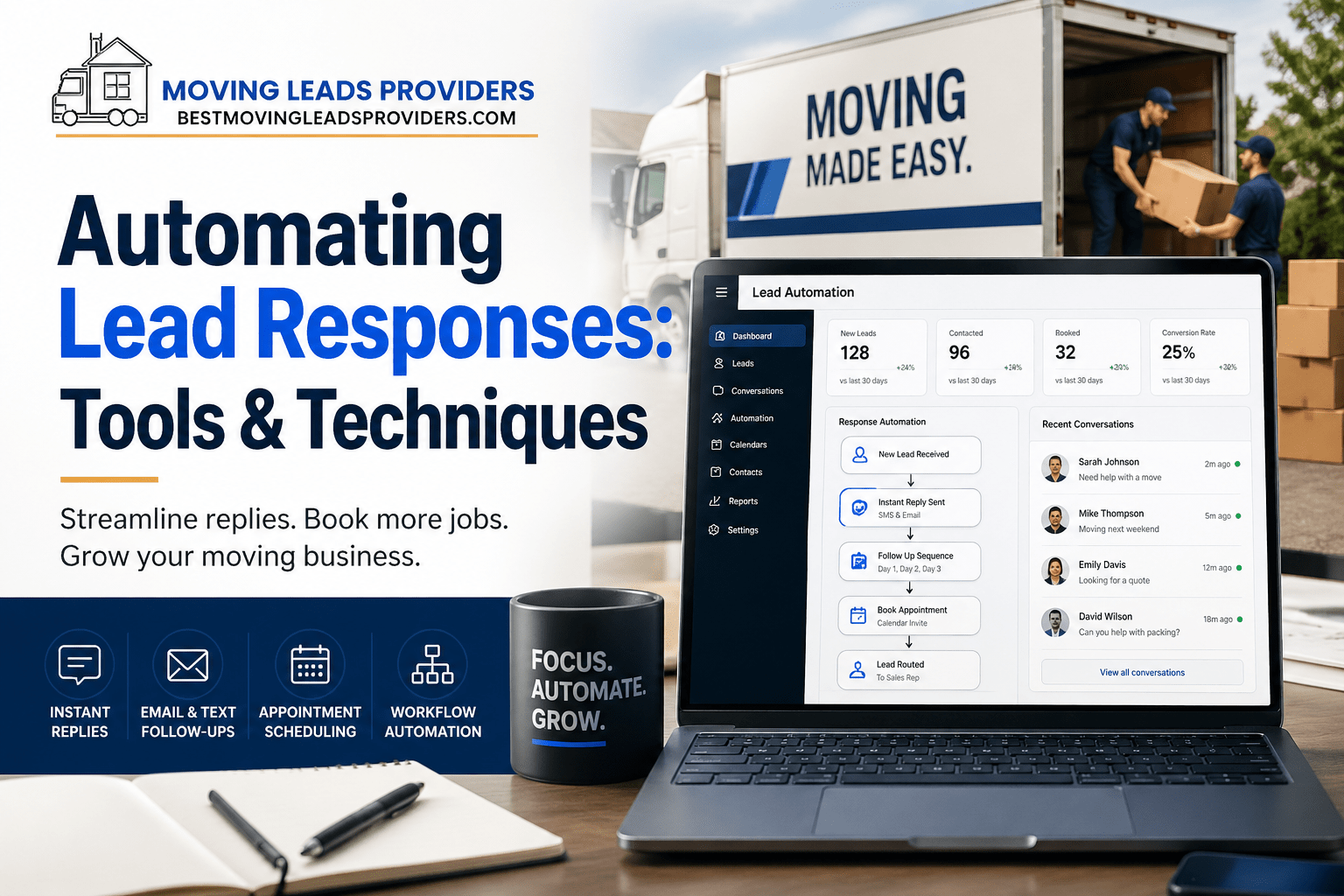
Automating Lead Responses: Tools & Techniques
For moving companies, speed is one of the biggest differences between a booked job and a missed opportunity. When a homeowner, renter, office manager, or corporate relocation contact submits a request for a moving quote, they are usually not waiting around for one company to respond. They may be comparing several movers at once, checking reviews, and looking for the fastest path to a clear estimate.
That is why automating lead responses has become essential for modern moving companies. Automation does not replace a knowledgeable sales team. Instead, it gives that team the ability to respond instantly, organize inquiries, schedule calls, and trigger the right follow-up steps without letting leads slip through the cracks.
At Best Moving Leads Providers, we help moving companies connect with high-intent prospects through exclusive and shared moving leads. But generating leads is only half the growth equation. The other half is having a strong response system that turns those leads into real conversations, booked estimates, and completed moves.
Why Fast Lead Response Matters for Moving Companies
Moving leads are time-sensitive. A customer searching for local movers, long-distance movers, interstate movers, commercial relocation services, or packing help usually has an immediate need. They may be moving in days or weeks, and they want reassurance quickly.
Manual follow-up creates delays. A sales rep may be on another call. A dispatcher may be managing crews. An office manager may not see the inquiry until later in the day. By then, another moving company may have already replied, booked the consultation, and started building trust.
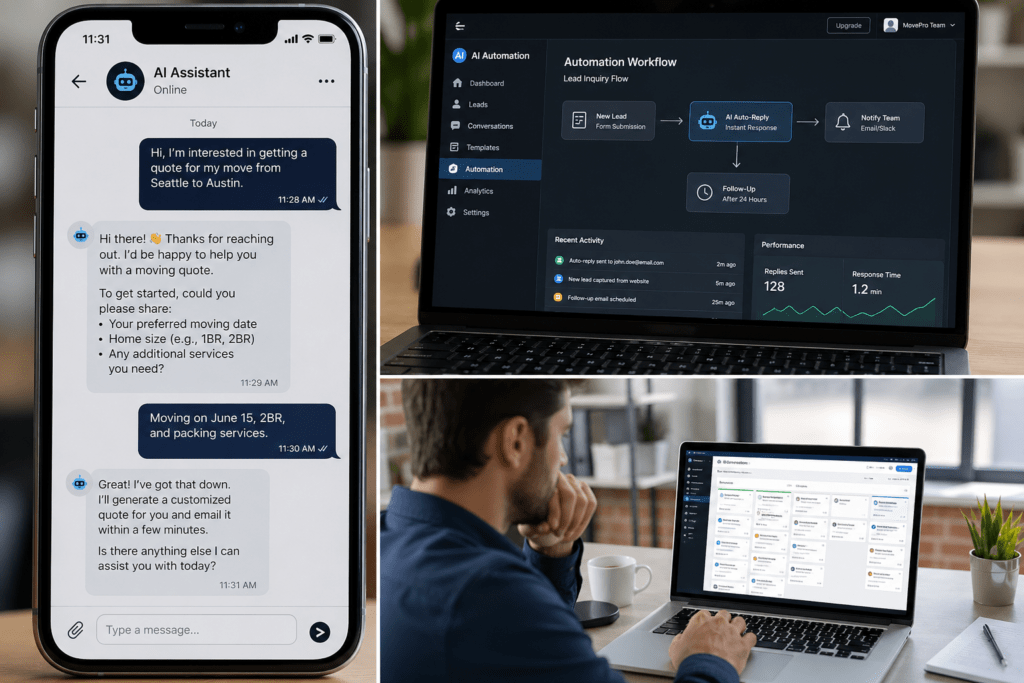
Automated lead response systems solve this by creating an instant first touch. The moment a lead comes in, the system can send a text message, email confirmation, calendar link, internal alert, CRM update, or task assignment. Tools like Zapier support workflows that connect form submissions, emails, and other lead sources to SMS or email actions, helping businesses notify teams and prospects quickly.
For moving companies, this creates a smoother customer experience and a more disciplined sales process.
What Lead Response Automation Should Do
A good automation system should do more than send a generic “Thank you” email. For movers, the best setup should support the full early-stage sales journey.
It should confirm that the inquiry was received, ask or reference key move details, route the lead to the right person, schedule a call or virtual estimate, create a CRM record, and trigger follow-up reminders if the prospect does not respond.
For example, a residential moving lead may need a fast quote call. A commercial relocation lead may need to be routed to a senior sales consultant. A long-distance moving lead may require different questions about origin, destination, inventory, dates, and storage needs. Automation helps organize these differences without forcing every lead into the same process.
Best Types of Tools for Automating Moving Lead Responses
CRM Platforms for Lead Tracking and Follow-Up
A feature-rich customer relationship management platform, or CRM, should be the foundation of your lead response system. It stores contact information, move details, communication history, quote status, and follow-up tasks in one place.
HubSpot, for example, offers lead management features such as automated lead rotation, follow-ups, workflows, and sequences. Its meeting scheduler also lets prospects book directly while syncing with Google and Office 365 calendars.
For moving companies, a CRM helps prevent common problems such as duplicate calls, forgotten follow-ups, scattered spreadsheets, and unclear lead ownership. When a lead enters the system, the CRM can assign it to a sales rep, create a task, trigger a text or email, and move the opportunity into the right pipeline stage.
This is especially valuable for companies buying moving leads from multiple sources. When exclusive moving leads, shared leads, website leads, referral leads, and paid ad inquiries all flow into one system, your team has a clearer view of performance.
Scheduling Software for Instant Call Booking
One of the most effective automation techniques is allowing leads to schedule a call immediately. Instead of replying with “When are you available?” your system can send a calendar link that shows real-time availability.
Calendly offers scheduling features such as routing forms, round robin distribution, and calendar syncing. Its routing tools can direct prospects to specific scheduling pages or team members based on form responses.
For movers, this is useful because not all leads require the same appointment type. A local apartment move may need a short quote call. A large home relocation may need a virtual survey. A commercial move may need a consultation with a relocation specialist. Routing forms can help guide each prospect to the correct next step.
Scheduling automation also reduces back-and-forth communication. Customers appreciate being able to choose a convenient time, and your sales team benefits from a calendar filled with qualified conversations.

SMS and Email Automation Tools
Text messages are powerful because many moving customers are busy, mobile, and looking for fast answers. Email is still useful for confirmations, quote summaries, checklists, and longer explanations. The strongest automation systems usually use both.
A simple automated SMS might say:
“Thanks for requesting a moving quote. We received your details and can help with your upcoming move. Pick a time here for a quick estimate call.”
An automated email can include more context, such as your service areas, available move types, what information the customer should prepare, and a link to schedule a consultation.
Zapier can connect different apps and trigger automated actions such as SMS alerts or email follow-ups when new inquiries arrive. It can also support delayed follow-ups if no response is received.
The key is to keep automated messages helpful and human. Moving is personal. Customers are trusting a company with their home, belongings, schedule, and budget. Automation should feel responsive, not robotic.
Industry and Home Service Automation Platforms
Some moving companies also use broader field service or home service platforms to manage sales, marketing, booking, and customer communication. Platforms in this category can be useful for companies that want marketing automation, call tracking, booking, dispatching, and customer follow-up in a more centralized system.
ServiceTitan, for example, offers Marketing Pro tools for trades businesses and describes features for automated customer engagement, campaign management, and AI-powered customer communication across channels such as SMS and voice.
While not every moving company needs an enterprise-level platform, growing movers should think carefully about scalability. The system that works for 20 leads per month may not work for 300 leads per month. As your lead volume grows, automation becomes less of a convenience and more of an operational requirement.

Practical Lead Automation Workflows for Movers
New Lead Instant Response Workflow
The simplest workflow starts when a lead submits a form, calls through a tracked number, or enters your CRM from a moving lead provider.
The system should immediately send a confirmation message, notify the sales team, create or update the CRM record, and assign the lead to the right rep. If the lead is high priority, such as a long-distance move with a near-term moving date, it can also trigger an urgent call task.
This workflow is ideal for moving companies that want to reduce response delays and improve contact rates.
Missed Call Recovery Workflow
Many moving leads call first. If no one answers, automation should step in. A missed call can trigger a text message such as:
“Sorry we missed your call. Are you looking for help with an upcoming move? You can reply here or schedule a quick quote call.”
This helps recover leads that might otherwise call the next company on the list.
Estimate Scheduling Workflow
Once a lead shows interest, automation can send a scheduling link for a phone estimate, video survey, in-home estimate, or commercial move consultation. For teams with multiple sales reps, round robin scheduling can distribute appointments more evenly.
This keeps your calendar organized and helps prospects take action while their interest is still high.
No-Response Follow-Up Workflow
Not every lead replies immediately. A no-response workflow can send a polite follow-up after a set period of time. For example, a customer might receive a text after one hour, an email the next day, and another reminder before the weekend.
The goal is not to overwhelm the prospect. The goal is to stay visible, helpful, and easy to reach.
Lead Source Tracking Workflow
Moving companies should also automate source tracking. Every lead should be tagged by channel, such as exclusive moving lead, shared moving lead, Google Ads, organic website form, referral, or repeat customer.
This helps you understand which sources generate the best conversations, appointments, and booked moves. Best Moving Leads Providers encourages movers to evaluate not only lead volume but also response speed, booking rate, and revenue quality.

Techniques for Better Automated Follow-Up
The best automation strategy starts with clear segmentation. A local residential move should not receive the same messaging as a corporate relocation inquiry. Segment by move type, location, timeline, move size, and lead source.
Personalization also matters. Use the customer’s name, origin city, destination city, and requested move date when available. Even simple personalization can make automated communication feel more relevant.
Timing is another major factor. The first message should be instant. The first call attempt should happen as quickly as possible. Follow-ups should be spaced naturally, not stacked aggressively within minutes.
Finally, every automated workflow should have a human handoff. When a customer replies, asks a specific question, or books an appointment, your team should be ready to take over with real expertise.
Common Mistakes to Avoid
One common mistake is relying on automation without reviewing message quality. A cold, vague, or overly sales-heavy message can hurt trust. Another mistake is sending too many follow-ups too quickly, especially by text.
Moving companies should also avoid disconnected tools. If your form, CRM, texting platform, calendar, and lead provider do not communicate properly, your team may still miss opportunities.
The most important mistake is failing to measure performance. Track response time, appointment booking rate, contact rate, quote rate, and booked move rate. Automation should not just make your process faster. It should make your sales pipeline more predictable.
How Best Moving Leads Providers Helps Movers Convert Faster
Best Moving Leads Providers helps moving companies access exclusive and shared moving leads designed to create more sales opportunities. But we also understand that lead quality must be matched with strong follow-up systems.
When movers combine high-intent leads with instant response automation, they create a major competitive advantage. They reach prospects faster, reduce manual work, keep sales teams organized, and improve the customer journey from first inquiry to booked move.
Whether your company specializes in local residential moving, interstate relocation, commercial moves, packing services, or long-distance moving, automation can help you turn more inquiries into conversations and more conversations into revenue.

Conclusion
Automating lead responses is no longer optional for moving companies that want to grow. Today’s customers expect fast replies, easy scheduling, and clear communication. The right tools can send instant messages, schedule calls, assign leads, trigger reminders, and keep your sales process moving even when your team is busy.
CRM platforms, scheduling tools, SMS automation, email workflows, and industry-specific software all play a role. The best system is the one that helps your moving company respond quickly, personalize communication, and follow up consistently.
With the right lead generation partner and the right automation strategy, moving companies can stop losing opportunities to slow response times and start building a more efficient, scalable sales engine.