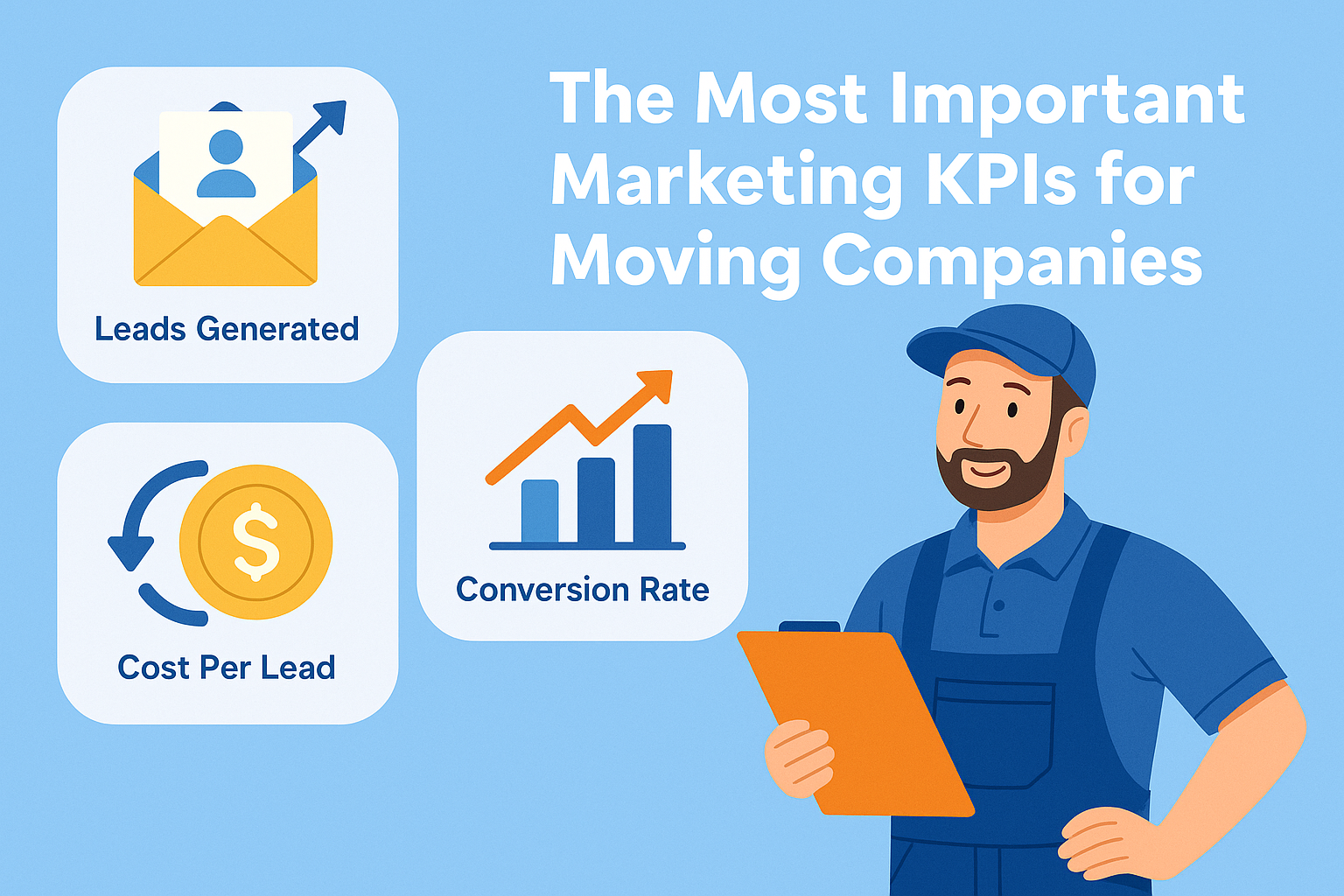
The Most Important Marketing KPIs for Moving Companies
Every marketing dollar your company spends should bring you closer to one goal — more booked moves. But for many movers, that doesn’t always happen. Often, money goes toward ads or campaigns that look good on paper but don’t actually generate results.
That’s where marketing KPIs (Key Performance Indicators) come in. These are the numbers that tell you what’s working, what’s not, and where your marketing is truly paying off.
At Best Moving Leads Providers, we help movers make sense of these numbers and focus on the metrics that matter most — the ones that lead directly to more qualified leads and steady profit growth.
What Are Marketing KPIs and Why Do They Matter?
KPIs are like your business dashboard — they show whether your marketing is driving results or wasting money. For movers, the right KPIs can help you see:
- Which ads bring real leads
- How much each lead costs
- How many leads turn into paying customers
- Whether your marketing is profitable
Without tracking these numbers, marketing becomes guesswork. With them, it becomes strategy.

The Most Important Marketing KPIs for Moving Companies
Let’s go through the key performance indicators that every mover should track — and what they mean for your business.
1. Leads Generated
Everything starts with leads. If you’re not generating enough inquiries, nothing else matters.
Leads come from different sources — website forms, phone calls, quote requests, or chatbots. Tracking where they come from helps you see which marketing channels actually work.
👉 Tip: Always separate total leads from qualified leads.
A “qualified lead” is someone who’s serious about booking a move soon, not just shopping around. This distinction helps you focus on prospects who are ready to convert instead of wasting time chasing weak leads.
2. Cost Per Lead (CPL)
It’s not enough to know how many leads you’re getting — you also need to know how much each one costs.
CPL = Total money spent ÷ Number of leads generated
For example, if you spend $500 on ads and get 10 leads, your cost per lead is $50.
A high CPL means your ads might not be reaching the right audience or your landing page isn’t converting well. To lower your CPL:
- Target more specific keywords or audiences
- Use stronger ad copy and visuals
- Simplify your quote request form so it’s easy to fill out
When your CPL drops, your marketing becomes far more efficient.
3. Conversion Rate
Getting leads is one thing — turning them into booked jobs is another.
Your conversion rate measures how many leads take a key action, like:
- Scheduling a home estimate
- Signing a contract
- Paying a deposit
If your conversion rate is low, look at:
- How fast you follow up (speed matters!)
- How clear your pricing is
- Whether your website and forms are easy to use
Even a small improvement in conversion rate can mean thousands in extra revenue.

4. Return on Marketing Investment (ROMI)
This is the KPI that really tells you if your marketing is profitable.
ROMI = Revenue generated ÷ Marketing spend
If you spend $1,000 on ads and those ads bring in $4,000 worth of booked moves, your ROMI is 4:1. That means every $1 invested brought back $4.
ROMI shows you which campaigns actually make money and where to invest more. Movers who track this KPI know exactly what’s worth scaling — and what to stop spending on.
5. Website Traffic & Local Visibility
If people in your area can’t find you online, they’ll find someone else.
Your website traffic and local SEO visibility show how visible your company is when people search for movers nearby.
Track things like:
- Google Business Profile views
- Clicks and direction requests
- Organic traffic from Google searches
But remember — traffic means nothing unless it turns into leads. Always check which pages or ads actually generate inquiries.
6. Customer Reviews & Reputation Score
When someone searches for movers, reviews are often the first thing they check.
A strong online reputation builds instant trust. Track:
- Average star rating
- Number of new reviews
- How often you respond to feedback
Encourage happy customers to leave reviews right after their move. Respond professionally to all feedback — even negative ones — because future customers will see how you handle problems.

7. Seasonality & Lead Consistency
Moving demand changes throughout the year — usually peaking in summer and slowing in winter. Tracking seasonality helps you plan ahead.
By monitoring leads month by month, you can:
- Increase ad spend during high-demand periods
- Run promotions or partnerships during slower months
- Plan your crew schedules more efficiently
This keeps your leads and revenue steady all year round, instead of only thriving in peak season.
Using Data to Make Smarter Marketing Decisions
The right KPIs do more than measure performance — they guide smarter business decisions.
When you track these numbers regularly, you can:
- See which ads deserve more budget
- Stop wasting money on underperforming campaigns
- Understand how your leads behave and book more effectively
At Best Moving Leads Providers, we help movers combine KPI tracking with high-quality, exclusive moving leads — giving you the full picture of what drives your business forward.
Wrapping Up
The most important marketing KPIs for moving companies are the ones tied directly to growth — leads, cost per lead, conversions, ROI, traffic, reviews, and seasonality.
By focusing on these, you’ll stop guessing and start managing your marketing with clarity and confidence. Every dollar will have a purpose — and every ad will bring you closer to your next booked move.
If you want to start tracking your performance and filling your calendar with quality moving leads, contact Best Moving Leads Providers today — and make your marketing smarter, not harder.