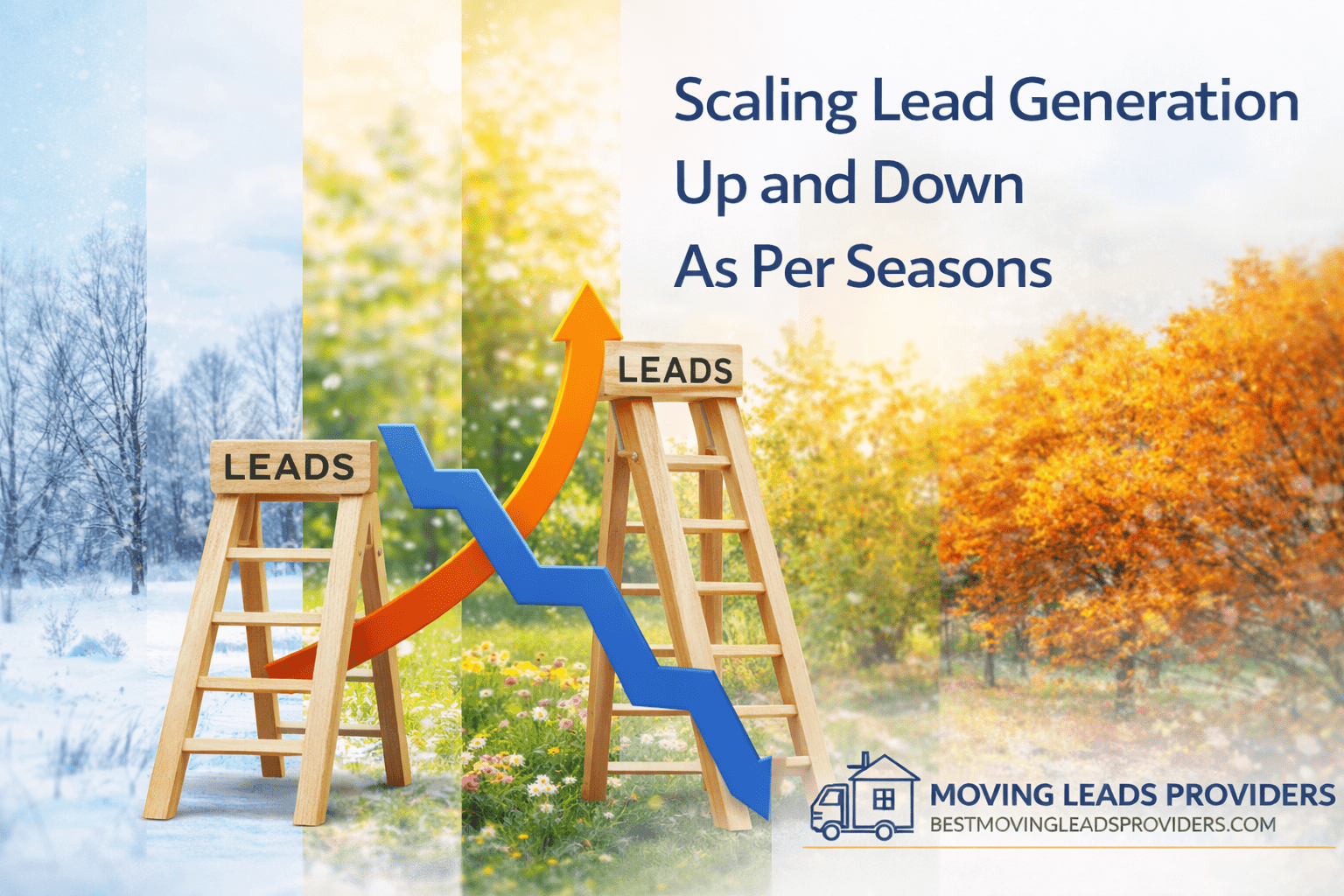
Scaling Lead Generation Up and Down According to Seasonality
In the moving industry, seasonality is not a small fluctuation, it is a defining force. Demand surges in late spring and summer, peaks during school transitions and lease turnovers, and slows dramatically in colder months. For many moving companies, this creates a cycle of overload followed by underutilization.
The mistake most businesses make is treating lead generation as a static system. They either overspend during slow periods or fail to fully capitalize on peak demand. The companies that grow consistently take a different approach. They treat marketing, staffing, and lead flow as adjustable levers that must align with seasonal demand.
Scaling lead generation up and down is not about reacting to the market. It is about anticipating it, structuring your marketing systems accordingly, and maintaining control over your pipeline year-round.
The Reality of Moving Seasonality (And Why It Creates Opportunity)
Seasonality in moving is driven by predictable human behavior. Families prefer to move during summer to avoid disrupting school schedules. Lease cycles often peak at the end of spring and early fall. Weather conditions influence both residential and commercial relocations.
What this means for movers is simple: demand is not evenly distributed. But instead of seeing this as a limitation, it should be viewed as a strategic advantage.
When you understand when demand will rise and fall, you can plan your lead generation efforts with precision. You can increase visibility when competition is highest and capture overlooked opportunities when others pull back.

Peak Season: How to Capture Maximum Demand Without Wasting Budget
During peak months, the challenge is not finding leads. It is managing them effectively while maximizing revenue.
Increase Budget Where Intent Is Highest
When demand surges, your marketing budget should follow. This is not the time to be conservative. High-intent channels like Google Ads, Local Services Ads, and high-converting lead sources should receive increased investment.
However, scaling does not mean spending blindly. Focus on campaigns that historically deliver booked jobs, not just inquiries. Peak season is where profitability is made, so every dollar should be aligned with conversion.
Prioritize High-Value Jobs
Not all peak-season leads are equal. Some will be low-margin, last-minute jobs that strain your resources. Others will be well-planned, higher-value moves.
With the right lead filtering and qualification process, you can prioritize the jobs that make the most sense for your business. This may include larger residential moves, long-distance relocations, or premium service packages.
Strengthen Your Sales Response Speed
In peak season, speed is everything. Leads are contacting multiple movers, and the first professional response often wins.
Scaling lead generation without scaling response capability leads to wasted opportunities. This is where having structured systems such as, call handling, follow-ups, and CRM workflows, becomes critical.
Off-Peak Season: Turning Slow Periods Into Growth Windows
When demand drops, many moving companies make the same mistake, they cut marketing entirely. While reducing spend can make sense, disappearing from the market often creates longer-term problems.
The off-season is not just a slowdown. It is a strategic window.
Maintain a Baseline of Lead Flow
Even in slower months, people still move. Job relocations, downsizing, and urgent life events continue year-round.
Maintaining a consistent presence ensures that your business continues to capture these opportunities. It also prevents your brand from losing visibility in local search and advertising platforms.

Shift Toward Brand and Relationship Building
Off-peak months are ideal for strengthening long-term lead sources. This includes local SEO improvements, review generation, referral partnerships, and content marketing.
These efforts may not produce immediate leads, but they build momentum for the next peak season. Companies that invest during slow periods often dominate when demand returns.
Experiment and Optimize
When lead volume is lower, it becomes easier to test new strategies. You can experiment with messaging, targeting, landing pages, and offers without the pressure of peak-season volume.
This is also a good time to refine your sales process. Improving scripts, response workflows, and customer experience during the off-season prepares your team for higher conversion rates when demand increases.
Adjusting Marketing Channels Based on Season
Different lead channels perform differently depending on the time of year. A flexible strategy allows you to shift focus rather than relying on a single source.
During peak months, high-intent channels tend to dominate. Paid search, Local Services Ads, and ready-to-book lead platforms perform strongly because customers are actively searching.
In slower months, discovery and nurturing channels become more valuable. Social media, email campaigns, and content-driven strategies help keep your brand top-of-mind.
The key is balance. Relying too heavily on one channel creates risk. A diversified approach allows you to scale more smoothly and maintain stability across seasons.
Aligning Staffing With Lead Volume
Lead generation and staffing must work together. Scaling marketing without adjusting your team creates operational bottlenecks. On the other hand, maintaining a large team during slow periods can strain profitability.
Peak Season Staffing Strategy
During busy months, flexibility is essential. This may include hiring temporary crew members, extending work hours, or partnering with additional labor resources.
The goal is to ensure that your capacity matches your lead volume. Turning away jobs during peak season is one of the biggest missed revenue opportunities in the moving industry.
Off-Season Staffing Strategy
In slower months, efficiency becomes the priority. This does not necessarily mean cutting staff aggressively. Instead, it means using your team strategically.
This is the time to focus on training, process improvement, equipment maintenance, and internal optimization. A well-prepared team performs better when demand returns.

Building a Predictable Seasonal Growth System
The most successful moving companies do not scramble to adjust every year. They build systems that anticipate seasonality and respond automatically.
This includes forecasting demand based on historical data, adjusting budgets in advance, and aligning marketing campaigns with expected trends. It also involves tracking performance metrics to understand what works in each season.
At its core, this approach turns seasonality from a challenge into a predictable cycle. Instead of reacting to fluctuations, your business operates with clarity and control.
That is the difference between short-term survival and long-term growth.
Conclusion
Scaling lead generation according to seasonality is not just about spending more in busy months and less in slow ones. It is about creating a flexible, intelligent system that aligns marketing, operations, and strategy with real-world demand.
Peak season is your opportunity to maximize revenue and capture high-intent leads. Off-season is your chance to build, refine, and prepare for the next surge. Both are equally important.
For moving companies that want consistent growth, the goal is not to fight seasonality. It is to master it.
That is exactly where Best Moving Leads Providers delivers value. By helping movers align lead generation with seasonal demand, optimize marketing channels, and build scalable systems, the path to steady, predictable growth becomes much clearer.