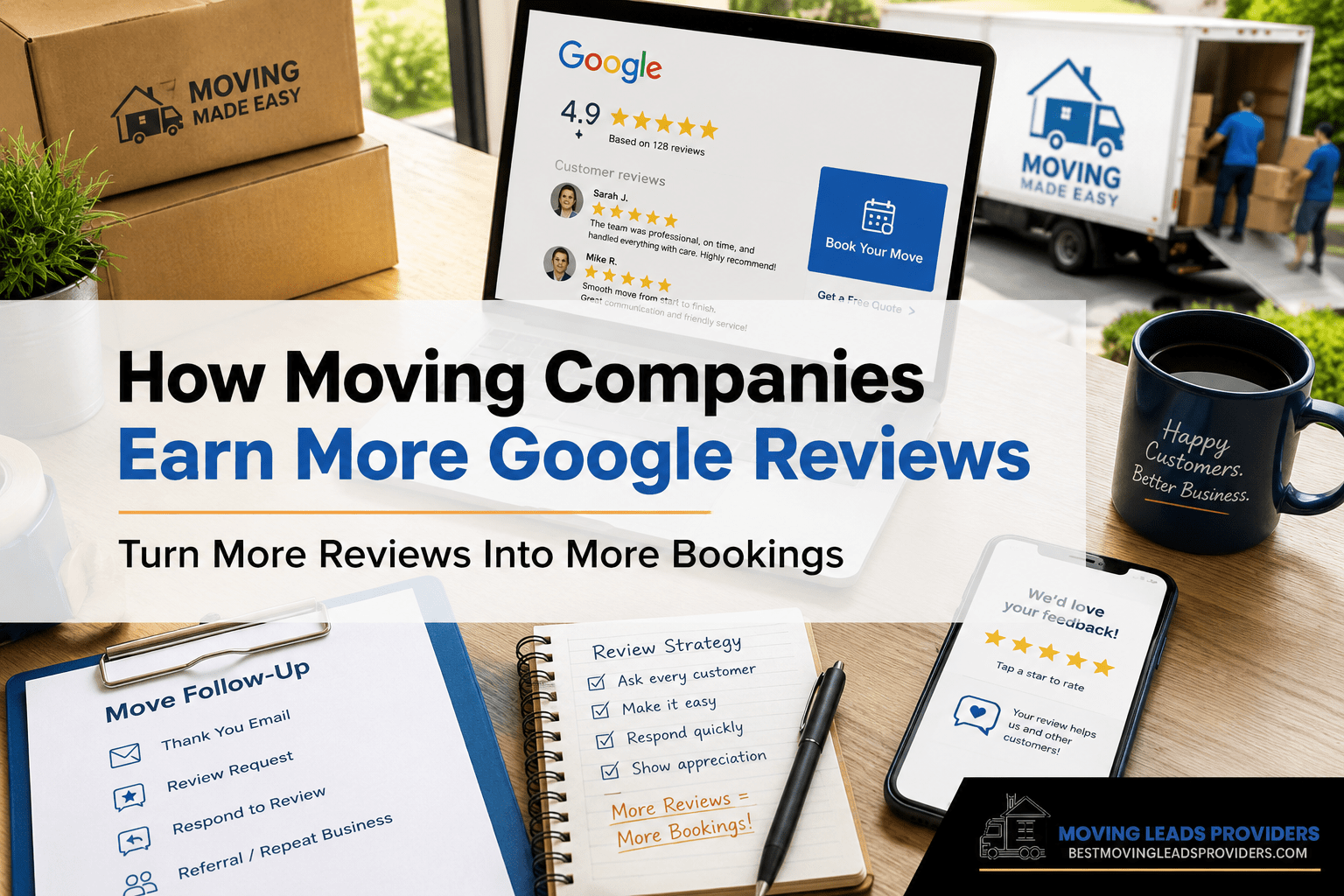
How Moving Companies Can Earn More Google Reviews (and Turn Them Into Bookings)
When someone is preparing to hire a moving company, the very first thing they do — almost without exception — is read reviews. Long before they pick up the phone, request a quote, or compare prices, they search for the company name on Google, scan the star rating, and skim the most recent feedback. Within a few seconds, a decision starts forming. The mover with a steady stream of recent, detailed five-star reviews earns a callback. The one with old, sparse, or unanswered reviews quietly loses the lead to a competitor with a stronger reputation.
This is the reality of running a moving company in today’s digital landscape. Reviews are no longer a nice-to-have asset — they are the single most influential factor in whether a customer chooses your business. At Best Moving Leads Providers, we work with movers across the country, and the companies that consistently convert their leads into booked jobs are almost always the ones with disciplined, systematic review collection in place. This article walks through why Google reviews matter so much, how to earn them consistently, and how to turn them into a real conversion engine that compounds over time.
Why Google Reviews Are a Lead Conversion Tool, Not Just a Vanity Metric
Most moving companies still think of reviews as a marketing nicety — something to collect when there’s time, post on the website, and forget about. The reality is that reviews directly influence two of the most important growth metrics in the business: local search visibility and lead-to-booking conversion rates.
On the visibility side, Google evaluates the quantity, quality, recency, and engagement of reviews when deciding which businesses to feature in the local map pack — that prominent block of three businesses that appears at the top of nearly every local search result. Movers with active, recent, well-rated profiles consistently appear in the map pack, while those with stale or sparse review activity get pushed below the fold where they receive a fraction of the clicks.
On the conversion side, reviews shape how every visitor perceives your company before they ever speak with you. A potential customer comparing your business against three competitors will almost always default to the one with the most authentic, recent, and detailed reviews. Pricing, services, and even brand awareness matter far less than the social proof reviews provide. In a high-trust industry like moving — where customers are handing over their belongings during a stressful transition — that social proof is often the deciding factor.
The Right Cadence for Collecting Reviews
A common mistake among moving companies is treating review collection as a project rather than a habit. They run a campaign in slow months, generate a burst of feedback, and then go quiet for the rest of the year. Google notices, and so do potential customers. Recent reviews matter far more than old ones — a profile with twenty positive reviews from the last six months tends to outperform a profile with two hundred reviews that haven’t seen activity in years.
The goal is steady, predictable review flow. Movers should aim to collect feedback after every completed move, not just from the customers who happen to be especially happy or vocal. When the process becomes part of standard operations — built into the post-move workflow alongside payment collection and final paperwork — review volume grows naturally and reliably without any extra effort during busy seasons.
Building a System That Actually Generates Reviews
The most effective review collection systems remove every possible friction point between the satisfied customer and the act of posting feedback. The easier you make it, the more reviews you receive.
The simplest starting point is leveraging the moment. The best time to ask for a review is immediately after the move is completed, while the customer is standing in their new home with everything in place and the experience fresh in their mind. A polite, personal request from the lead mover on the crew — “If we did a good job today, a quick Google review would mean a lot to our team” — works remarkably well. Customers who agree in person are far more likely to follow through than those approached days later.
The next layer is frictionless access. QR codes printed on business cards, thank-you notes, invoices, and even the side of your trucks let customers scan with a phone camera and land directly on your Google review page. Email and SMS follow-ups sent within a day of the move should include the same direct link. The customer should never have to search for your company on Google or navigate through multiple menus to leave feedback — every extra step lowers completion rates dramatically.
A third layer is team alignment. When your moving crews understand that reviews directly contribute to the company’s growth and their own job security, they tend to take ownership of the process. Many movers create simple recognition programs — bonuses, prizes, or public acknowledgment for crews who consistently bring in reviews. The point is not pressure, but partnership. When the entire team is aligned around the goal, results follow naturally.
Finally, automation closes the gaps. CRM tools and review request platforms can send automated thank-you emails and SMS messages after every completed job, ensuring no customer is missed. The most effective automated sequences include a personal note from the crew lead or office, a clear review link, and a soft follow-up reminder a few days later for customers who didn’t respond the first time. This is exactly the kind of system our Online Reputation Management services at Best Moving Leads Providers help moving companies put in place.
Mistakes That Quietly Stall Review Growth
Even movers who understand the importance of reviews often hit the same handful of obstacles. The most common is inconsistency — asking sporadically rather than systematically. The second is making the process complicated, with confusing links, unclear instructions, or multi-step funnels that lose customers before they finish. The third is ignoring reviews once they post, which signals to both Google and potential customers that the company doesn’t engage with its audience.
Another common pitfall is offering incentives in exchange for reviews. Google explicitly prohibits this, and profiles caught doing it can have reviews removed or face suspension. Authentic feedback is the only kind that builds lasting trust and protects your local rankings.
Finally, failing to respond to negative reviews is one of the most damaging mistakes a mover can make. Every potential customer reading reviews will eventually find a negative one — and how the company responds matters far more than the criticism itself. A calm, professional reply that acknowledges the issue and offers to make things right transforms a negative review into a credibility builder.
Responding to Reviews the Right Way
Every review deserves a response. For positive reviews, a short, genuine thank-you note that mentions the customer by name and references something specific about the move shows authenticity. For negative reviews, the tone matters more than the words. Stay calm, take ownership where appropriate, never argue publicly, and offer to continue the conversation offline. Future customers reading the exchange care less about what went wrong and more about how the company handled it.
Consistency in responding also signals to Google that your business is active and engaged, reinforcing the positive ranking impact of the reviews themselves.
Turning Reviews Into Booked Moves
Reviews are most powerful when they are integrated into the rest of your sales process. Feature your best reviews prominently on your website’s homepage and service pages. Include them in email follow-ups to leads who haven’t booked yet. Train your sales team to reference relevant reviews during quote calls — for example, mentioning a recent five-star review from a customer who moved to the same destination city the prospect is heading to.
This kind of integrated reputation strategy — paired with steady lead flow from a trusted provider — is what turns a moving company from average to standout. At Best Moving Leads Providers, our exclusive, shared, and live transfer moving leads work hand-in-hand with our Online Reputation Management and digital marketing services to give movers a complete growth engine, from lead generation to booking.
Frequently Asked Questions
Most movers see visible improvements within four to eight weeks of building a consistent review collection habit. The improvement compounds over time as recency and volume both grow.
Yes. Asking satisfied customers for honest feedback is fully within Google’s guidelines. What’s not allowed is offering payment, discounts, or incentives in exchange for reviews.
Respond calmly and professionally first, then flag the review through Google’s reporting tool if it violates their content policies. Avoid public arguments — they hurt your credibility more than the original review.
Yes. Yelp, BBB, Angi, and industry-specific platforms all contribute to your overall reputation. Google reviews carry the most weight for local search, but a balanced presence across major platforms strengthens trust.
Final Word
Google reviews are no longer optional for moving companies serious about growth. They drive local rankings, build customer trust, and dramatically lift conversion rates on every lead your business touches. With a disciplined review collection system and strong reputation management support from Best Moving Leads Providers, your moving company can turn five-star feedback into a steady stream of booked moves.