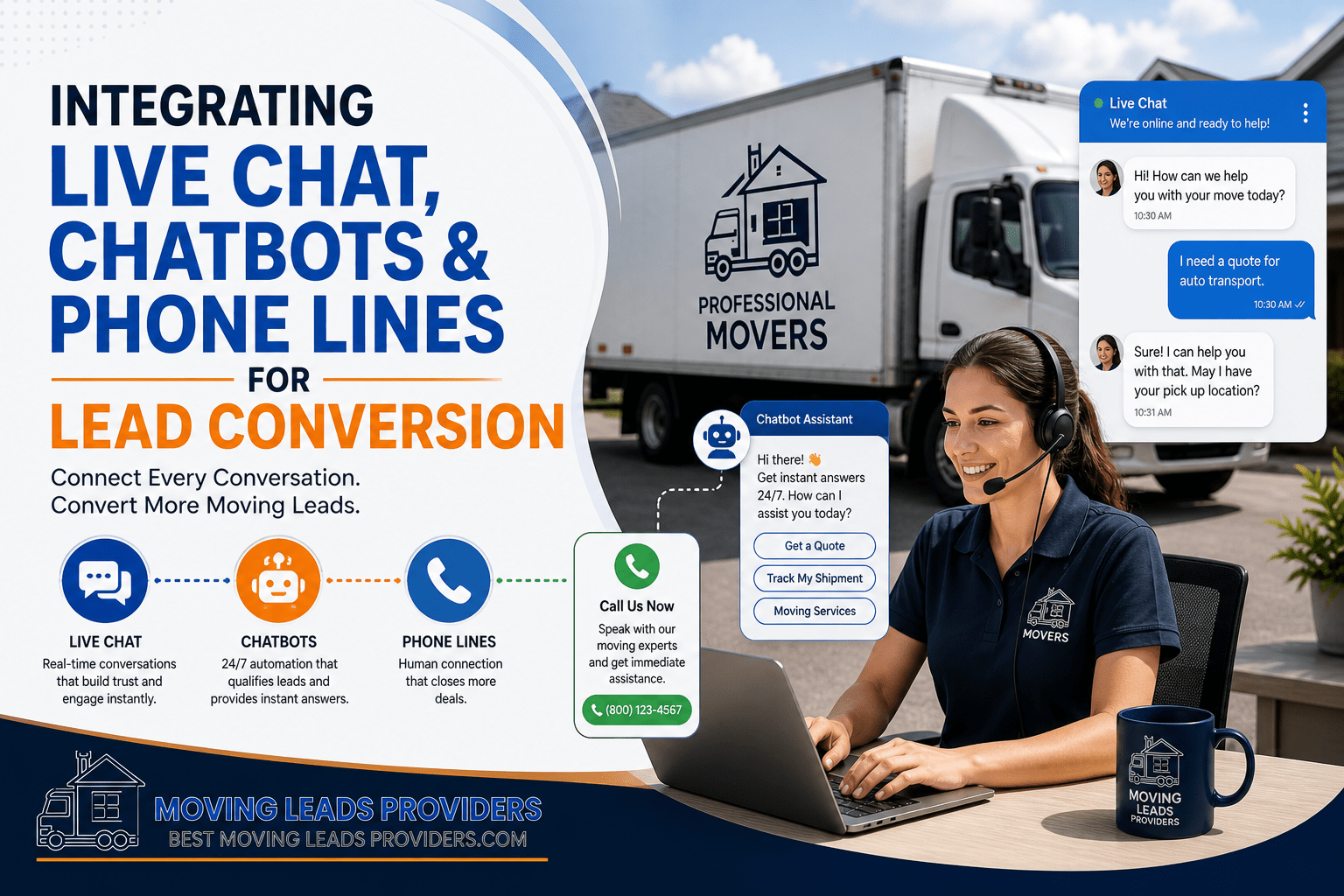
Integrating Live Chat, Chatbots & Phone Lines for Lead Conversion
A moving lead is rarely won through one single interaction anymore. A customer may first visit your website on their phone, ask a quick question through live chat, leave before finishing the form, return later through a retargeting ad, then finally call when they are ready to compare quotes. If your communication channels are disconnected, that journey becomes messy. The customer repeats themselves. Your sales team loses context. Follow-ups get delayed. By the time you call back, another mover may already have won the job.
For moving companies, speed matters, but speed alone is not enough. A fast response that feels robotic, incomplete, or poorly coordinated can still lose the customer. The real advantage comes from creating a connected communication system where live chat, chatbots, and phone lines work together instead of operating as separate tools.
When these channels are integrated properly, each one plays a clear role in the lead conversion process. Chatbots handle instant engagement and basic qualification. Live chat adds a human touch when prospects need reassurance. Phone lines turn high-intent conversations into booked estimates, scheduled surveys, and confirmed moves. Together, they create a smoother customer experience from first click to final booking.
For moving companies that want to convert more leads without increasing wasted sales effort, this kind of communication setup is no longer just a nice upgrade. It is becoming a core part of modern lead management.
Why Multi-Channel Communication Matters for Moving Leads
Moving customers are often under pressure. They may be relocating for a job, downsizing, moving across state lines, handling a family transition, or trying to compare costs before making a decision. Because moving is both expensive and stressful, customers want answers quickly. They also want to feel confident that the company they choose is organized, responsive, and trustworthy.
That means your communication channels are part of your sales pitch. A delayed reply tells the customer you may be slow during the move. A confusing handoff suggests your team may not be organized. A missed call or unanswered chat can make the customer assume you are not available.
On the other hand, a smooth experience builds trust before your sales team even starts selling. When a prospect can ask a quick question, receive an instant response, get routed to the right person, and continue the conversation by phone without starting over, your company feels professional. That confidence can make a major difference, especially when the customer is comparing multiple movers.
The challenge is that many moving companies still treat communication channels separately. The website form goes to one inbox. Live chat lives in another dashboard. Phone calls are tracked manually. Chatbot transcripts are not reviewed by sales. This creates gaps in the customer journey, and those gaps cost conversions.
An integrated system closes those gaps. It allows your team to see who the lead is, what they asked, where they came from, how urgent the move is, and what needs to happen next.
The Role of Live Chat in Moving Lead Conversion
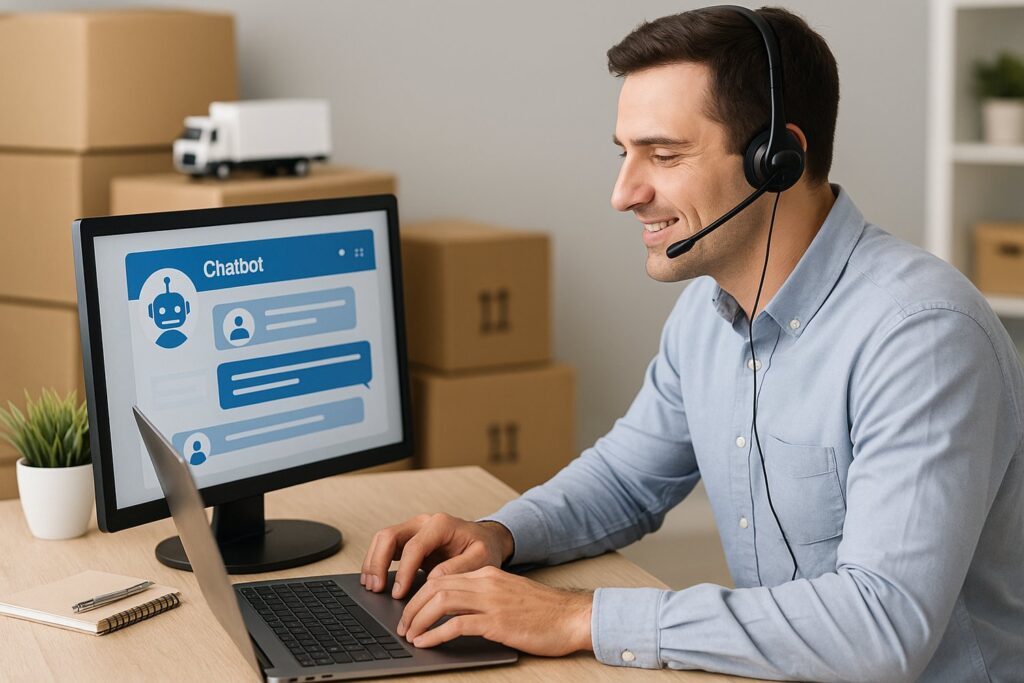
Live chat works best when a customer is interested but not fully ready to call. Many prospects browsing your website may have questions before they feel comfortable submitting a full quote request. They may want to know whether you handle long-distance moves, whether you serve their city, whether packing is available, or whether they can get a rough estimate before scheduling a consultation.
Live chat gives them a low-pressure way to engage.
This is especially useful for moving companies because many customers compare several providers at once. If your website offers immediate help while competitors only show a static form, you have a chance to capture the lead earlier. A visitor who may have left without taking action can be pulled into a conversation.
Live chat is also valuable because it creates emotional reassurance. Moving customers are not just buying a service; they are trusting someone with their belongings, schedule, and budget. A friendly chat agent can answer practical questions, calm concerns, and guide the visitor toward the next step.
For example, a customer may ask:
“Do you move apartments from Dallas to Denver?”
A simple answer is helpful, but a conversion-focused response goes further:
“Yes, long-distance apartment moves are something we can help with. Are you moving from a one-bedroom, two-bedroom, or larger apartment? I can help get the right details over to our moving specialist so they can give you a more accurate quote.”
That response does three things at once. It answers the question, starts qualification, and moves the lead toward a sales conversation.
Live chat should not simply exist as a support tool. For movers, it should be designed as a lead capture and lead qualification channel.
The Role of Chatbots in Instant Engagement
Chatbots are useful because they are always available. Even if your sales team is offline, busy, or handling another call, a chatbot can respond immediately. That matters because many moving leads come in after normal business hours. Customers may research movers at night, during lunch breaks, or on weekends. Without automation, those prospects may disappear before anyone responds.
A chatbot can welcome the visitor, ask basic questions, capture contact details, and route the lead into your CRM. It can also set expectations by telling the customer when they can expect a call or by offering to schedule a consultation.
For moving companies, a useful chatbot should be simple and practical. It does not need to pretend to be a human or handle every possible question. Its strongest role is to collect the key details your sales team needs to prioritize and respond properly.
Those details usually include:
- Origin and destination
- Move type
- Move date or estimated timeframe
- Home size or inventory size
- Packing or storage needs
- Preferred contact method
- Phone number and email address
The chatbot can also identify urgency. A customer moving next week should not be treated the same as someone casually researching a move six months away. By asking the right questions, the chatbot helps your team prioritize high-intent leads faster.
However, chatbots should not become a wall between the customer and your team. If a customer has a complex question, wants pricing clarification, or seems ready to speak with someone, the chatbot should make it easy to transfer the conversation to live chat or a phone call.
The best chatbot experience feels like a bridge, not a barrier.

The Role of Phone Lines in Closing High-Intent Leads
Phone calls remain one of the most powerful conversion channels in the moving industry. A customer who is willing to speak on the phone is often more serious than a casual website visitor. They may be ready to discuss pricing, schedule an estimate, compare services, or book a move.
This is where your sales team can do what automation cannot. A trained representative can listen for urgency, explain service options, handle objections, build trust, and guide the customer toward a decision.
Phone calls are especially important for higher-value moves such as long-distance relocations, commercial moves, international moves, and full-service moves involving packing or storage. These leads often need more explanation than a form or chatbot can provide.
The problem is that phone calls are often disconnected from the rest of the lead journey. A customer may have already chatted with your website, submitted a form, or interacted with a bot, but when they call, the sales rep has no context. The customer then has to repeat everything.
That creates friction.
A connected system solves this by giving your phone team access to previous interactions. If the customer first used live chat to ask about a move from Chicago to Atlanta, the phone rep should already know that. If the chatbot captured that they need packing and storage, the rep should see that before answering or returning the call.
This allows the conversation to begin with confidence:
“I see you are planning a move from Chicago to Atlanta and may need help with packing and short-term storage. I can help you go through the details and get the right estimate started.”
That small amount of context makes the customer feel heard. It also makes your company look more organized than competitors who treat every interaction like a first contact.
Why These Channels Should Not Work Separately
Live chat, chatbots, and phone lines each have value, but they become much more powerful when connected. If they operate separately, your team may still lose leads due to missed information, slow handoffs, duplicate outreach, and inconsistent messaging.
A disconnected system often creates problems like:
- Chatbot leads that never receive a phone follow-up
- Live chat transcripts that sales reps never review
- Phone calls that are not connected to website visitor behavior
- Customers being asked the same questions multiple times
- Multiple reps contacting the same lead without coordination
- No clear record of which channel actually influenced the conversion
These issues may seem operational, but they directly affect revenue. Moving leads are time-sensitive. If your process slows down or feels confusing, the customer may move on quickly.
Integration creates a single flow. A customer can start in chat, move to a phone call, receive a follow-up text or email, and continue through the sales process without losing context. Your team can see the full journey instead of scattered pieces of it.
That is how you turn communication tools into a conversion system.
Building a Seamless Customer Journey
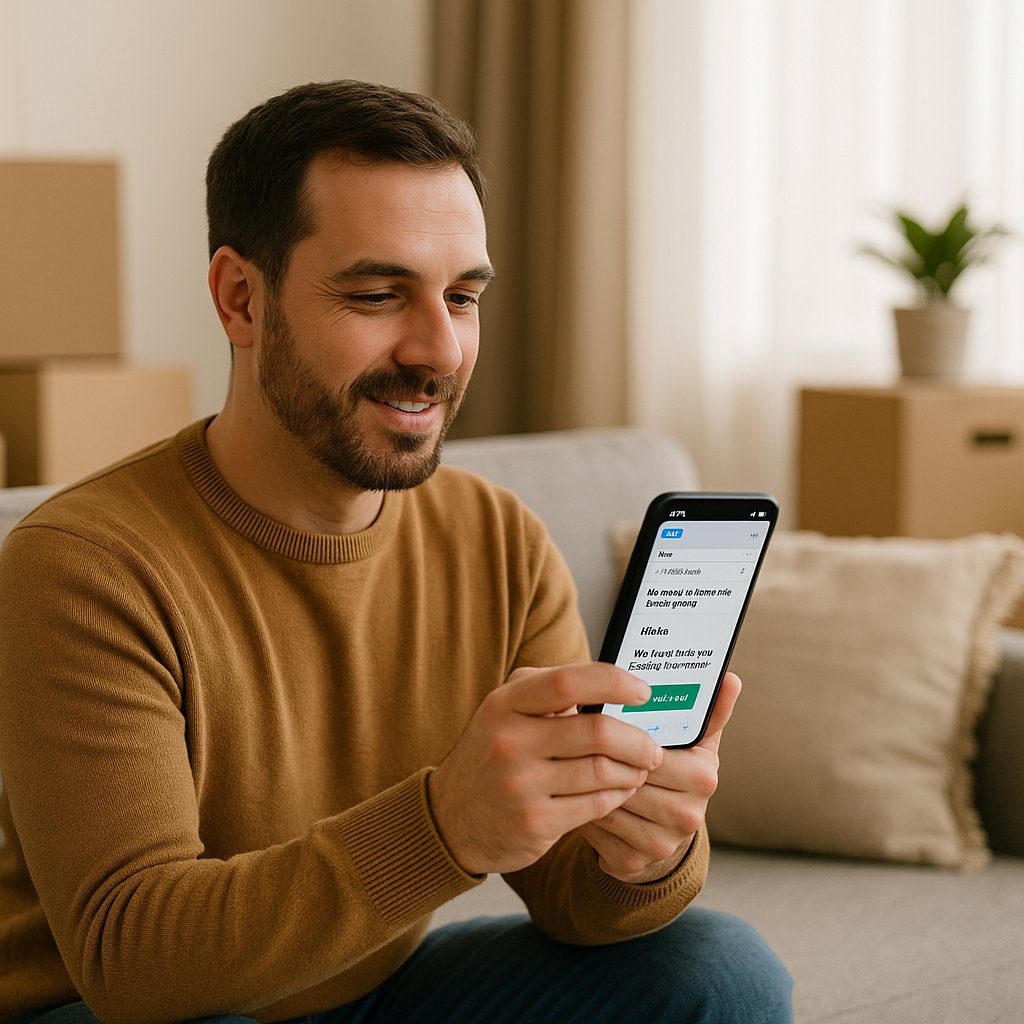
A seamless customer experience does not mean every customer follows the same path. Some people want to call immediately. Some prefer chat. Some only want to submit a quote form. Some need automated help first and human help later.
The goal is to let customers move between channels naturally.
A strong moving lead journey may look like this:
A visitor lands on your long-distance moving page. A chatbot asks whether they need help with a local or long-distance move. The visitor selects long-distance and enters the origin city, destination city, move date, and phone number. Because the move is happening within two weeks, the system marks it as high priority.
If a live agent is available, the chat is transferred immediately. If not, the chatbot offers a phone call and sends the lead into the CRM. A sales rep receives the lead with the full chatbot transcript and calls within minutes. During the call, the rep confirms the move details, asks about inventory, explains the estimate process, and schedules a virtual survey.
After the call, the CRM triggers a follow-up message confirming the next step.
That journey feels smooth to the customer because every step connects. It also helps your sales team because they are not starting from scratch.
Connecting Channels Through Your CRM
The CRM should be the central place where all communication data comes together. Without a CRM or lead management system, it becomes difficult to track conversations, assign follow-ups, and measure results.
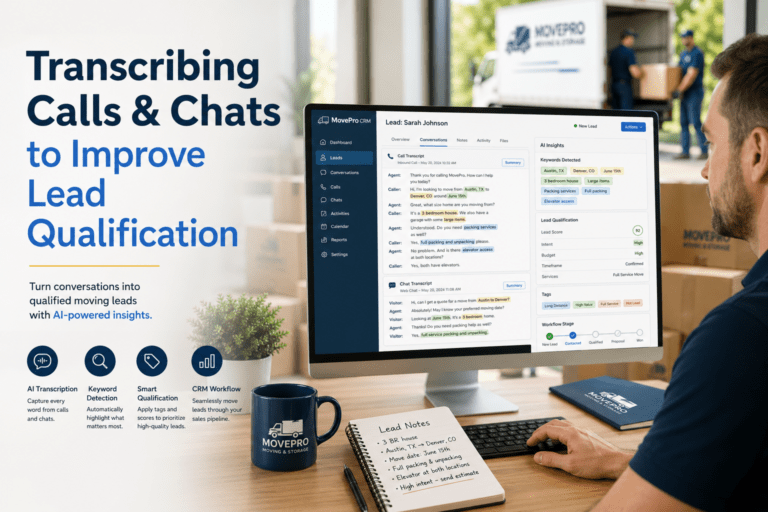
For moving companies, CRM integration should capture every important touchpoint. When a customer interacts with your chatbot, that transcript should attach to the lead record. When they use live chat, the conversation should be saved. When they call, the call should be logged. If a call is recorded or transcribed, that information should also be connected to the lead.
This gives your sales team a complete view of the prospect.
It also makes follow-up more effective. Instead of sending generic messages, your team can tailor outreach based on what the customer already shared. A lead who asked about storage can receive a follow-up mentioning storage options. A lead who asked about commercial moving can be routed to someone experienced with office relocations. A customer who requested a call but did not answer can be followed up with a message referencing their quote request.
The more connected your data is, the more personal and relevant your sales process becomes.

Using Channel Data to Prioritize Leads
Not all leads have the same level of intent. One of the biggest benefits of integrating live chat, chatbots, and phone lines is that you can use channel behavior to prioritize follow-up.
A person who only visits one page and leaves may not be ready. A person who interacts with the chatbot, provides a move date, asks about pricing, and requests a call is much more valuable. A caller who previously visited your packing services page may be a stronger upsell opportunity. A commercial moving prospect who fills out detailed project information may deserve immediate attention from a senior sales rep.
When channels are connected, these signals become easier to spot.
Your team can create lead scoring rules based on behavior such as:
- Requested a phone call
- Provided a moving date
- Selected a move within the next 30 days
- Asked about pricing or availability
- Mentioned packing, storage, auto transport, or commercial services
- Used multiple channels before converting
- Called after submitting a chat or form
These details help your sales team spend more time on the leads most likely to convert.
Improving Response Speed Without Losing Quality
Fast response time is one of the most important factors in moving lead conversion. Customers often contact several companies, and the first professional response can shape their decision. However, speed should not come at the cost of quality.
This is where integrated channels help.
A chatbot can respond instantly. Live chat can step in when the customer needs human support. Phone lines can handle the serious sales conversation. The CRM can keep everyone aligned. Instead of forcing one channel to do everything, each channel handles the part it is best suited for.
This creates a faster and better experience.
For example, if your phone team is unavailable, the chatbot can still capture the lead and set expectations. If a customer starts in live chat but becomes highly qualified, the agent can invite them to a call. If a customer calls after using the chatbot, the sales rep can continue the conversation without wasting time.
The result is not just faster response. It is smarter response.

Creating Better Handoffs Between Automation and Human Sales
One of the biggest mistakes moving companies make is relying too heavily on automation without planning the human handoff. A chatbot may collect information, but if the transition to a real person is slow or awkward, the lead may lose interest.
A good handoff should feel natural.
The chatbot should clearly tell the customer what happens next. For example:
“Thanks. I have the basic details of your move. A moving specialist can now help you review options and get a more accurate estimate. Would you prefer a call now or later today?”
This gives the customer control while moving them toward a sales conversation.
The sales rep should then receive the full context before making contact. They should know what the customer entered, what questions were asked, what pages the customer visited if available, and what the next expected step is.
The handoff should not feel like a restart. It should feel like progress.
Training Your Team to Use Integrated Communication Properly
Technology can connect channels, but your team still needs the right process. A CRM full of chat transcripts and call logs is only useful if sales reps actually use the information.
Your team should be trained to review previous interactions before calling or replying. They should understand how to interpret chatbot responses, how to pick up a live chat conversation, and how to document phone outcomes clearly.
They should also know when to move a lead from one channel to another. Not every chat needs a call, but high-intent conversations should be escalated quickly. Not every chatbot conversation requires immediate human attention, but urgent move dates should be flagged. Not every phone inquiry is ready to book, but every call should result in a clear next step.
A connected system works best when your team treats each channel as part of the same sales journey.

Avoiding a Robotic Customer Experience
Automation is useful, but moving customers still want to feel like they are dealing with real people. This is especially true when they are making a stressful or expensive decision.
Your chatbot should be helpful, but not overly scripted. Your live chat should sound human, not copied from a template. Your phone team should acknowledge what the customer already shared instead of asking the same questions repeatedly.
The tone across all channels should be consistent. If your website promises friendly, professional service, your chatbot, live chat agents, and phone reps should reflect that same personality. If one channel sounds polished and another feels careless, the experience becomes inconsistent.
The best integrated systems combine automation with empathy. They use technology to remove delays, organize information, and improve routing, while still allowing human reps to build trust where it matters most.
Tracking Which Channels Drive Conversions
Once your channels are connected, you can measure performance more accurately. Instead of only asking, “How many leads came from the website?” you can ask better questions:
- Which leads started in chat and later converted by phone?
- Which chatbot questions produced the highest-quality leads?
- Which pages generated the most live chat conversations?
- How many missed calls were recovered through follow-up automation?
- How quickly did the team respond to high-intent chat leads?
- Which channel combinations produced the best booking rates?
This information can help you improve both marketing and sales.
For example, if many visitors use live chat on your long-distance moving page, that page may need stronger pricing guidance or clearer next steps. If chatbot leads with move dates within 14 days convert at a high rate, those leads should receive immediate priority. If after-hours chatbot leads are not converting, your follow-up process may need improvement.
Integration does more than improve communication. It gives you better insight into what actually drives booked jobs.
How Best Moving Leads Providers Helps Movers Capture and Convert Better Leads
At Best Moving Leads Providers, we understand that lead generation does not stop when a prospect submits a form or makes a call. For moving companies, the real value comes from turning that interest into an actual booked move. That requires the right mix of lead quality, response speed, follow-up systems, and sales coordination.
We help moving companies connect with prospects who are actively looking for moving services, including local moving leads, long-distance moving leads, commercial moving leads, international moving leads, auto transport moving leads, and live transfer leads. But beyond lead supply, we also understand the importance of how those leads are handled once they enter your pipeline.
A strong communication setup can make every lead more valuable. When your team can respond quickly, continue conversations across channels, and prioritize high-intent opportunities, your conversion rate improves. That means less wasted effort and more revenue from the leads you already receive.
Whether you are handling live transfer calls, inbound quote requests, chatbot inquiries, or website leads, the goal should be the same: respond fast, keep the experience smooth, and move the customer confidently toward booking.
Final Thoughts
Live chat, chatbots, and phone lines each serve a different purpose in moving lead conversion. Chatbots provide instant engagement and basic qualification. Live chat gives customers real-time human support when they need quick answers. Phone lines allow your sales team to build trust, handle objections, and close high-value opportunities.
But the real power comes from integration.
When these channels are connected, your customer experience becomes smoother and your sales process becomes more organized. Prospects do not have to repeat themselves. Sales reps get better context. Urgent leads receive faster attention. Follow-ups become more relevant. Your company appears more professional from the very first interaction.
For moving companies competing in a fast-moving market, that seamless experience can be the difference between a missed inquiry and a booked job.
If your moving business wants more high-quality leads and a better chance of converting them into paying customers, Best Moving Leads Providers can help you connect with prospects who are ready to move. Contact us today to learn how our moving leads, live transfer leads, and marketing solutions can support your growth.