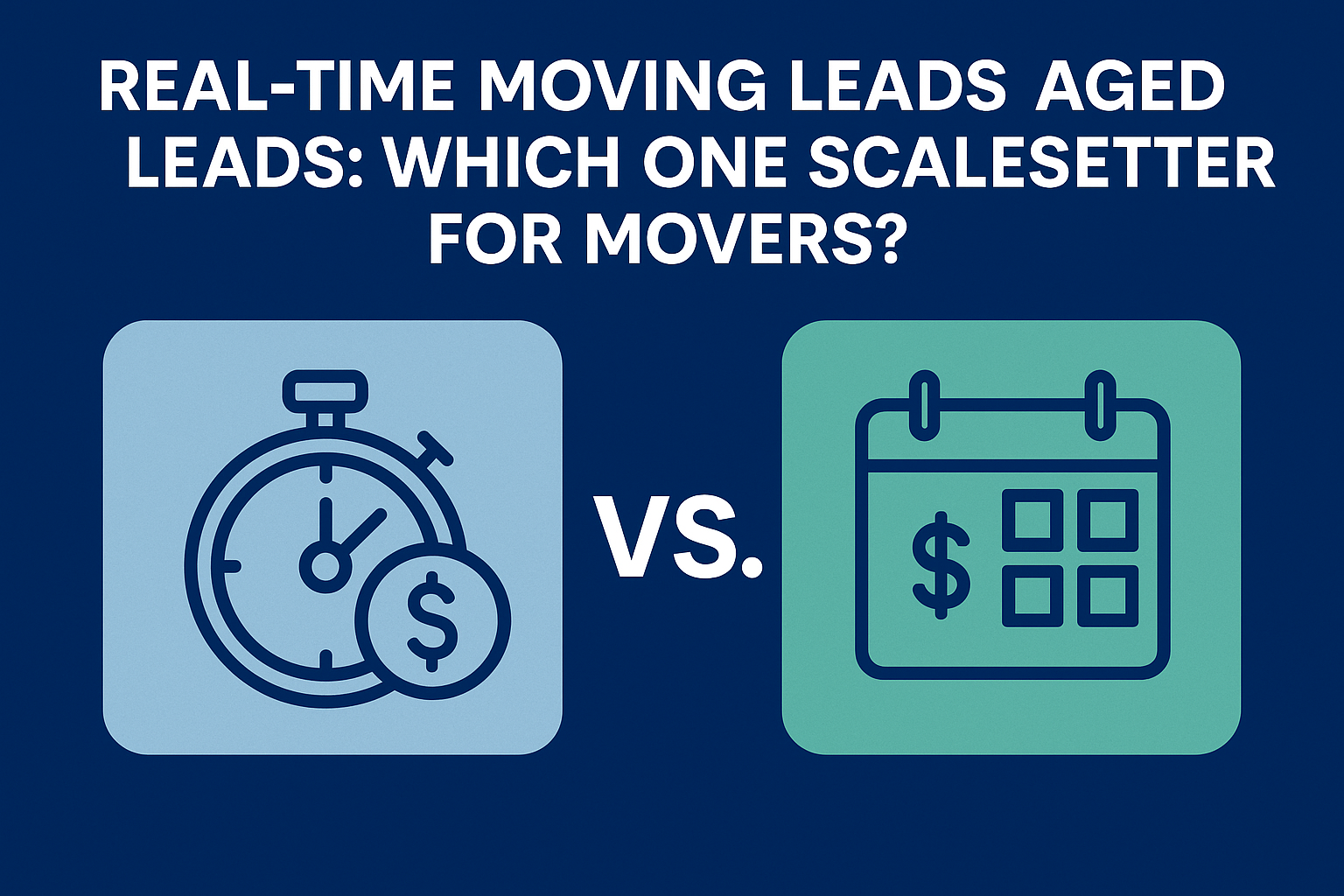
Real-Time Moving Leads vs. Aged Leads: Which One Scales Better for Movers?
The moving industry thrives on timing. A customer who is actively planning a move today will not wait weeks for a call back, and a company that fails to connect quickly risks losing the job to faster competitors. That’s why one of the biggest debates movers face when purchasing leads is whether to invest in real-time moving leads or aged leads.
Both have their advantages and disadvantages, and both can play a role in a company’s growth strategy. But the real question is: which option scales better for movers looking to grow consistently? Let’s break it down.

What Are Real-Time Moving Leads?
Real-time moving leads are leads delivered to your business the moment a potential customer fills out a form online, clicks an ad, or reaches out through a lead provider.
Key Features of Real-Time Leads:
- Delivered instantly, often within seconds of submission.
- Typically exclusive or limited in competition.
- Reflect immediate intent, meaning the customer is actively looking for a mover.
Example:
A customer in Dallas submits a request online for a move next month. Within 30 seconds, the lead hits your CRM or phone system. If your team calls immediately, you’re the first mover they speak with — and chances are high they’ll book with you.
What Are Aged Moving Leads?
Aged leads are leads that were once real-time inquiries but were not immediately purchased or converted. Depending on the source, aged leads can range from a few days old to several weeks or even months old. They can be either shared or exclusive leads, which you need to confirm from your lead provider.
Key Features of Aged Leads:
- Much cheaper than real-time leads.
- May have already been contacted by multiple movers.
- Intent may have decreased, or the customer may have already booked a move.
Example:
That same Dallas customer from the previous example didn’t book right away, and their lead was marked as “aged.” You purchase it two weeks later at a discount. While the chances of conversion are lower, the cost is significantly less.

Pros and Cons of Real-Time Leads
Advantages:
- Highest conversion potential — you reach the customer while they’re still searching.
- Speed to contact makes your business look professional and responsive.
- Exclusive options often reduce competition.
Disadvantages:
- Higher cost per lead than aged leads.
- Requires fast response systems — slow follow-ups can waste expensive leads.
- ROI can vary depending on sales team training.
Pros and Cons of Aged Leads
Advantages:
- Cost-effective — priced much lower than real-time leads.
- Can be purchased in bulk, allowing movers to scale outreach efforts.
- Useful for movers with strong sales processes who can re-engage older leads.
Disadvantages:
- Lower intent — many customers may have already booked a mover.
- Higher competition — the lead may have been sold to multiple companies.
- Conversion rates are generally much lower.

Which Scales Better: Real-Time or Aged Leads?
When it comes to scaling, the answer isn’t black and white. It depends heavily on your budget, sales process, and business model.
Real-Time Leads for Scaling
- Best for movers who want to grow fast and can handle high-volume follow-ups immediately.
- Works well if you have a dedicated sales team, instant CRM alerts, and the ability to respond within minutes.
- Provides predictable results when properly managed, making it easier to scale marketing spend.
Aged Leads for Scaling
- Best for movers with limited budgets who want to keep pipelines full.
- Works well if you have persistent sales reps trained in follow-up and nurturing.
- Provides a low-cost way to scale outreach, though conversions will require more effort.
Hybrid Approach: The Best of Both Worlds
The most successful moving companies often use a hybrid strategy:
- Buy real-time leads to capture immediate bookings and maintain steady cash flow.
- Purchase aged leads in bulk to keep the sales team busy, fill downtime, and occasionally uncover hidden opportunities.
For example, a mover might spend 70% of their budget on real-time leads for predictable jobs, while investing 30% into aged leads for additional growth at a lower cost.
Tips for Maximizing ROI from Both Lead Types
- Respond within 5 minutes for real-time leads — speed is everything.
- Use automation (texts, emails, auto-dialers) to follow up instantly.
- Build a nurturing sequence for aged leads — send helpful tips, moving checklists, or discount offers.
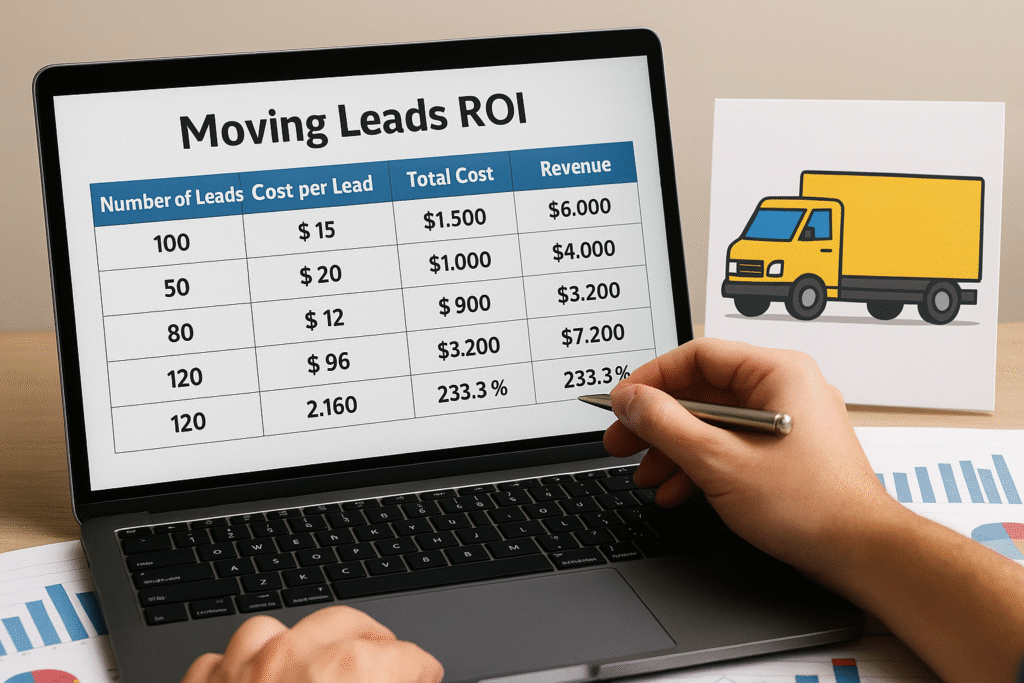
- Track conversion data separately for real-time and aged leads to know where your ROI is strongest.
- Test different mixes of real-time vs. aged until you find the right balance for your business.
Final Thoughts
So, which one scales better — real-time leads or aged leads? The truth is that each has its place. Real-time leads give movers the best chance of closing jobs quickly and consistently, while aged leads provide a cost-effective way to keep pipelines active.
In 2025, movers who want to grow at scale should not look at this as an either/or decision. Instead, they should build a system that uses both intelligently — real-time leads for predictable revenue, aged leads for volume and low-cost opportunities.
By combining the strengths of each, your moving business can scale faster, lower acquisition costs, and dominate your local market.