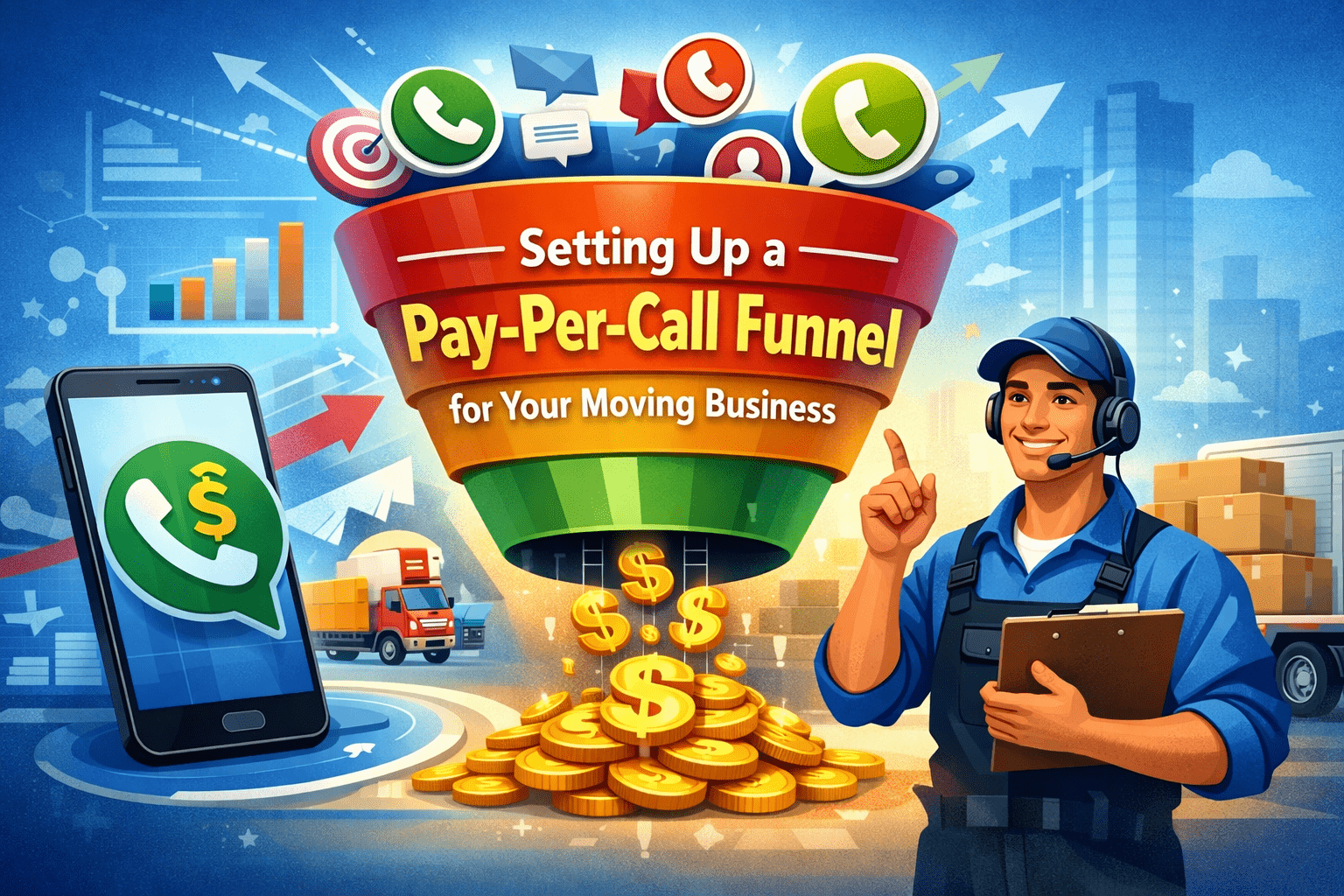
Setting Up a Pay-Per-Call Funnel for Your Moving Business
The moving industry has changed dramatically over the last few years. Customers no longer want to wait for callbacks, sift through emails, or fill out long quote forms. When people search for movers, especially for urgent or high-value jobs, they want to speak to someone immediately.
This shift in buyer behavior is exactly why pay-per-call marketing has become one of the most effective lead generation models for moving companies. But simply buying calls is not enough. Without a properly structured funnel, many movers waste money on unqualified calls, missed opportunities, or inconsistent results.
In this guide, we break down how to set up a pay-per-call funnel for your moving business—from traffic sources and call routing to qualification, conversion, and scaling. When built correctly, this funnel can become one of the most predictable and profitable systems in your marketing stack.
What Is a Pay-Per-Call Funnel in the Moving Industry?
A pay-per-call funnel is a structured system that attracts potential moving customers and routes them into live phone conversations with your sales team. Instead of paying for clicks or form submissions, you pay only when a qualified call is delivered.
The funnel itself is not just the phone call. It includes everything that happens before, during, and after that call—how the prospect finds you, why they decide to call, how the call is handled, and what happens once the conversation ends.
For movers, this funnel is especially powerful because moving services are high-trust, time-sensitive, and often complex. A well-designed pay-per-call funnel aligns perfectly with how customers actually want to buy.

Step One: Understanding Call Intent and Buyer Readiness
Before building a pay-per-call funnel, it’s critical to understand who should be calling you. Not every phone call is valuable. The goal is not volume, it’s intent.
High-intent callers are people who:
- Are actively planning a move
- Have a defined timeframe
- Are looking for professional movers
- Want pricing or availability now
Your funnel should be designed to attract only these types of prospects. This starts with targeting and messaging that clearly communicates what services you offer and who you serve.
When intent is clear, conversion becomes far easier.
Step Two: Choosing the Right Traffic Sources for Pay-Per-Call
The success of a pay-per-call funnel depends heavily on where calls originate. Different traffic sources produce very different call quality.
Search-based traffic is often the strongest performer. When someone searches for terms like “movers near me,” “same day movers,” or “long distance movers,” they are usually ready to talk immediately. These searches naturally lend themselves to phone calls rather than forms.
Paid advertising can also be highly effective when structured correctly. Call-focused ads, extensions, and landing experiences that emphasize “call now” messaging tend to outperform traditional lead forms for movers.
The key is alignment. The ad message, keyword, and call experience must all match the intent level of the prospect. When that alignment exists, the funnel begins working efficiently.
Step Three: Call Routing and Real-Time Transfers
Once a prospect initiates a call, what happens next is critical. Poor routing can destroy even the best leads.
A strong pay-per-call funnel routes calls in real time to available sales representatives. This eliminates hold times, voicemail, and call abandonment—three of the biggest conversion killers in the moving industry.
Call routing should also account for:
- Business hours
- Geographic service areas
- Type of move (local, long-distance, commercial, etc.)
- Sales team capacity
When routing is optimized, calls reach the right person at the right time, increasing both conversion rates and customer satisfaction.

Step Four: Pre-Qualification Before the Call Is Delivered
One of the biggest advantages of pay-per-call funnels is call qualification. Not every inbound call should reach your sales team.
A properly built funnel filters calls based on minimum criteria such as move type, timing, and location. This prevents your team from spending time on calls that will never convert.
For moving businesses, this step protects profitability. It ensures that you are paying only for conversations that have a real chance of turning into booked jobs.
At Best Moving Leads Providers, qualification is a core part of funnel design—not an afterthought.
Step Five: Handling the Call Like a High-Value Opportunity
Once the call reaches your team, the funnel shifts from marketing to sales. This transition must be seamless.
Pay-per-call leads should never be treated like cold inquiries. These callers are already engaged, already interested, and already expecting answers. The way the call is handled often determines whether the move is booked on the spot or lost to a competitor.
Effective call handling focuses on:
- Listening before selling
- Asking structured but natural questions
- Addressing concerns clearly and confidently
- Guiding the caller toward a next step
Consistency here is key. Sales scripts should provide structure without sounding robotic. Every call should reinforce trust, professionalism, and competence.
Step Six: Tracking, Recording, and Analyzing Calls
A pay-per-call funnel is only as good as the data behind it. Without tracking, optimization becomes guesswork.
Call tracking allows movers to see:
- Where calls are coming from
- Which campaigns produce the best conversions
- How long calls last
- Why certain calls convert and others don’t
Call recordings are especially valuable. They reveal patterns in objections, pricing concerns, and booking behavior. Over time, this data helps refine both marketing and sales strategies.
For growing moving businesses, this feedback loop is what turns pay-per-call from an expense into an investment.
Step Seven: Scaling the Funnel Without Losing Quality
Once a pay-per-call funnel is working, the natural next step is scaling. However, scaling too quickly without safeguards can reduce lead quality and overwhelm operations.
Smart scaling focuses on:
- Gradual volume increases
- Expanding into proven service areas
- Adding call capacity before increasing demand
- Maintaining strict qualification standards
A well-managed funnel grows predictably, not explosively. This approach keeps close rates stable while revenue increases.

Common Pay-Per-Call Funnel Mistakes Movers Make
Many movers struggle with pay-per-call not because the model doesn’t work, but because the funnel is incomplete.
Common mistakes include running call campaigns without proper tracking, sending calls to voicemail, undertraining sales staff, or trying to cut costs by removing qualification filters.
Each of these issues weakens the funnel and leads to frustration. Pay-per-call is powerful, but only when treated as a system—not a shortcut.
How Best Moving Leads Providers Build High-Performing Call Funnels
Best Moving Leads Providers designs pay-per-call funnels specifically for moving businesses. Every funnel is built around intent, timing, and conversion—not just call volume.
Campaigns are structured to attract ready-to-move customers, qualify them before transfer, and connect them to movers in real time. The result is fewer wasted calls, higher booking rates, and better ROI.
Pay-per-call works best when it’s integrated into a broader marketing strategy that includes SEO, PPC, and reputation management. This creates both immediate results and long-term growth.
Turning Phone Calls Into Predictable Revenue
A pay-per-call funnel is one of the most direct paths to booked moves in the modern moving industry. When built correctly, it removes friction, shortens the sales cycle, and connects movers with customers at the exact moment they are ready to decide.
For moving businesses that want consistency, control, and scalability, pay-per-call is no longer optional—it’s essential.
Best Moving Leads Providers helps movers build and optimize these funnels so every call has the potential to become a profitable move, not just another missed opportunity.