How to Create a Referral Program Complementing Your Affiliate Program
Most moving companies invest heavily in acquiring new leads, through paid ads, third-party platforms, and affiliate partnerships. While these channels are essential, they often come with rising costs and increasing competition.
What many movers overlook is one of the most powerful and cost-effective lead sources already within their reach: past customers.
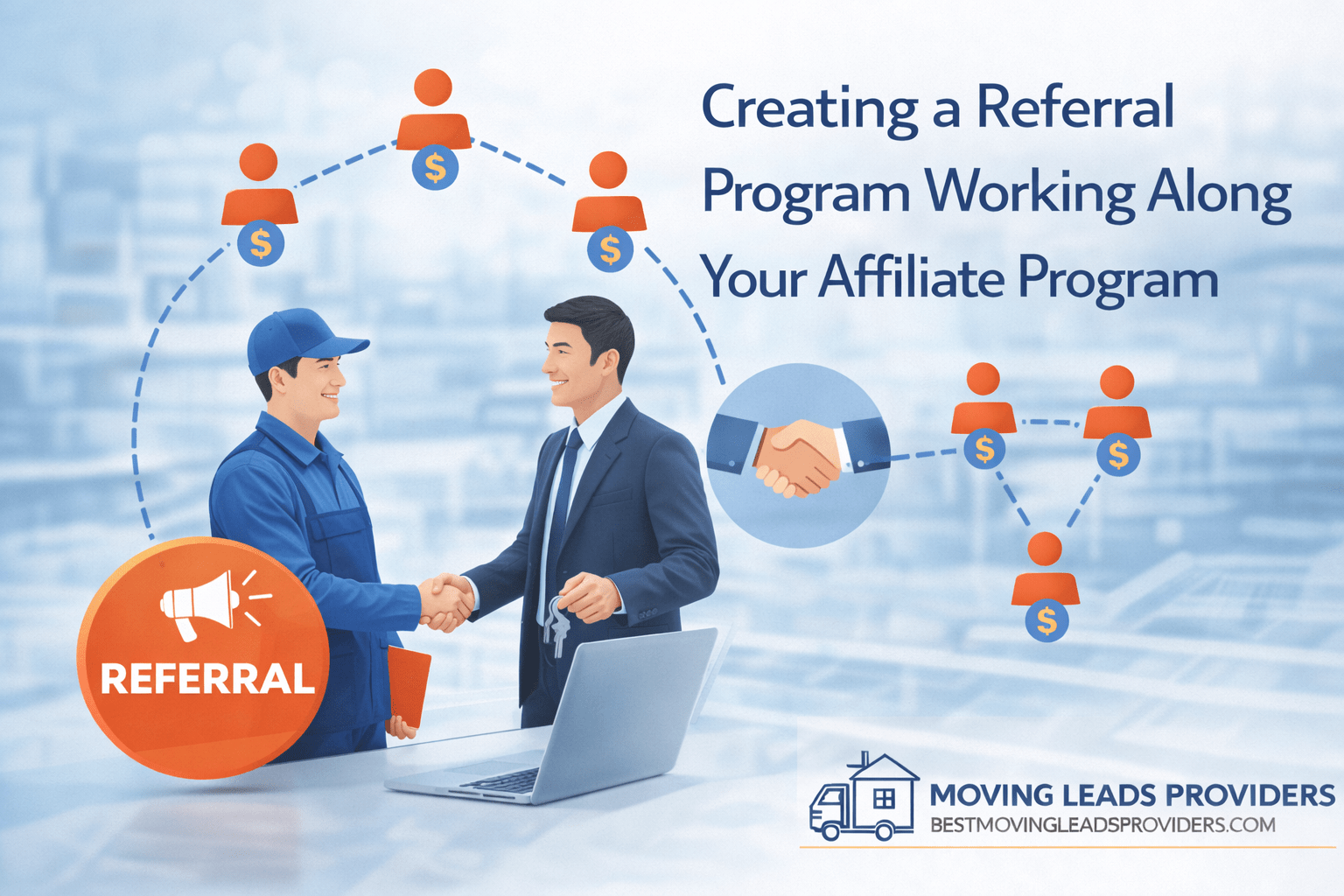
A well-designed referral program can turn satisfied clients into a consistent stream of high-quality leads. When combined with an existing affiliate strategy, it creates a balanced, scalable acquisition system, one that blends external reach with internal trust.
At Best Moving Leads Providers, we see the most successful moving companies treating referrals not as an afterthought, but as a structured growth channel that works alongside affiliate marketing, not separately from it.
Why Referral Programs and Affiliate Programs Work Better Together
Affiliate marketing and referral programs are often viewed as similar, but they serve different purposes.
Affiliate partners help you reach new audiences at scale. They operate externally, driving volume through networks, platforms, and marketing systems you do not control directly.
Referral programs, on the other hand, operate internally. They rely on trust, experience, and personal recommendations from people who have already used your service.
When these two channels are aligned, they create a powerful combination:
- Affiliates bring in new traffic and awareness
- Referrals bring in high-trust, high-conversion leads
- Together, they stabilize your lead pipeline
The goal is not to replace one with the other. It is to create a system where both channels reinforce your growth.

The Foundation of a Strong Referral Program
A referral program only works if customers actually want to participate. That means it must be simple, rewarding, and well-timed.
Start with a Memorable Customer Experience
No incentive can compensate for a poor moving experience.
Referrals are driven by satisfaction. If your service is unreliable, stressful, or inconsistent, customers will not recommend you, regardless of rewards. This is why operational excellence is the first step. A smooth, professional move creates the emotional foundation for referrals.
Keep the Process Frictionless
Customers should not have to figure out how to refer someone.
Provide a clear, simple path:
- A referral link
- A quick form
- A direct contact method
The easier it is, the more likely customers are to take action.
Make the Incentive Worthwhile
Incentives do not need to be extravagant, but they must feel meaningful.
Options may include:
- Cash rewards
- Gift cards
- Discounts on future services
- Service upgrades
The key is to align the reward with what your customers value.
Designing Incentives That Drive Action
Not all referral incentives perform equally. The structure of your reward system plays a major role in participation.
Dual-Sided Incentives Work Best
One of the most effective approaches is rewarding both the referrer and the new customer.
For example:
- The referring customer receives a reward after the job is completed
- The new customer receives a discount or added service
This creates a win-win dynamic and increases the likelihood of referrals.
Tie Rewards to Completed Jobs, Not Just Leads
To maintain quality, incentives should be triggered by successful bookings—not just referrals.
This ensures that your program attracts serious prospects rather than low-intent inquiries.
Introduce Tiered Rewards for High Referrers
Some customers will refer more than others. Recognizing and rewarding these individuals can amplify results. Tiered incentives, where rewards increase based on the number of successful referrals, encourage ongoing participation.
At Best Moving Leads Providers, we often see referral programs become a consistent revenue channel when they are structured with long-term engagement in mind.

Integrating Referrals Into Your Existing Affiliate Strategy
The real advantage comes when your referral program and affiliate marketing work together strategically.
Avoid Channel Conflict
Your referral program should complement, not compete with, your affiliate efforts. This means clearly defining how each channel operates. Affiliates may drive traffic through marketing campaigns, while referrals come from direct customer relationships.
Keeping these channels distinct prevents overlap and confusion.
Use Data to Compare Performance
Track referral leads and affiliate leads separately. Look at metrics such as:
- Conversion rates
- Revenue per lead
- Customer lifetime value
Referral leads often outperform in trust and conversion, while affiliates provide scale. Understanding this balance helps you allocate resources more effectively.
Reinforce Trust Across Channels
Strong branding and consistent messaging ensure that both referral and affiliate leads experience the same level of professionalism. When your reputation is strong, both channels perform better.
When and How to Ask for Referrals
Timing is critical in any referral strategy.
Ask at the Right Moment
The best time to request a referral is immediately after a successful move—when the customer is most satisfied. This could be:
- At the end of the move
- During a follow-up call
- In a post-service email
The key is to capture the moment when the experience is still fresh.
Use Multiple Touchpoints
Do not rely on a single request. Incorporate referral prompts into:
- Email follow-ups
- SMS messages
- Thank-you pages
- Customer feedback surveys
Consistent visibility increases participation.
Train Your Team to Mention It Naturally
Your crew and customer service team can play a role in generating referrals.
A simple, natural mention—“If you know anyone else planning a move, we’d love to help”—can go a long way when paired with a formal program.

Leveraging Technology to Scale Your Referral Program
Manual referral tracking quickly becomes inefficient as your business grows.
Using the right tools allows you to:
- Track referrals automatically
- Attribute leads accurately
- Manage rewards efficiently
- Analyze performance data
Integrating your referral program with your CRM ensures that every referral is captured, tracked, and followed up properly.
At Best Moving Leads Providers, we emphasize building systems that scale. A referral program should not rely on memory or manual processes, it should operate as a structured part of your lead generation strategy.
Conclusion
Creating a referral program that complements your affiliate strategy is one of the smartest ways to build a balanced, sustainable lead generation system. Affiliate marketing brings scale and reach. Referrals bring trust and high conversion. Together, they create a powerful engine for growth.
By focusing on customer experience, designing meaningful incentives, and integrating referrals into your broader marketing strategy, moving companies can unlock a steady stream of high-quality leads.
At Best Moving Leads Providers, we believe that the strongest businesses do not rely on a single channel. They create ecosystems, where every lead source supports the others. And when referrals become part of that system, growth becomes more predictable, more profitable, and far more resilient.