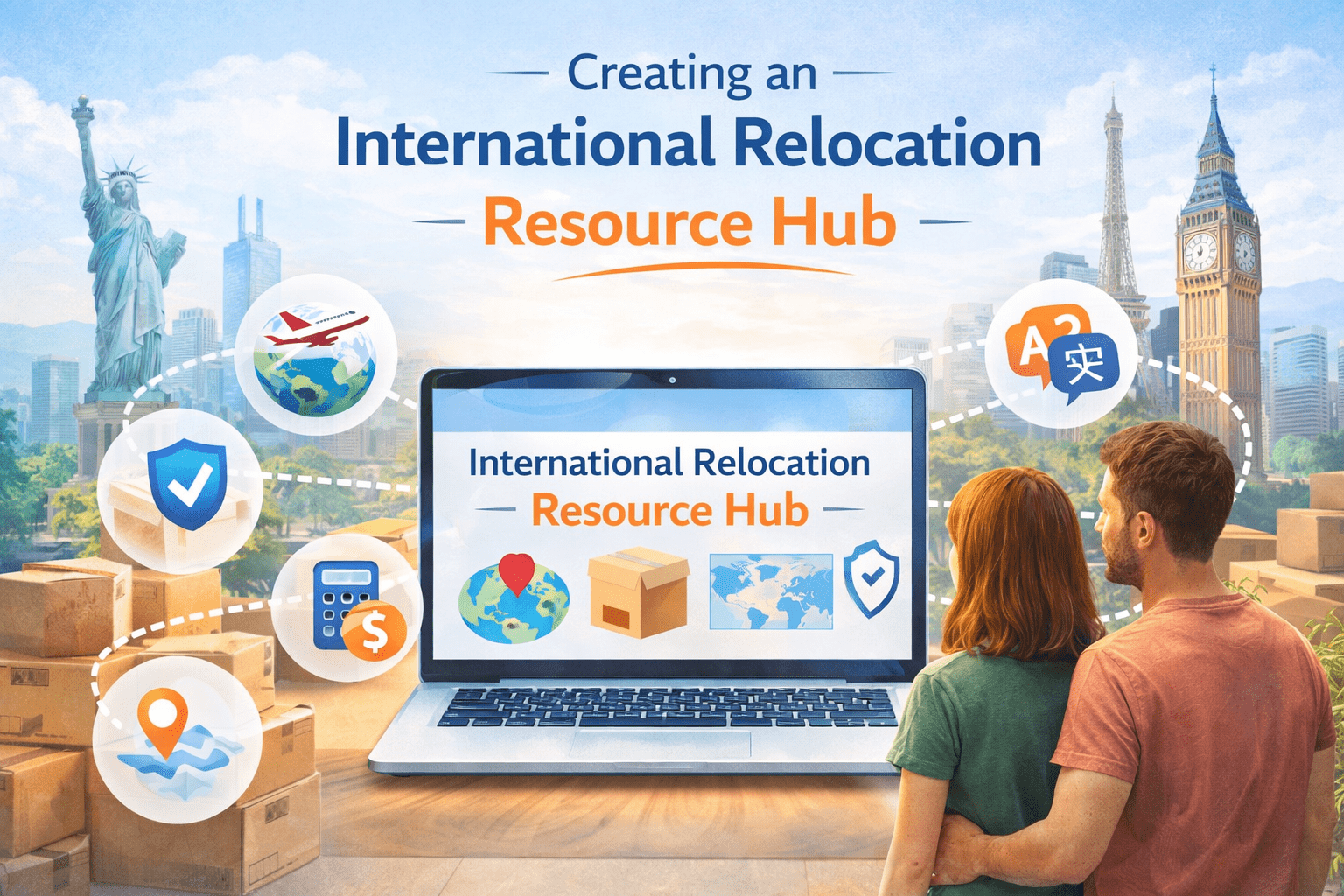
Creating an International Relocation Resource Hub
For moving companies that want to grow beyond local and domestic markets, international lead generation requires a different approach. Global moving customers are not just searching for a transporter. They are searching for answers. They want clarity on customs procedures, shipping timelines, destination requirements, packing expectations, and the overall complexity of relocating across borders.
That is why creating an international relocation resource hub can be such a powerful strategy.
Instead of relying only on service pages and quote forms, movers can build a content library that helps international prospects navigate the research phase with confidence. When your website becomes a trusted source for relocation information, it attracts more qualified global leads, keeps them engaged longer, and positions your company as an expert before the sales conversation even begins.
At Best Moving Leads Providers, we see resource-driven SEO and lead generation as one of the smartest ways to capture high-intent traffic in specialized moving categories. For international movers, a well-built relocation hub can become both a visibility asset and a conversion tool.

Why International Movers Need a Resource Hub
International relocation is more complicated than a local or interstate move. Prospects are often dealing with unfamiliar regulations, longer timelines, larger budgets, and higher perceived risk. They may be moving for work, family, education, or corporate assignment, and they usually have far more questions before they are ready to request a quote.
A standard service page often is not enough to win that lead.
Global moving customers want practical guidance. They may search for information on customs paperwork, shipping methods, restricted household items, transit time expectations, import procedures, destination country rules, and how far in advance they should plan. If your website does not answer those questions, they will continue their research elsewhere.
A resource hub solves this problem by meeting international prospects earlier in the decision process. Instead of waiting until they search for “international movers near me,” you attract them through informational content that supports their journey from research to inquiry.
What an International Relocation Resource Hub Should Include
A successful resource hub should feel like a useful library, not a random collection of blog posts. The content should be organized around the questions international customers ask most often and structured in a way that makes navigation easy.
One of the most valuable content categories is customs guidance. Many international prospects are concerned about what documents they may need, what household goods can be shipped, and what delays may arise at the border. Clear destination-specific customs overviews can help reduce anxiety and position your company as informed and reliable.
Shipping timeline content is another essential piece. International moves often involve sea freight, air freight, port handling, customs review, and final delivery coordination. Customers want to understand what affects timing and what a realistic relocation schedule looks like. A helpful content hub can explain planning windows, transit stages, and common delay factors without overpromising exact delivery dates.
Relocation tips also play an important role. These can include packing advice for international shipments, guidance on downsizing before a global move, tips for preparing children or pets for relocation, storage planning, and checklists for moving abroad. This type of content keeps the hub practical and broadens the range of keywords your site can target.

Use Destination-Specific Content to Attract Better Leads
One of the strongest ways to improve international SEO is to create destination-focused content. People rarely search for international moving information in broad terms alone. They often search by country, region, or route.
For example, a prospect may look for guidance on moving household goods to Canada, shipping personal belongings to Germany, or planning a relocation from the United States to the UAE. Destination pages and guides help your site align with that intent.
These pages should go beyond generic descriptions. They should address what customers want to know about relocating to that destination, such as documentation expectations, estimated shipping windows, popular service routes, and practical preparation advice. Even when exact regulations vary by case, educational destination content still helps establish authority and search relevance.
For lead generation, this matters because destination-specific traffic is often more qualified. The prospect is not just casually browsing. They are researching a real move path and looking for expertise.
How a Resource Hub Supports SEO Growth
An international relocation hub is valuable not only for user experience, but also for organic visibility. International moving keywords can be competitive, and many prospects begin with informational searches rather than commercial ones. A resource hub helps your website capture that earlier-stage traffic.
When structured correctly, the hub creates topical authority. Search engines can see that your site does not only offer international moving services, but also publishes useful content around customs, shipping preparation, planning timelines, relocation logistics, and destination guidance. That relevance can strengthen your visibility across a much wider set of search terms.
It also creates more internal linking opportunities. A customs guide can link to a destination service page. A shipping timeline article can connect to your international quote page. A relocation checklist can link to your packing services. This keeps users moving through the site while helping search engines understand the relationship between your pages.
At Best Moving Leads Providers, we often recommend this content ecosystem approach because it turns a moving website into a lead-generation platform rather than a digital brochure.

Resource Hubs Build Trust Before the Sales Call
Trust is a major factor in international moving. Customers are not just choosing a company to move furniture. They are trusting a provider with cross-border logistics, long transit periods, important personal belongings, and a high-stakes life transition.
That is why educational content can have such a strong influence on conversions.
When a prospect finds clear, helpful answers on your website, your company feels more credible. A resource hub shows that you understand the complexity of international relocation and are prepared to guide customers through it. That confidence often carries into the quote stage.
This is especially important for premium and corporate relocation leads, where buyers may compare multiple vendors but prefer the one that appears most knowledgeable and organized. Helpful content can shape that perception well before a salesperson gets involved.
Turn Information Into Lead Capture Opportunities
A resource hub should not only educate. It should also support conversion. Each guide, timeline page, or destination article should include logical next steps that help turn readers into leads.
That might mean offering a downloadable international moving checklist, a relocation planning guide, or a destination preparation worksheet in exchange for contact information. It could also mean placing quote prompts, consultation offers, or soft conversion forms throughout the hub.
The key is matching the offer to the user’s stage. Someone reading an article about customs procedures may not be ready for a hard sales pitch, but they may be willing to download a planning guide or request a relocation consultation. These smaller conversion steps help you capture global leads earlier and nurture them over time.
Keep the Hub Organized and Easy to Use
A resource hub only works if users can navigate it easily. Group content into clear categories such as destination guides, customs information, shipping timelines, packing advice, and relocation planning. Make the structure intuitive so international prospects can quickly find what is relevant to their move.
The hub should also feel current and professional. Update key pages regularly, improve thin content over time, and expand into new destination topics as demand grows. A neglected hub can weaken credibility, while an active one strengthens it.

Conclusion
Creating an international relocation resource hub is one of the smartest ways for moving companies to attract and convert global leads. It allows your business to meet prospects earlier, answer the questions that matter most, and build trust before the quote request ever happens.
By publishing customs guides, shipping timeline content, destination-specific resources, and practical relocation tips, movers can create a stronger SEO footprint and a better user experience for international prospects. That combination leads to better visibility, better engagement, and more qualified leads over time.
Best Moving Leads Providers helps moving companies build content strategies that do more than fill a blog. They create authority, support conversions, and turn specialized expertise into measurable growth. For international movers, a well-built resource hub is not just helpful content. It is a scalable lead generation asset.