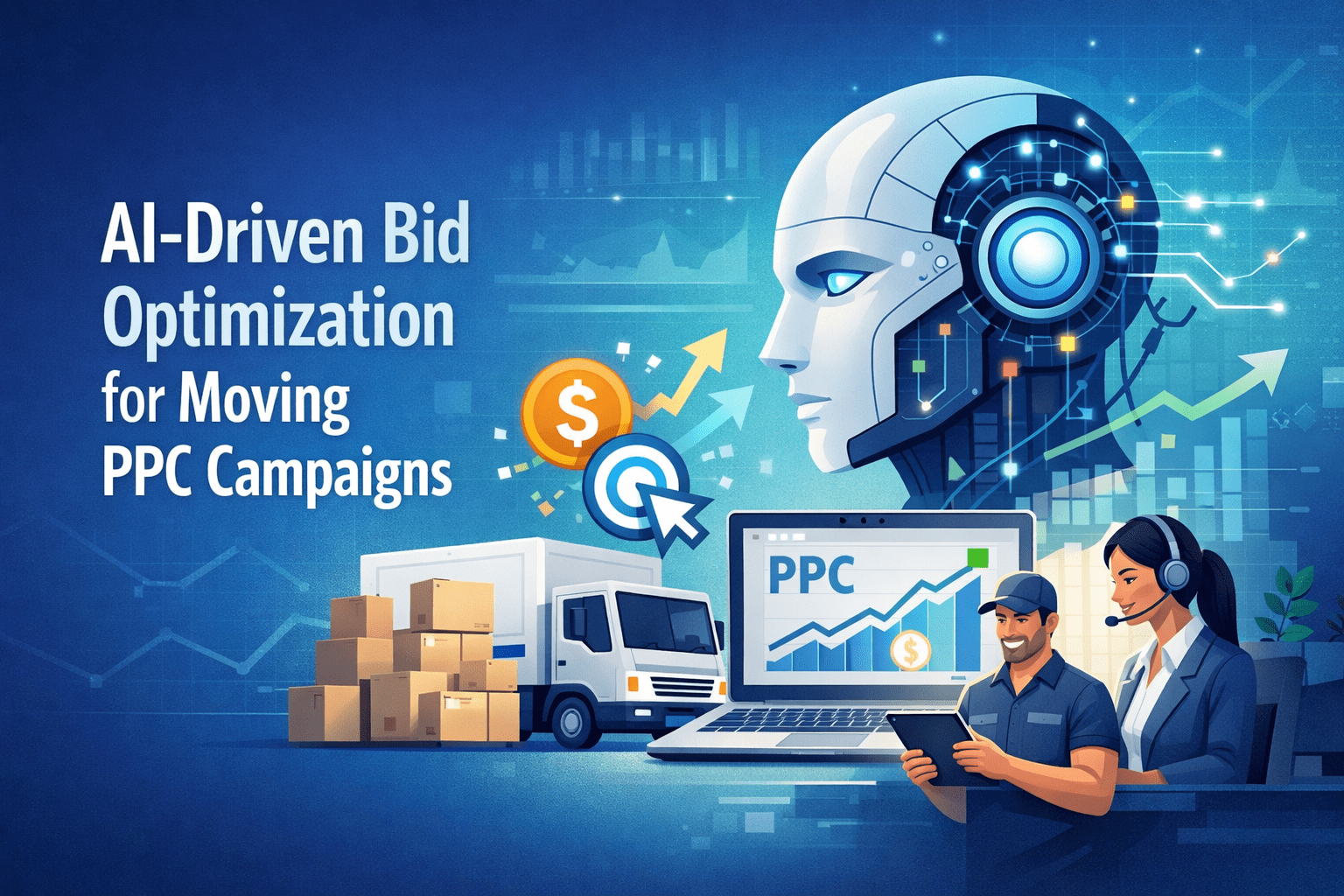
AI-Driven Bid Optimization for Moving PPC Campaigns
PPC for moving companies is expensive for one simple reason: you’re buying attention at the exact moment someone is stressed, time-constrained, and ready to compare options. In many cities, “movers near me” and “moving company” keywords sit in highly competitive auctions, and small changes in performance can swing your cost per booked job dramatically.
That’s where AI-driven bid optimization comes in. Modern platforms like Google Ads use machine learning to adjust bids in real time, aiming to win the auctions most likely to produce conversions, calls, quote requests, and ultimately booked moves. When implemented properly, automated bidding can reduce wasted spend, stabilize lead flow, and help you compete more efficiently.
At Best Moving Leads Providers, we see AI bidding work best for movers who treat it like a system: solid conversion tracking, clean campaign structure, and realistic expectations. Here’s how it works and how to use it without handing the keys to your budget blindly.
What AI-Driven Bid Optimization Actually Means
AI-driven bid optimization is the use of machine-learning algorithms to set or adjust your PPC bids automatically based on real-time signals. Instead of you manually choosing bids for every keyword, the platform evaluates the likelihood that a specific search will convert and then bids accordingly.
For a moving company, that means the system might bid higher when signals suggest a strong booking chance, such as a mobile user searching inside your service area on a weekday morning, while bidding lower (or not competing as aggressively) when the conversion likelihood is weaker.
The goal isn’t “more clicks.” The goal is more conversions for the same spend or the same conversions for less spend.

The Real-Time Signals AI Uses in Moving PPC
While the exact signals are platform-dependent, AI bidding typically considers factors like:
- Location and proximity: Searchers closer to your target neighborhoods may receive higher bids.
- Device type: Mobile searches often indicate “call now” intent, especially for local movers.
- Time of day and day of week: Certain windows convert better (end-of-month spikes, weekday planning hours).
- Search query context: Not just the keyword, but the full query and modifiers like “same day,” “apartment,” “packing,” or “cheap.”
- Audience behavior: Past site visitors, engaged users, and similar audiences may be valued differently.
- Expected conversion rate: Based on historical account and campaign data.
In plain terms: AI attempts to “predict the good leads” and spend more on those moments.
Common AI Bidding Strategies Movers Use
Most moving PPC campaigns fall into a few automated bidding approaches:
Maximize Conversions
This strategy focuses on getting as many conversions as possible within your budget. It’s often used when you want volume and have reliable conversion tracking (calls, form fills).
Best for movers who: need more leads quickly and can handle the volume operationally.
Target CPA (Cost Per Acquisition)
Target CPA aims to keep your average cost per conversion around a set number. It’s a popular choice when you’ve already established baseline performance and want more control over efficiency.
Best for movers who: have consistent conversion volume and want predictability.
Maximize Conversion Value / Target ROAS
These strategies optimize toward higher “value” conversions. For movers, this becomes powerful when you can assign values based on move size, revenue, or booked-job value.
Best for movers who: can track booked revenue (or strong proxies) and want to prioritize higher-ticket moves.
The Catch: AI Only Optimizes What You Measure
AI bidding is only as smart as your conversion data. If you tell the system that every 10-second call is a conversion, it will happily optimize toward cheap, low-quality calls. If you track only form fills but ignore phone calls, it will undervalue high-intent mobile traffic.
For moving companies, the strongest setup usually includes:
- Qualified call conversions (example: calls over a certain duration)
- Quote/estimate request conversions (form submissions)
- Down-funnel outcomes when possible (estimate scheduled, job booked)
The more your conversion tracking aligns with real revenue, the better the AI can allocate spend toward profitable leads.

How to Prepare Your Campaigns for AI Optimization
AI bidding performs best when your account isn’t messy. Before switching on automation, tighten the fundamentals:
Clean campaign segmentation
Separate campaigns by intent (local vs. long-distance vs. packing/labor-only). This prevents the algorithm from mixing radically different lead types and conversion behaviors.
Strong negative keywords
Automation does not replace keyword hygiene. Movers still need negatives to prevent spend on irrelevant searches like jobs, DIY, truck rentals, or “free boxes.”
Landing pages that match intent
AI can drive traffic, but it can’t fix a landing page that doesn’t convert. If your ad is for “apartment movers,” your page must speak to stairs, elevators, and building rules—fast.
A real response system
Bidding optimization helps you win better auctions. But movers still lose money when they don’t answer calls quickly or follow up consistently. Speed-to-lead remains a conversion multiplier.
Where Movers See the Biggest Gains
When AI bidding is set up correctly, movers often see improvements in:
- Reduced wasted spend from low-intent clicks
- Better performance during high-converting times and neighborhoods
- Increased conversion volume without increasing budget (or steadier volume at the same spend)
- More competitive positioning on mobile and local intent searches
The biggest wins tend to happen after you connect conversion tracking to the sales process—so the system learns what “good leads” look like over time.
How Best Moving Leads Providers Complements AI PPC
AI-driven bidding is a powerful lever, but it’s still only one part of a growth engine. Many movers combine PPC with a stable inbound pipeline so they aren’t fully dependent on auction volatility, seasonal spikes, or sudden CPC increases.
That’s why movers use Best Moving Leads Providers for exclusive and shared moving leads alongside marketing support that improves conversion: better follow-up processes, higher-quality lead handling, and smarter channel mix decisions. When you have consistent lead flow and clean tracking, AI optimization becomes far more profitable, because it’s feeding into a system that actually closes.

Let AI Optimize Bids But Keep Humans Owning Strategy
AI-driven bid optimization can absolutely improve ad spend efficiency for moving PPC campaigns. It adjusts bids using real-time signals humans can’t practically manage at scale, helping you compete more effectively for the searches most likely to convert.
But the winning formula is still human-led: clear campaign structure, accurate conversion tracking, strong landing pages, and a disciplined response process. Use AI to optimize the auction decisions, then use your operations, sales process, and tracking to make sure the conversions it drives turn into booked moves.