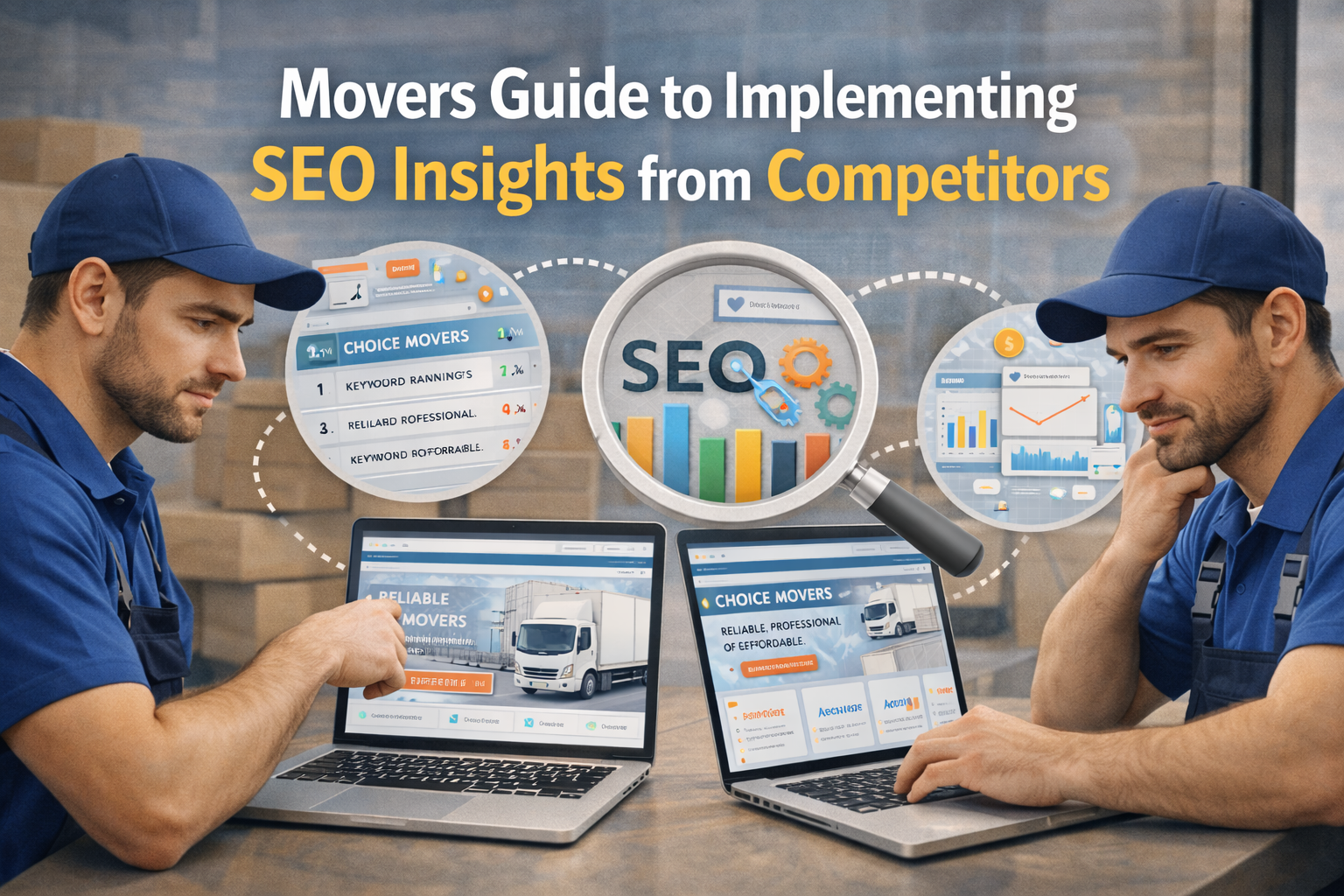
Movers Guide to Implementing SEO Insights from Competitors
Standing out online is no longer optional for moving companies—it’s essential. With more customers researching movers before ever picking up the phone, understanding how your competitors rank and attract traffic can give you a significant advantage. Implementing SEO insights from competitors provides a data-driven way to strengthen your online presence, attract qualified visitors, and improve lead quality.
By analyzing what top-ranking moving companies are doing right, such as which keywords they target, how they structure content, and where they earn backlinks, you can refine your own SEO strategy with clarity and purpose. Competitive SEO analysis helps movers build a stronger digital foundation and compete more effectively in crowded local markets.
Identify Your True SEO Competitors
The first step in implementing SEO insights from competitors is knowing who you are actually competing with online. SEO competitors are not always the same as your offline competitors.
Your SEO competitors include:
- Local moving companies ranking for searches like “local movers,” “moving services,” or city-based keywords
- Moving businesses offering similar services within your service area
- Large aggregator platforms such as directories and review sites that dominate search results
Benchmarking competitors helps you understand how they structure pages, target keywords, and build authority. This transforms competitor research into actionable SEO improvements rather than guesswork.

Who Are the Key SEO Competitors in Your Area?
Start by identifying direct competitors, moving companies serving the same locations and offering similar services. Then identify indirect competitors, such as directories or marketplaces that often outrank individual movers.
To find these competitors:
- Review Google Search and Google Maps results for your main keywords
- Use tools like Ahrefs, SEMrush, or similar platforms
- Analyze which companies consistently appear in top positions
This process shows who dominates local search, how strong their online presence is, and where opportunities exist for your business to stand out.
How to Identify SEO Competitors Effectively
Once you have a list of competitors, analyze how each company earns its rankings. When implementing SEO insights from competitors, focus on these core areas:
- On-page SEO and content structure
- Backlink profiles and authority signals
- Social media engagement and brand activity
- Paid advertising strategies and keyword targeting
Each of these areas provides valuable insights that can be adapted to your own strategy.
Analyze On-Page SEO and Content Strategies
Start with content benchmarking. Review your competitors’ strongest pages and examine how they are structured.
Focus on:
- Headings and keyword placement
- Page length and clarity
- Use of FAQs, reviews, and trust signals
- Internal linking and navigation
Identify which service pages perform best, such as local moves, long-distance moves, packing, or storage. Look at how competitors explain their services and answer customer questions. Applying these insights helps you improve relevance, refine page structure, and better match search intent.
Examine Backlink Profiles for Authority Gaps
Backlinks remain a major ranking factor, especially in competitive local markets. Backlink benchmarking shows why certain competitors rank higher.
Use SEO tools to analyze:
- Which websites link to competitors’ top pages
- The quality and relevance of those links
- Local signals from directories, partners, or community sites
Run an authority gap analysis to identify sites that link to competitors but not to you. These represent opportunities to strengthen your backlink profile. Applying competitor backlink insights helps build trust signals and improves your ability to outrank similar moving companies.
Leverage Social Media Insights
Social media insights can indirectly support SEO and strengthen your overall marketing presence. Instead of copying competitor posts, analyze performance patterns.
Look at:
- Posting frequency and engagement levels
- Content themes such as moving tips or local updates
- How competitors respond to reviews and comments
These insights reveal what resonates with your audience and builds credibility. Applying this information helps you create more intentional social content that supports brand trust and visibility.
Monitor Ad Spend and Paid Search Tactics
Paid search analysis complements SEO research by revealing high-intent keywords and seasonal trends. Review competitor advertising activity to understand how they approach demand peaks.
Focus on:
- Keywords competitors prioritize in Google Ads
- Seasonal budget shifts during busy moving periods
- Ad copy and landing page messaging
Tools like SpyFu or the Google Ads Transparency Center can provide visibility into competitor campaigns. Track performance metrics such as cost per lead and conversion behavior to refine your own paid and organic strategies.

Evaluate and Apply Keyword Insights
Keyword research becomes far more effective when guided by competitor data. Review which keywords your SEO competitors rank for and identify gaps or opportunities.
Key steps include:
- Benchmarking keyword coverage across service categories
- Targeting localized keywords that match your service areas
- Prioritizing keywords with strong intent rather than just high volume
By aligning competitive keyword insights with your content plan, you attract users who are more likely to request quotes and book services.
Assess Website User Experience (UX)
User experience directly affects engagement and rankings. Compare your website to top-ranking competitors to understand user expectations.
Evaluate:
- Page speed and mobile responsiveness
- Navigation clarity and service visibility
- Quote forms, contact options, and calls to action
- How reviews and trust elements are displayed
UX benchmarking highlights friction points and improvement opportunities. A fast, intuitive website keeps users engaged longer, supporting stronger SEO performance.
Make Strategic Improvements Based on Insights
Once competitive insights are gathered, apply them strategically rather than copying competitors outright. Look for ways to highlight strengths competitors may overlook.
Consider improvements such as:
- Emphasizing special handling for fragile or valuable items
- Highlighting eco-friendly or sustainable moving practices
- Creating targeted content for niche services
Optimizing content around these areas with relevant keywords allows you to differentiate your business while meeting real customer needs.

Continuous Monitoring and SEO Improvement
SEO is not a one-time task. Ongoing tracking and refinement are essential for long-term success.
Regularly monitor:
- Keyword ranking changes
- Backlink growth and quality
- Local search performance and visibility
- Engagement metrics and conversions
Use tools like Google Search Console and SEO platforms to track progress against competitors. Adjust content, keywords, and strategies as housing trends and seasonal demand shift.
Build a Stronger SEO Strategy Through Competitor Insights
Implementing SEO insights from competitors gives moving companies a structured way to improve visibility and rankings. By understanding how competitors build authority, target keywords, and structure content, you can make smarter, data-backed improvements.
Treat SEO as a continuous process. Review competitor data regularly, refine underperforming pages, and track the impact of every change. With consistent effort and informed decisions, your moving company can build a stronger, more competitive digital presence with Best Moving Leads Providers supporting your growth.