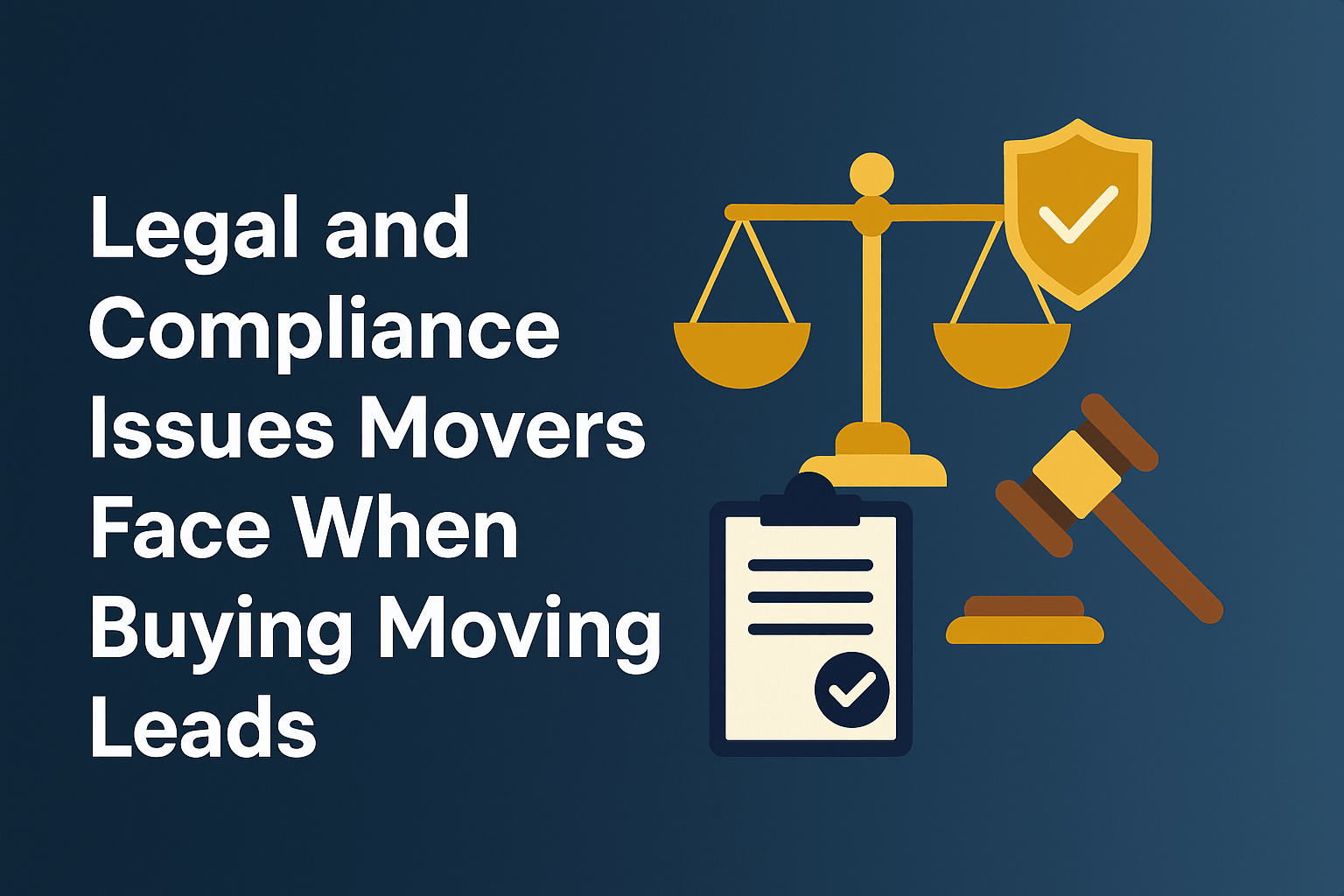
Legal and Compliance Issues Movers Face When Buying Moving Leads
The moving industry depends heavily on leads, and many companies turn to third-party providers or marketing agencies to keep their sales pipelines full. But while buying moving leads can be a smart way to grow your business, it also comes with risks. Not all leads are created equal, and in some cases, the way those leads are generated may expose movers to legal and compliance issues.
Failing to understand these rules can lead to fines, lawsuits, damaged reputations, or even being shut down. In this article, we’ll explore the key compliance concerns movers should be aware of when purchasing moving leads — and how to protect your business from unnecessary risks.
Why Compliance Matters in Moving Lead Generation
Leads are not just names and phone numbers. They are consumer data, and handling that data comes with legal responsibilities. Movers who buy leads from providers must ensure that the leads were collected legally and that they themselves are using them in a compliant way.
Ignoring compliance can have serious consequences:
- Financial penalties for violating privacy or telemarketing laws.
- Lawsuits from customers who feel their information was misused.
- Loss of trust if your brand is associated with spammy or unethical practices.

Common Legal and Compliance Issues Movers Face
1. TCPA (Telephone Consumer Protection Act) Violations
The TCPA regulates how businesses can contact consumers by phone or text. If you buy moving leads and your sales team uses automated dialers or sends text messages without proper consent, you may be breaking the law.
Risks:
- Lawsuits from consumers.
- Fines of $500–$1,500 per violation.
Solution:
- Only buy leads where customers have explicitly agreed to be contacted.
- Keep records of consent from lead providers.
- Train your sales team on proper calling practices.
2. Do Not Call (DNC) Registry Issues
The national DNC registry prohibits telemarketing calls to consumers who have opted out. Movers that call leads without checking the DNC list risk hefty penalties.
Risks:
- Federal fines up to $43,792 per call.
- State-level penalties that add up quickly.
Solution:
- Scrub all leads against the DNC list before calling.
- Work with lead providers who guarantee DNC compliance.

3. Data Privacy Laws (CCPA, GDPR, etc.)
With increasing concerns about data privacy, laws like the California Consumer Privacy Act (CCPA) and General Data Protection Regulation (GDPR) in Europe give consumers more control over their personal information. Even if you operate in the U.S., these laws may apply if you buy leads from or serve customers in regulated regions.
Risks:
- Penalties for mishandling customer data.
- Requirements to delete or disclose information upon request.
Solution:
- Understand where your leads come from and whether privacy laws apply.
- Store customer data securely and limit who has access.
- Honor opt-out or deletion requests immediately.
4. Misrepresentation by Lead Providers
Not all lead providers are transparent about how they collect leads. Some may use misleading ads, fake sweepstakes, or even purchase scraped data. If you buy from these sources, you risk contacting people who never actually wanted moving services.
Risks:
- Angry prospects accusing your company of spamming.
- Association with shady marketing practices.
- Wasted money on low-quality or fake leads.
Solution:
- Vet providers carefully and ask about their lead generation methods.
- Look for providers who offer exclusive, opt-in leads.
- Avoid deals that seem “too good to be true.”

5. Improper Email Marketing Practices (CAN-SPAM Act)
If you send emails to leads without following CAN-SPAM regulations, you could face penalties. These include requirements like providing an unsubscribe option, using accurate subject lines, and including your company’s address in every message.
Risks:
- Up to $50,120 in fines per violation.
- Damage to your email reputation, reducing deliverability.
Solution:
- Ensure all email campaigns are fully compliant.
- Use professional email marketing software that automatically manages compliance requirements.
How Movers Can Stay Compliant When Buying Leads
1. Work Only with Trusted Lead Providers
Choose providers who prioritize compliance and can show proof of how leads are generated. Ask for written guarantees that leads are opt-in and legally collected.
2. Implement Internal Compliance Systems
Don’t rely on providers alone. Scrub your leads, train your team, and use software to automate compliance checks.
3. Document Everything
Keep records of lead source, consent, and customer interactions. Documentation can protect you in case of disputes or audits.
4. Regularly Train Your Sales Team
Laws change, and so should your training. Ensure your team knows the latest rules about calling, texting, and emailing prospects.
5. Stay Updated on Regulations
Federal and state laws evolve. Subscribe to industry updates or consult with legal experts to make sure your practices remain compliant.

Final Thoughts
Buying moving leads can be a powerful growth tool, but it comes with legal responsibilities. Movers who ignore compliance put themselves at risk of fines, lawsuits, and reputational damage. On the other hand, companies that prioritize compliance build trust with customers, protect their brand, and ensure sustainable growth.
The bottom line: quality and compliance go hand in hand. Always know where your leads are coming from, ensure proper consent, and adopt strict compliance practices. By doing so, your moving company can generate more business confidently — without the hidden legal risks.