Cost Models for Long-Distance Moving Leads: Pay-Per-Call vs CPL
Long-distance moving leads are among the most valuable opportunities in the moving industry—but they are also among the most expensive to acquire. Because of higher job values, longer sales cycles, and increased competition, the pricing model you choose for lead acquisition can significantly impact profitability.
Many movers struggle not because long-distance leads don’t convert, but because they use the wrong cost model for their sales process. Paying for the wrong type of lead, at the wrong stage of intent, can inflate acquisition costs and erode margins.
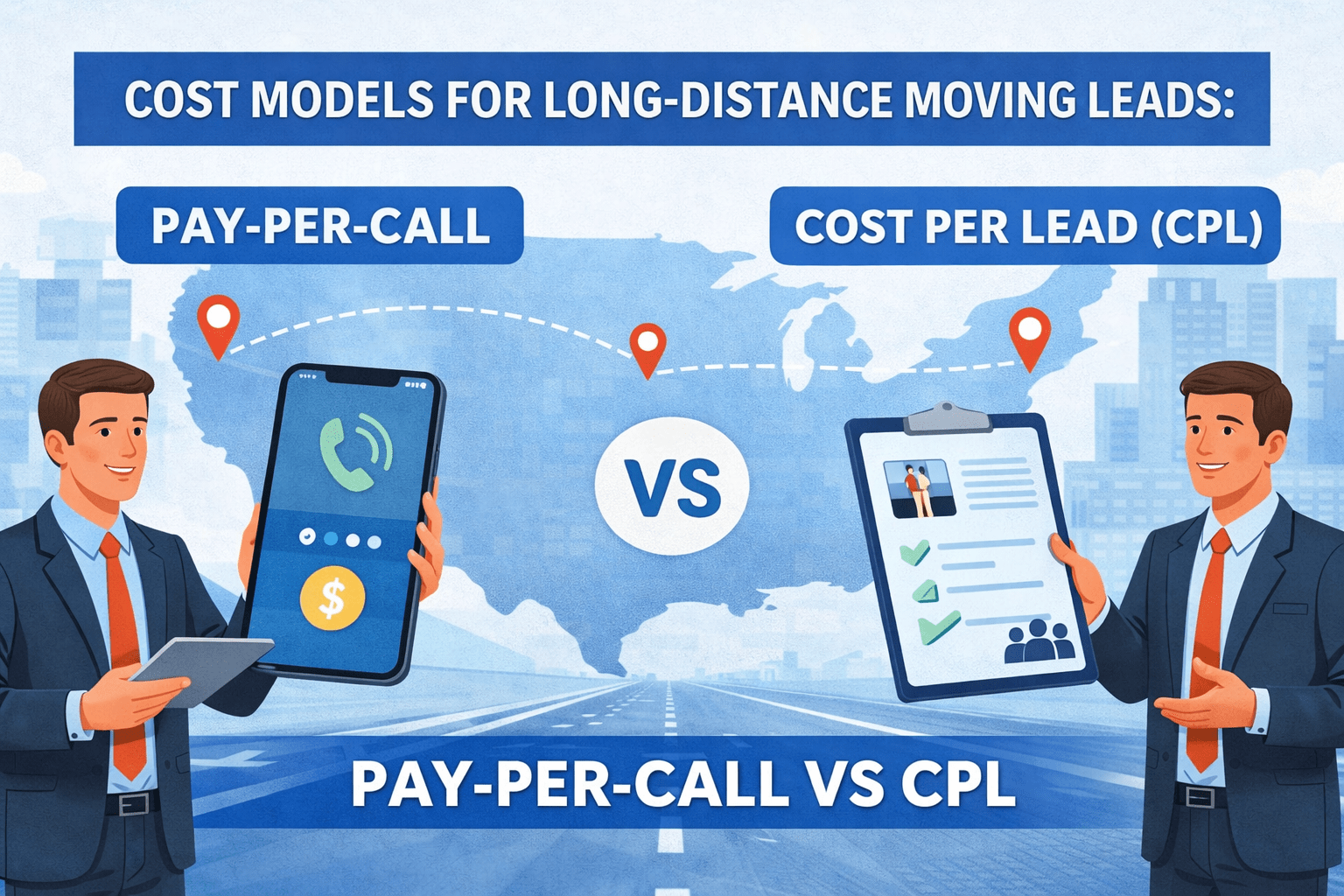
This article breaks down the two most common pricing models used for long-distance moving leads, pay-per-call and cost-per-lead (CPL), and explains when each model works best, how to evaluate ROI, and how Best Moving Leads Providers helps movers choose the right structure for sustainable growth.
Nature of Long-Distance Moving Leads
Long-distance movers behave differently from local customers. They research longer, ask more questions, and take fewer risks. Their decisions involve higher emotional and financial stakes.
Because of this, long-distance leads sit deeper in the funnel and require more qualification, communication, and trust-building than local leads. Any pricing model that ignores this reality creates inefficiencies.
Choosing the right cost model means aligning lead pricing with buyer intent, not just lead volume.
What Is Cost-Per-Lead (CPL) in Long-Distance Moving?
Cost-per-lead pricing charges movers a fixed amount for each lead delivered. These leads typically come through online forms, quote requests, or contact submissions.
CPL appeals to movers because of its predictability. Budgets are easy to plan, and lead counts are straightforward to track.
However, CPL does not guarantee intent. Many long-distance CPL leads are early-stage researchers rather than ready-to-book customers.
Strengths of the CPL Model for Long-Distance Leads
CPL works best when movers have:
- Strong follow-up systems
- Patient sales teams
- Robust lead nurturing processes
- Capacity to handle longer sales cycles
For movers building brand awareness or filling the top of the funnel, CPL can be a useful component of a broader strategy.
When paired with CRM automation and consistent follow-ups, CPL leads can eventually convert—but not always quickly.
Limitations of CPL for Long-Distance Moves
The biggest drawback of CPL is uncertain intent. Many CPL leads submit forms to compare pricing, explore options, or gather information weeks or months before moving.
This increases:
- Time spent chasing unresponsive leads
- Sales fatigue
- Cost per booked move
For long-distance moves, where competition is fierce, CPL often results in multiple movers calling the same prospect, driving price pressure and reducing close rates.

What Is Pay-Per-Call for Long-Distance Moving Leads?
Pay-per-call pricing charges movers only when a qualified phone call is delivered. These calls usually come from prospects who actively want to speak with a mover and are closer to making a decision.
In long-distance moving, calls often represent higher intent than form submissions because customers want reassurance, clarity, and direct answers.
Pay-per-call aligns cost with engagement rather than curiosity.
Why Pay-Per-Call Works Exceptionally Well for Long-Distance Moves
Long-distance customers often reach a point where online research is no longer enough. They want to confirm details, understand timelines, and evaluate trustworthiness.
Pay-per-call captures prospects at this critical moment.
Because calls happen in real time, movers can immediately address objections, explain value, and guide the customer toward booking—shortening the sales cycle significantly.
Comparing Lead Quality: Calls vs Forms
In long-distance campaigns, call leads consistently outperform form leads in terms of:
- Conversion rates
- Speed to booking
- Revenue per lead
While calls may cost more upfront, they typically produce a lower cost per booked move, which is the metric that truly matters.
Best Moving Leads Providers structures pay-per-call campaigns to ensure calls meet minimum qualification standards before delivery.
Cost Predictability vs Revenue Predictability
CPL offers cost predictability—you know how much each lead costs. Pay-per-call offers revenue predictability—you know calls are happening at the decision stage.
For long-distance movers focused on scaling profitably, revenue predictability often outweighs cost predictability.
The right model depends on operational maturity and sales readiness.

When a Hybrid Model Makes Sense
Many successful movers use a hybrid approach, combining CPL and pay-per-call.
CPL fills the awareness and research phase, while pay-per-call captures high-intent prospects ready to act. This layered strategy smooths demand while maximizing conversion efficiency.
Hybrid models work best when campaigns are clearly segmented and tracked separately.
Evaluating True ROI for Long-Distance Lead Models
The mistake many movers make is comparing CPL and pay-per-call based solely on price per lead. The correct comparison is cost per booked move and revenue per customer.
Metrics to evaluate include:
- Close rate
- Average job value
- Time to booking
- Sales effort required
When these factors are considered, pay-per-call often delivers superior ROI for long-distance movers.
How Best Moving Leads Providers Helps Movers Choose the Right Model
Best Moving Leads Providers does not force movers into a single pricing model. Instead, lead strategies are tailored based on service focus, sales capacity, and growth goals.
By analyzing performance data and buyer behavior, movers receive lead models that align with how long-distance customers actually convert—not how leads are traditionally sold.
This approach reduces wasted spend and increases long-term profitability.
Avoiding Common Cost Model Mistakes
Some movers choose CPL simply because it looks cheaper, without accounting for follow-up costs. Others adopt pay-per-call without preparing their sales teams to handle live conversations effectively.
Both mistakes lead to frustration.
Success comes from matching the pricing model to readiness and execution.

Conclusion: Choosing the Right Cost Model Is a Strategic Decision
Long-distance moving leads are too valuable to approach casually. The cost model you choose shapes lead quality, sales efficiency, and overall profitability.
CPL can support awareness and early research, but pay-per-call consistently delivers higher intent and faster conversions for long-distance moves.
Best Moving Leads Providers helps movers navigate this decision with clarity, ensuring lead acquisition strategies support sustainable growth—not short-term volume.