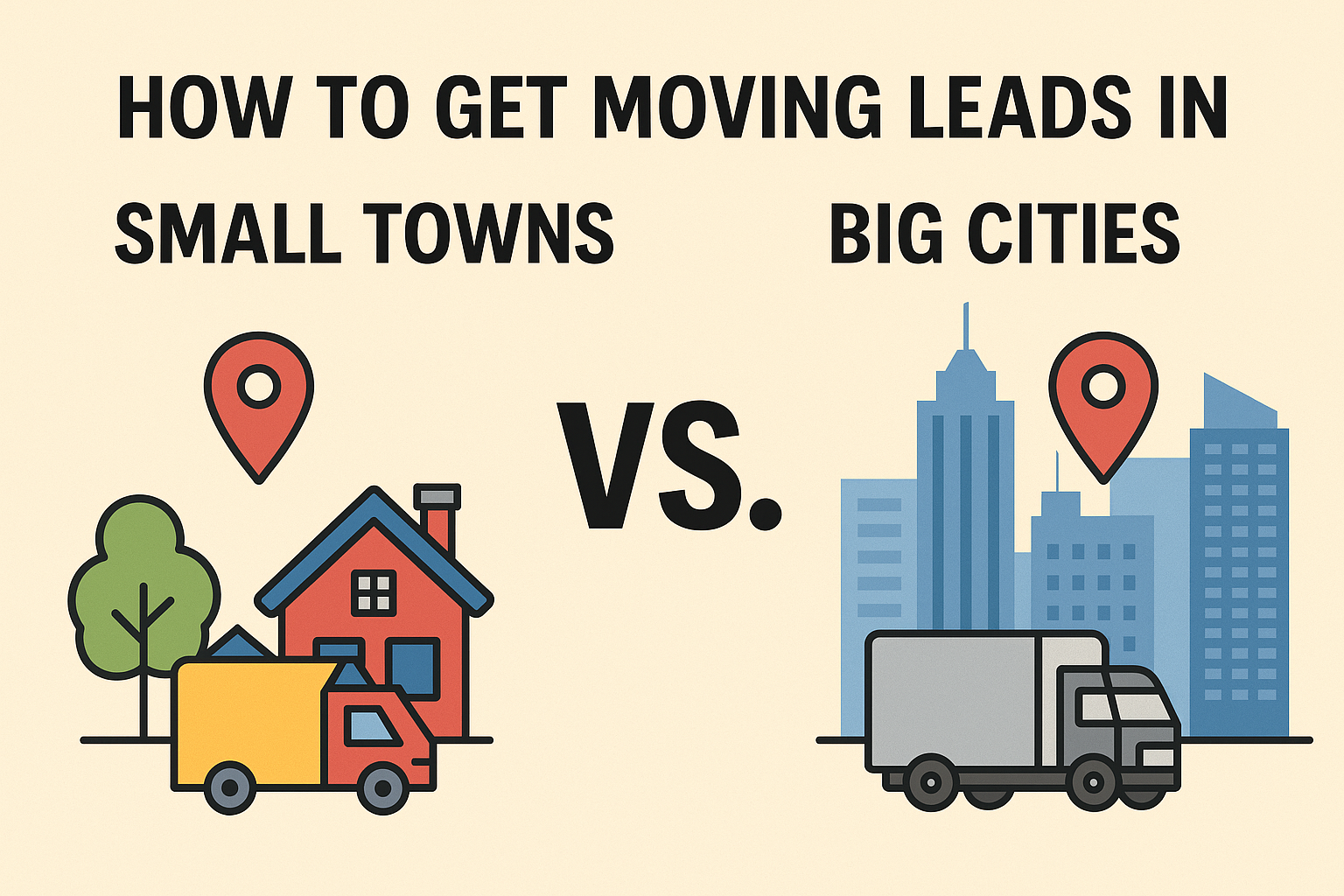
How to Get Moving Leads in Small Towns vs Big Cities
When it comes to generating moving leads, geography matters—a lot. The strategies that help movers succeed in a big metro area like New York, Los Angeles, or Chicago won’t always work in smaller towns or rural markets. Competition levels, customer behavior, marketing costs, and lead sources vary widely depending on location.
If you want to maximize your lead generation efforts, you need to tailor your approach. Let’s break down the key differences and strategies for winning moving leads in small towns versus big cities.
The Big Picture: Small Towns vs Big Cities
Before diving into tactics, let’s understand the dynamics:
- Big Cities: High population density, more moves happening every day, and a wide variety of move types (local, interstate, commercial). But also, fierce competition—large moving companies and national brands dominate search results and ad space.
- Small Towns: Fewer moves overall, but often less competition. Customers are more likely to choose movers based on trust, referrals, and reputation. Marketing budgets can go further, but volume is naturally limited.

Small Towns: Winning with Trust and Local Visibility
In smaller markets, personal relationships and local presence are your strongest assets.
1. Prioritize Local SEO
- Optimize your Google Business Profile with complete details, high-quality photos, and frequent updates.
- Focus on hyper-local keywords while doing SEO: “movers in [Town Name],” “local moving company near Sacramento County.”
- Encourage happy customers to leave Google reviews—these carry outsized weight in smaller communities.
2. Community Networking
- Join the local chamber of commerce and sponsor community events (parades, school fundraisers, county fairs).
- Partner with real estate agents, landlords, and storage facilities who frequently interact with people moving in/out of town.
- Old-fashioned tactics still work—flyers in local businesses, direct mail, and word-of-mouth.
3. Social Media with a Local Touch
- Post about local events, highlight community involvement, and share customer testimonials.
- Join local Facebook groups where people often ask for mover recommendations.
- Run small-budget, geo-targeted ads (radius targeting around your service area).
4. Focus on Reputation
In small towns, everyone knows everyone. One bad review can hurt, while great word-of-mouth spreads quickly.
- Offer extra-mile customer service (showing up on time, protecting floors, follow-up thank-you notes).
- Use referral incentives: give past customers discounts or gift cards for referrals.
5. Low-Cost, High-ROI Ads
Paid ads (Google or Facebook) are often cheaper in small towns due to less competition. A modest budget can dominate the local search landscape.

Big Cities: Standing Out in Crowded Markets
In large metro areas, competition is stiff. Dozens of movers may bid for the same keywords, and customers are bombarded with options. Success here depends on smart positioning, scalability, and leveraging data.
1. Aggressive SEO Strategy
- Build out city- and neighborhood-specific landing pages (“Movers in Brooklyn,” “Downtown LA office movers”).
- Target long-tail keywords that capture high-intent searches (“best movers for high-rise apartments in Chicago”).
- Invest in regular blogging, link-building, and optimizing for competitive terms like “moving leads in [City].”
2. Paid Ads with Precision Targeting
- Expect higher CPCs (cost per click) in competitive cities, but offset them with better targeting.
- Use audience segmentation: retarget website visitors, focus on in-market audiences (people searching for “apartments for rent” or “storage units”).
- Bid on competitor brand names to capture prospects comparing options.
3. Showcase Differentiation
With so many movers available, you need to stand out. Highlight:
- Specialty services (piano moving, high-rise expertise, commercial relocations).
- Unique selling points (faster booking, guaranteed quotes, premium service).
- Case studies or testimonials from well-known clients in the city.
4. Lead Providers and Partnerships
- In big cities, lead providers (shared or exclusive) can deliver a steady flow of leads.
- Partner with apartment complexes, large real estate brokerages, corporate relocation services, and property managers.
- Consider affiliate partnerships with local lifestyle blogs, moving checklists, or relocation websites targeting city movers.
5. High-End Branding & Online Reputation
- Invest in professional branding—slick website, polished social media, paid PR placements.
- Actively manage online reviews across Google, Yelp, Angi, and Thumbtack. In big cities, prospects often compare 5–10 movers before choosing.
6. Scale Operations for Volume
Unlike small towns, big cities can provide endless leads—but only if you can handle them.
- Use a CRM to manage and nurture leads efficiently.
- Have a trained sales team to follow up quickly (speed-to-lead is critical).
- Offer multiple crew sizes and trucks to accommodate high demand.

Key Differences in Customer Behavior
- Small Towns: Customers value trust, reputation, and word-of-mouth. Price matters, but reliability and relationships are more important.
- Big Cities: Customers are time-strapped and more transactional. They compare online, expect instant quotes, and want efficiency.
Hybrid Approach: Movers Serving Both
Some moving companies operate in smaller towns while still targeting nearby metros. In that case:
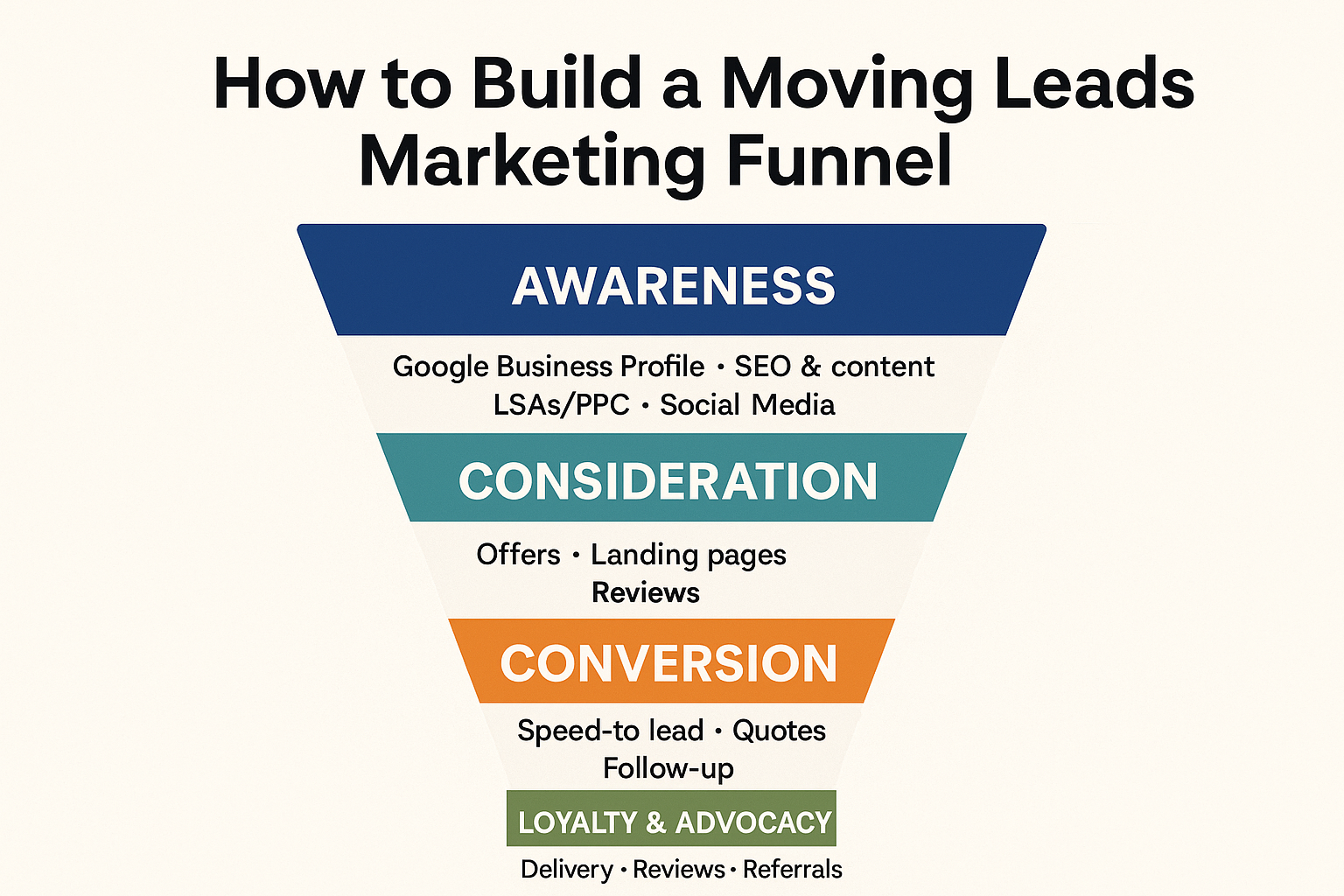
- Use different marketing funnels: hyper-local SEO for small towns, aggressive PPC/SEO for city markets.
- Adjust pricing and packages: offer budget-friendly local moves for towns and premium add-ons for city customers.
- Maintain separate case studies and testimonials to appeal to both demographics.

Wrapping Up
The path to generating moving leads depends heavily on geography:
- In small towns, focus on hyper-local visibility, trust-building, community engagement, and affordable ads.
- In big cities, emphasize differentiation, aggressive SEO and paid campaigns, strong partnerships, and scalable systems.
The movers who succeed are those who recognize that small towns and big cities require different playbooks. By tailoring your approach, you can consistently generate moving leads in any market, no matter its size.