How Professional Moving Companies Answer Phone Calls
For all the time and money moving companies pour into generating leads, the moment that often decides whether a customer books or hangs up is shockingly simple: the way the phone is answered. A well-handled call builds instant trust, sets a confident tone, and dramatically increases the chance of conversion. A poorly handled call — distracted, rushed, or unprofessional — sends the customer straight to a competitor, no matter how strong the marketing that produced the call may have been.
At Best Moving Leads Providers, we deliver exclusive leads, shared leads, and live transfers to moving companies across the country, and the same pattern shows up in client after client: the movers with the highest conversion rates are not always the ones with the best prices or the largest fleets. They are the ones whose phones get answered with skill and care. This guide walks through how professional moving companies handle calls, what to avoid, and how to turn every ring into a booked job.
Why the First Ten Seconds Decide Everything
Customers calling a mover are usually nervous. They are about to spend hundreds or thousands of dollars and trust strangers with their belongings during a stressful life transition. The tone they hear in the first ten seconds of a call signals whether they are dealing with a real business or a chaotic operation. A warm, confident greeting reassures them. A mumbled hello, background noise, or a long hold time pushes them toward the next phone number on their list.
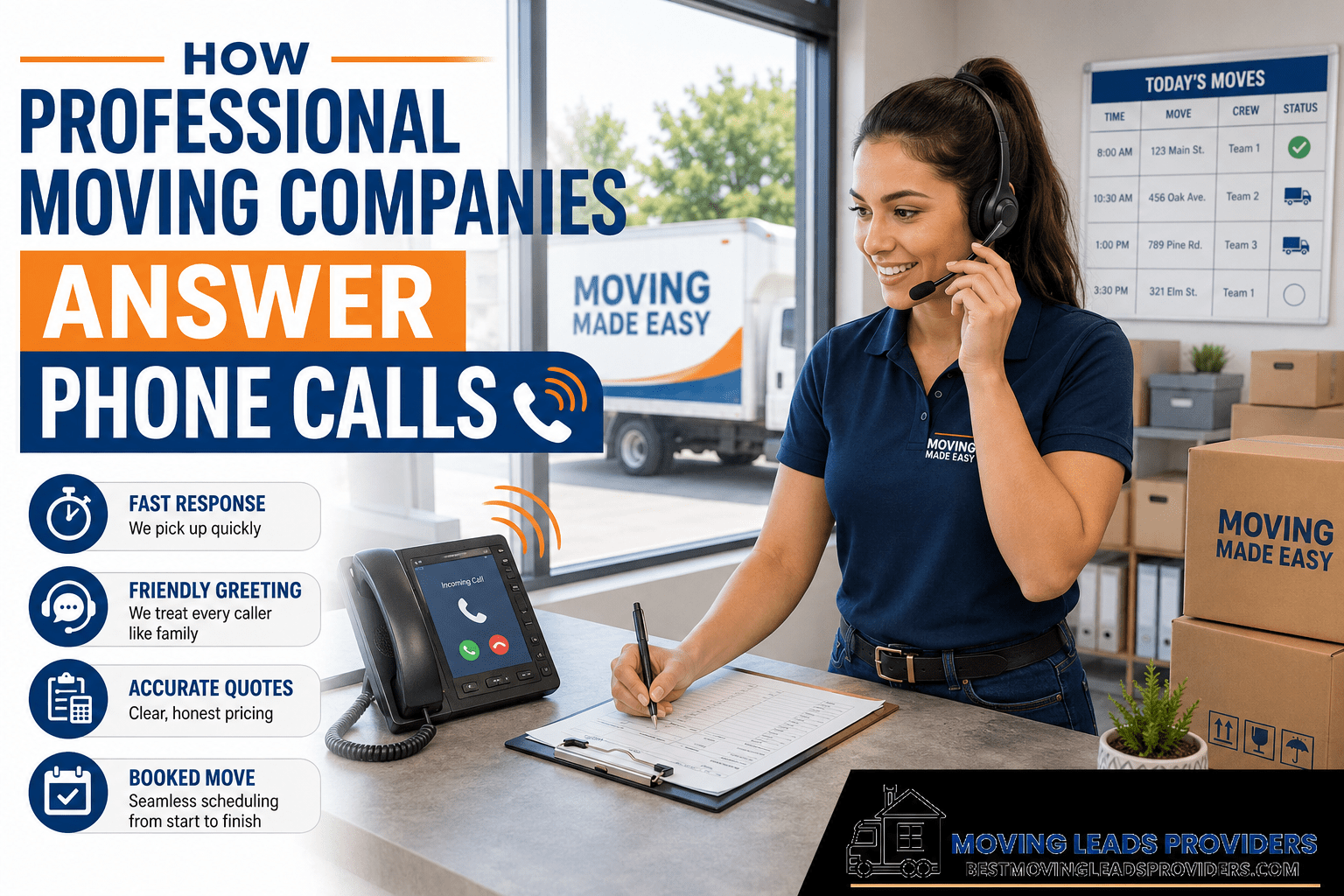
The professional standard is simple: answer within three rings, lead with a clear company name and your own first name, and immediately let the caller know they have reached the right place.
Something like “Thanks for calling [Company Name], this is Sarah, how can I help you with your move today?” sets the right tone instantly.

Listening Before Selling
The biggest mistake untrained staff make is launching into a pitch before understanding what the customer actually needs. Professional movers do the opposite — they let the customer talk first.
A simple question like “Can you tell me a little about what you’re moving and when?” opens the conversation and gives the caller space to share the details that matter to them.
Active listening — confirming what you heard, asking follow-up questions, taking notes — accomplishes two things at once. It gathers the information needed for an accurate quote, and it makes the customer feel heard. Both are essential for converting the call into a booking.
Gathering the Right Information
Every call should capture a core set of details: the customer’s name, phone number, email, current address, destination address, move date, size of the move (bedrooms, square footage, or item count), special items like pianos or pool tables, and any access challenges like stairs, elevators, or long carries. Build a simple intake form that your team uses every time, so nothing gets missed.
For long-distance and auto transport calls, also confirm pickup windows, preferred delivery dates, and whether the customer needs storage. The more accurate the intake, the more accurate the quote — and accurate quotes close at higher rates than rough estimates that get revised later.
Quoting With Confidence
Once you have the information, deliver the quote with confidence. Hesitation kills sales. If you need to follow up with a written estimate, set a clear timeline — “I’ll have your written quote in your inbox within the hour” — and then meet it. If you can give a verbal estimate on the call, do so directly, explain what’s included, and ask for the booking. Many customers are ready to commit immediately and will book on the first call if simply asked.
Avoid the temptation to undercut competitors blindly. Explain your value such as, trained crews, proper equipment, insurance coverage, customer service, give price accordingly. Customers chasing the lowest price often become the most difficult jobs to service.

What to Avoid on Every Call
Certain habits quietly destroy conversion rates. Eating, chewing gum, or talking with food in your mouth is unmistakable to the caller. Background noise — barking dogs, loud TVs, other conversations — signals an unprofessional environment. Putting callers on hold for more than thirty seconds without checking back loses them. Saying “I don’t know” without immediately offering to find out makes the company sound disorganized. Pressuring the customer aggressively turns them off before they finish the call.
Never interrupt the customer. Never argue about pricing. Never make promises you cannot keep about specific arrival times, crew sizes, or move durations. Customers remember broken promises long after they forget good ones.
Following Up When Calls Don’t Close Immediately
Not every call books on the spot. A professional follow-up sequence — a confirmation email summarizing the quote, an SMS message later that day, a callback within forty-eight hours — recovers meaningful revenue from leads that would otherwise go cold. Movers who treat follow-up as a discipline rather than an afterthought consistently outperform those who let warm leads slip away.
This is one of the reasons live transfer leads and exclusive moving leads from Best Moving Leads Providers convert so well for trained teams. When the lead arrives ready to talk and the team answers with skill, the booking is almost inevitable.
Frequently Asked Questions
In-house teams generally convert better because they know your services intimately. Call centers can scale faster but require careful training to maintain quality.
Three rings or fewer is the professional standard. Beyond that, abandonment rates climb sharply.
Only as a last resort. Even brief voicemail use costs you bookings. A backup answering service or after-hours team is a much better investment.
Final Word
Phone calls remain the single most important conversion moment for moving companies, and the difference between average and excellent call handling is the difference between a struggling business and a thriving one. With quality leads from Best Moving Leads Providers and a trained team ready to answer them, your moving company can convert more calls into booked jobs every single week.