
How to Attract Ready-to-Convert Visitors to Your Moving Company Website
The modern homeowner no longer flips through a phone book to find movers, instead they search online, compare options, and make fast, confident booking decisions. That means your moving company website must do more than just appear in search results. It must attract visitors who are ready to convert.
At Best Moving Leads Providers, we help movers turn search behavior into leads. Understanding why and how homeowners search allows you to tailor your SEO strategy toward people ready to act, not just browse.
Let’s explore how to decode homeowner search intent and transform your website into a magnet for high-intent traffic and booked jobs.
The Psychology Behind Homeowner Searches
Every move begins with a series of decisions — and each stage of planning reveals how close a potential customer is to booking.
1. Planning Stage
Homeowners start exploring general information about moving companies, costs, and reviews. They search broad terms like “best moving companies near me” or “moving costs.” These users are researching, not yet ready to book.
2. Decision Stage
At this point, they’ve narrowed down options and are comparing details — insurance, timing, and trust. Searches evolve into more specific terms like “licensed movers with storage” or “trusted moving companies in [city].”
3. Execution Stage
Now, they’re ready to act. Searches become transactional — “book movers today,” “get moving quotes,” or “hire movers near me.”
Understanding these stages helps you meet customers with the right content at the right time — from information seekers to ready-to-book visitors.

Emotional and Practical Triggers in Moving Decisions
Behind every keyword lies emotion. Moving is stressful and homeowners look for reassurance. They look for companies that show empathy, reliability, and professionalism.
They also have practical concerns:
- Will their belongings arrive safely?
- Can they afford it?
- Can the company meet their schedule?
Your website should address both emotion and logic, showing care, security, and efficiency.
High-Intent Search Behaviors: What They Look Like
Visitors ready to convert use different language than casual browsers.
Informational Searches
- “How to choose a moving company”
- “Moving checklist for families”
They seek guidance, not booking.
Navigational Searches
- “Best Moving Leads Providers reviews”
- “XYZ Movers official website”
They’re looking for specific brands.
Transactional Searches
- “Book movers now”
- “Local moving quotes near me”
- “Affordable movers available today”
These are the golden keywords — they signal booking intent.
Your goal? Match every type of search with the right content and call-to-action (CTA).

How to Identify High-Intent Keywords
Keyword tools reveal what homeowners actually search for, and which phrases mean they’re ready to hire.
Use the Right Tools
- Google Keyword Planner – for search volume and cost-per-click insight.
- Ahrefs – for keyword difficulty and backlink opportunities.
- SEMrush – for competitor keyword strategies.
Look for:
- Moderate competition keywords (not too broad)
- Transactional modifiers like “book,” “quote,” or “hire”
- Location terms such as “movers in Dallas” or “long-distance movers near me”
Example High-Intent Keywords
- “Hire professional movers near me”
- “Book same-day moving service”
- “Affordable long-distance moving quotes”
Aligning SEO with Search Intent
Once you identify what your audience is searching for, structure your website to guide them from curiosity to conversion.
1. Optimize On-Page SEO
- Use high-intent keywords in titles, headers, and meta descriptions.
- Write meta text that promises a clear action (“Get your free moving quote today”).
- Include location-based keywords to attract local traffic.
2. Create Content That Matches Intent
- Informational content: Blogs like “10 Tips for Packing Fragile Items” build awareness and trust.
- Transactional content: Landing pages offering “Free Moving Estimates” or “Instant Quotes” capture ready buyers.
- Navigational content: Brand pages ensure users find your business directly.
3. Boost Local SEO Visibility
- Optimize your Google Business Profile with accurate details and recent reviews.
- Maintain consistent NAP (Name, Address, Phone) info across all listings.
- Create service area pages for key locations — e.g., “Movers in Austin” or “Moving Services in Miami.”
4. Enhance User Experience
A smooth, fast, and mobile-friendly website builds trust.
- Use clear CTAs like “Book Your Move” or “Get a Quote Now.”
- Keep forms short and easy to fill.
- Offer real-time chat or callback options for immediate engagement.
Turning Traffic into Booked Jobs
Driving traffic is only half the battle. Converting it is where you win.
Here’s how to guide visitors from search to booking:
✅ Use Intent-Based CTAs
For informational visitors:
“Read our complete moving checklist.”
For ready-to-book users:
“Get your free quote now.”
✅ Show Social Proof
Display reviews, testimonials, and badges (like BBB or Google rating stars). Homeowners rely heavily on trust signals.
✅ Use Retargeting Ads
Many visitors won’t book on their first visit. Retargeting helps you stay visible until they’re ready to act.
Example: Converting Search Intent into Bookings
Scenario:
A homeowner searches “trusted movers with insurance in Seattle.”
- Your optimized service page for “Seattle Moving Services” appears.
- They read local reviews, see clear pricing, and click “Get a Free Estimate.”
- They fill out the form — and you just earned a ready-to-convert lead.
This is the power of aligning search intent with strategy.
Measure and Refine for Consistent Growth
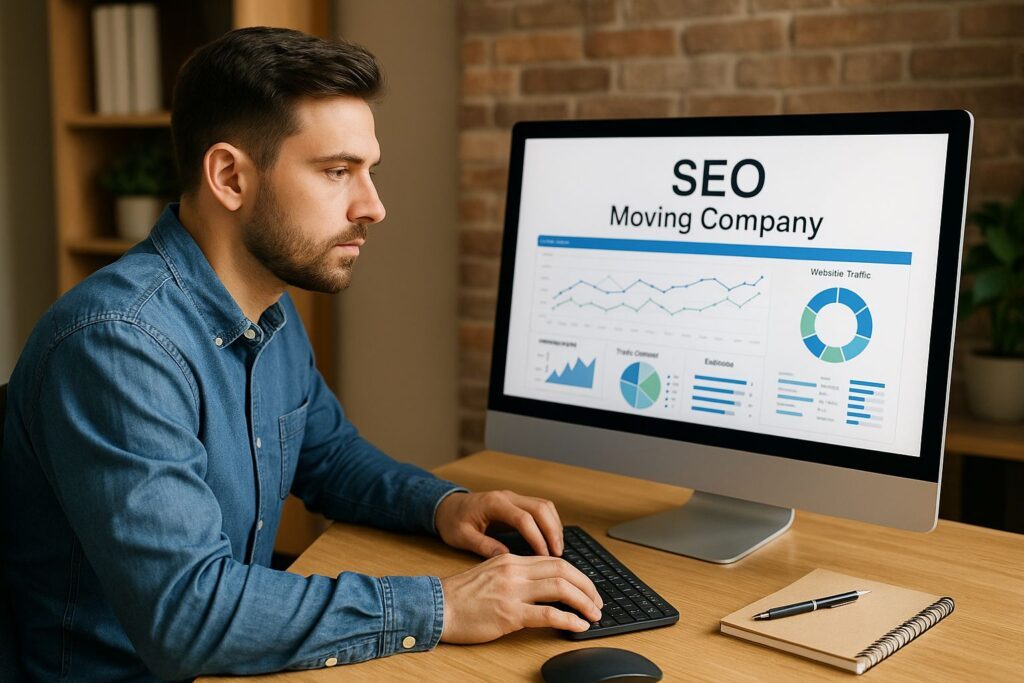
Track what’s working using analytics tools:
- Google Analytics: Monitor conversion rates by page.
- Search Console: Identify top-performing queries.
- Heatmaps: See where users click most.
Review results monthly. If pages with high traffic have low conversions, adjust your CTAs or simplify your forms.

Win More High-Intent Visitors — and Turn Them into Customers
When your website speaks directly to what homeowners want, you stop chasing leads and start attracting them.
By combining intent-focused SEO, strong local visibility, and user-friendly design, your moving company can consistently attract visitors ready to book now.
If you’re ready to turn search behavior into sales, Best Moving Leads Providers can help you optimize every click into a conversion.
👉 Start converting high-intent traffic into booked moves today.