
Moving Lead Providers: Conversion, Volume & Quality Benchmarks (2025)
In the highly competitive U.S. moving industry, lead providers remain one of the most important tools for customer acquisition. This 2025 report presents clear benchmarks on moving lead generation, including conversion rates, provider performance, lead volume, cost per lead, and quality metrics to help moving companies make informed, data-driven decisions.
U.S. Moving Volume and Lead Market Size
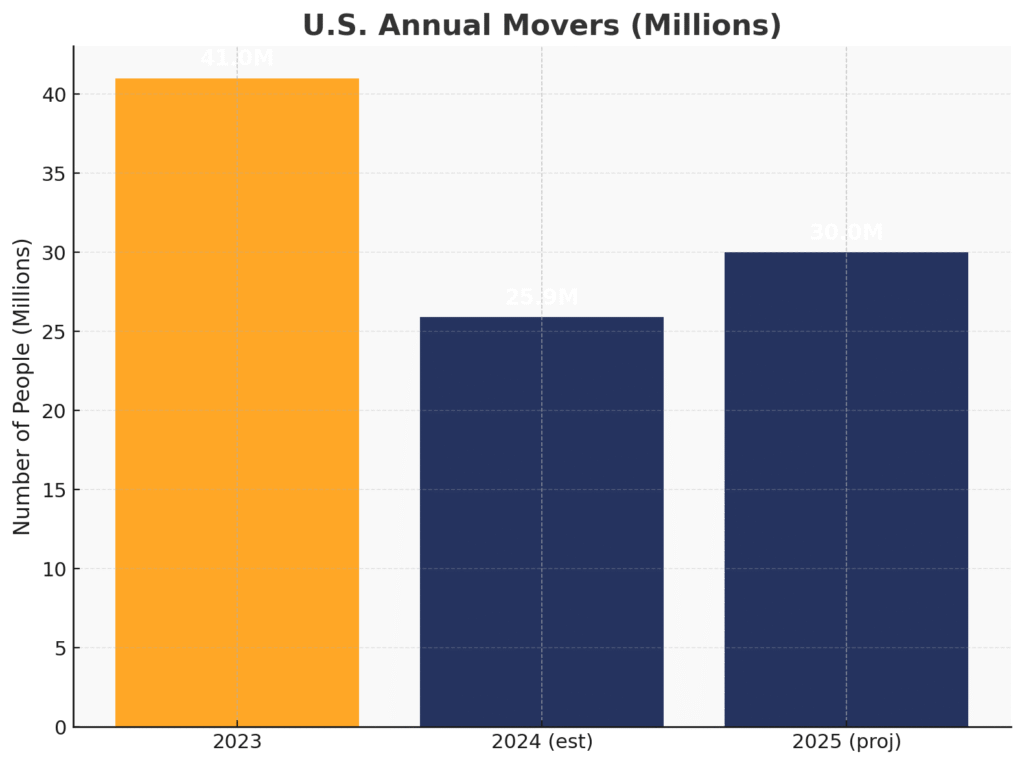
The U.S. moving industry generates tens of millions of consumer leads each year. Despite declining migration rates, the overall market remains large and competitive.
- In 2023, 12.1 percent of Americans moved, totaling over 41 million people
- Forecasts estimate around 30 million movers in 2025, or roughly 9 percent of the population
- The moving services industry is valued at approximately 23 billion dollars in 2025
- Around 40 percent of new moving customers are acquired through online lead forms
- Roughly 41 percent of all moves occur between May and August, increasing seasonal lead volume
Lead Conversion Rates (Shared vs Exclusive)
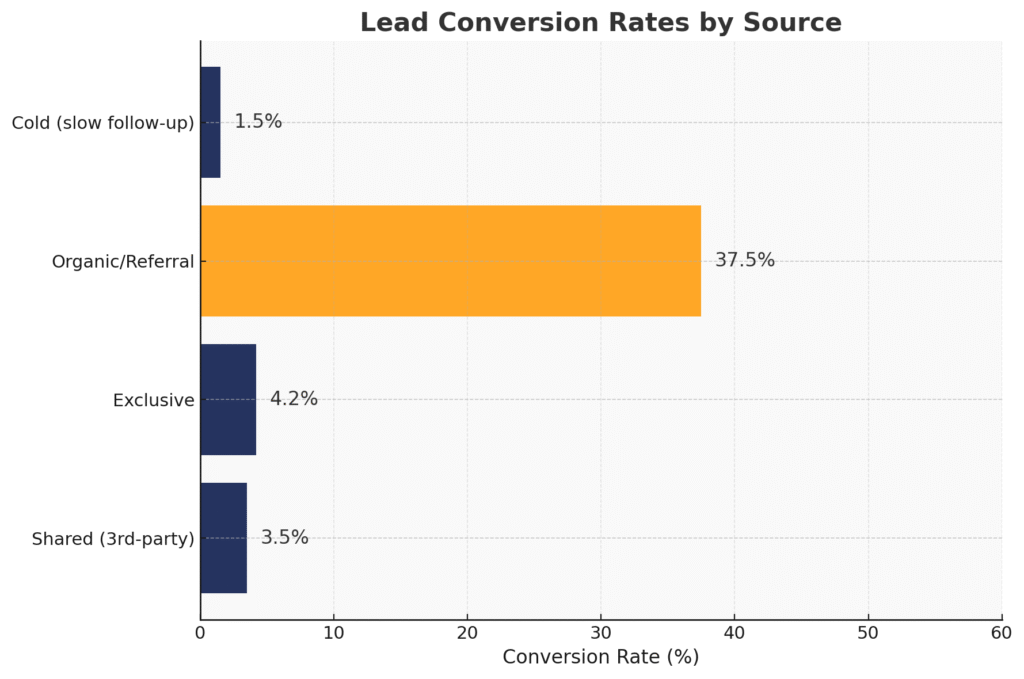
Lead conversion varies widely depending on the source and exclusivity of the lead. Shared leads generate lower conversion due to competition, while exclusive or referral-based leads consistently perform better.
- Shared third-party leads convert at an average rate of 2 to 5 percent
- Exclusive leads convert approximately 20 percent higher than shared leads
- Organic leads and direct referrals convert at 25 to 50 percent, depending on sales follow-up
- Long-distance leads generally convert lower than local or in-state leads
- Cold leads with slow follow-up convert below 2 percent in most markets
Average Cost Per Lead (CPL)
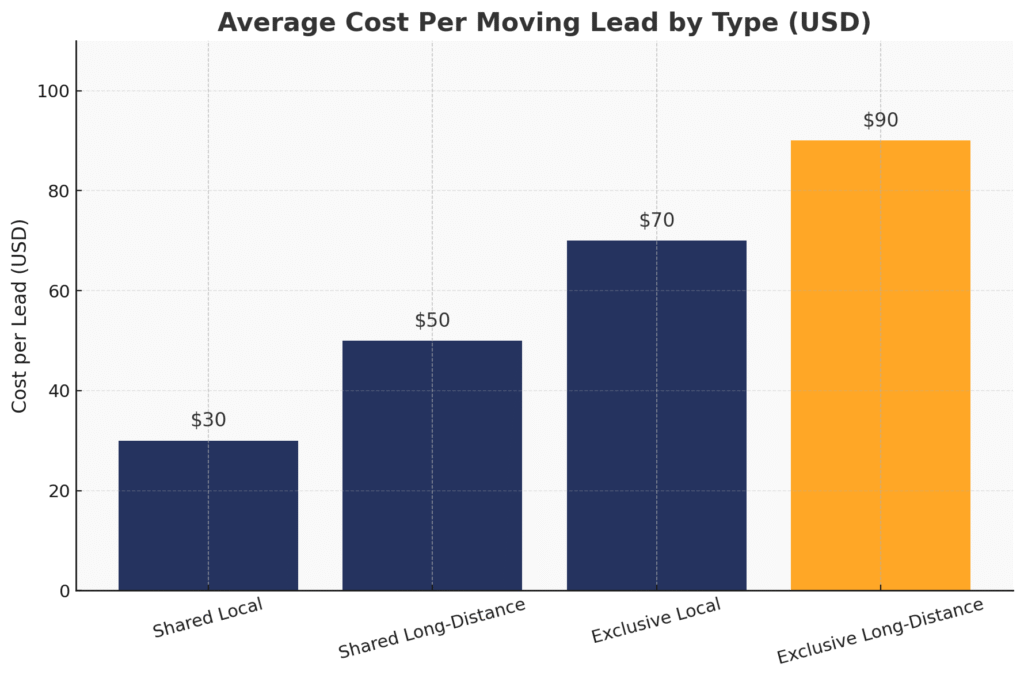
Lead prices vary depending on exclusivity, geography, and provider reputation. Movers typically spend more per lead for long-distance or exclusive inquiries with verified details.
- CPL ranges from 20 to 100 dollars for most moving leads
- Shared local leads: typically 20 to 40 dollars
- Exclusive or long-distance leads: often 60 to 100 dollars
- CPL increases in peak months (May to August) due to demand
- Some providers offer tiered pricing based on lead quality and urgency
Speed-to-Contact Benchmarks
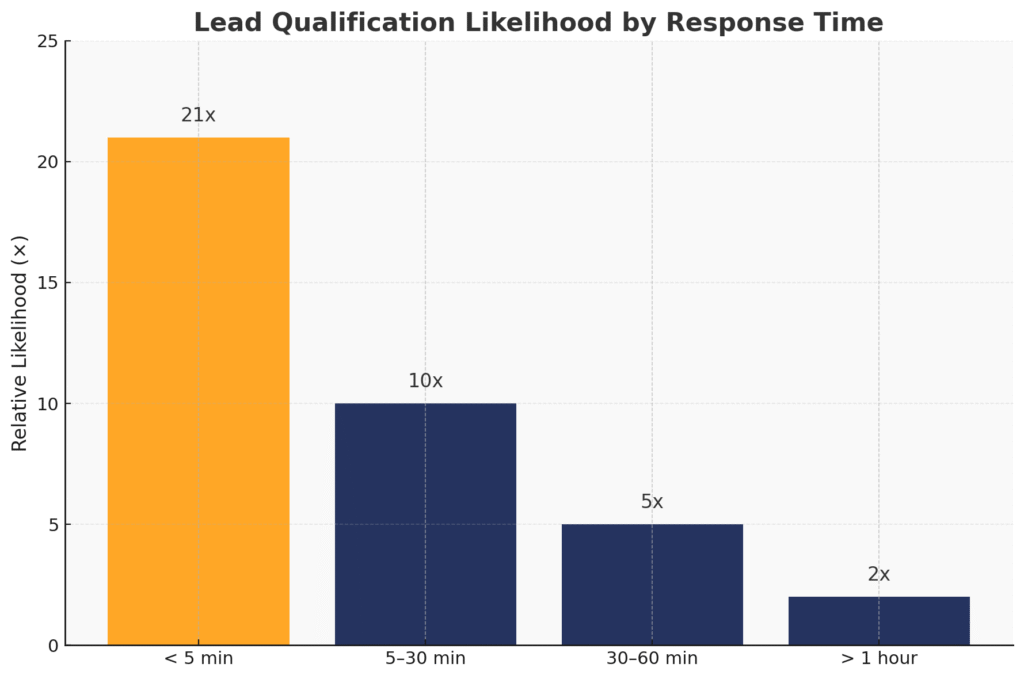
Fast follow-up is the single most important factor in converting leads. Studies consistently show that movers who respond within minutes outperform those who wait, even by half an hour.
- Responding to a new lead within 5 minutes makes a business 21 times more likely to qualify that lead compared to waiting 30 minutes or more (Lead Response Management Study)
- Over 78 percent of customers buy from the company that contacts them first (Harvard Business Review)
- Yet, only 27 percent of companies respond within 5 minutes, and nearly half take over 24 hours (HBR)
- Movers who follow up within 10 minutes convert significantly more leads than those who respond later
- Speed matters most for shared leads — multiple companies are often calling at once
Lead Quality Benchmarks
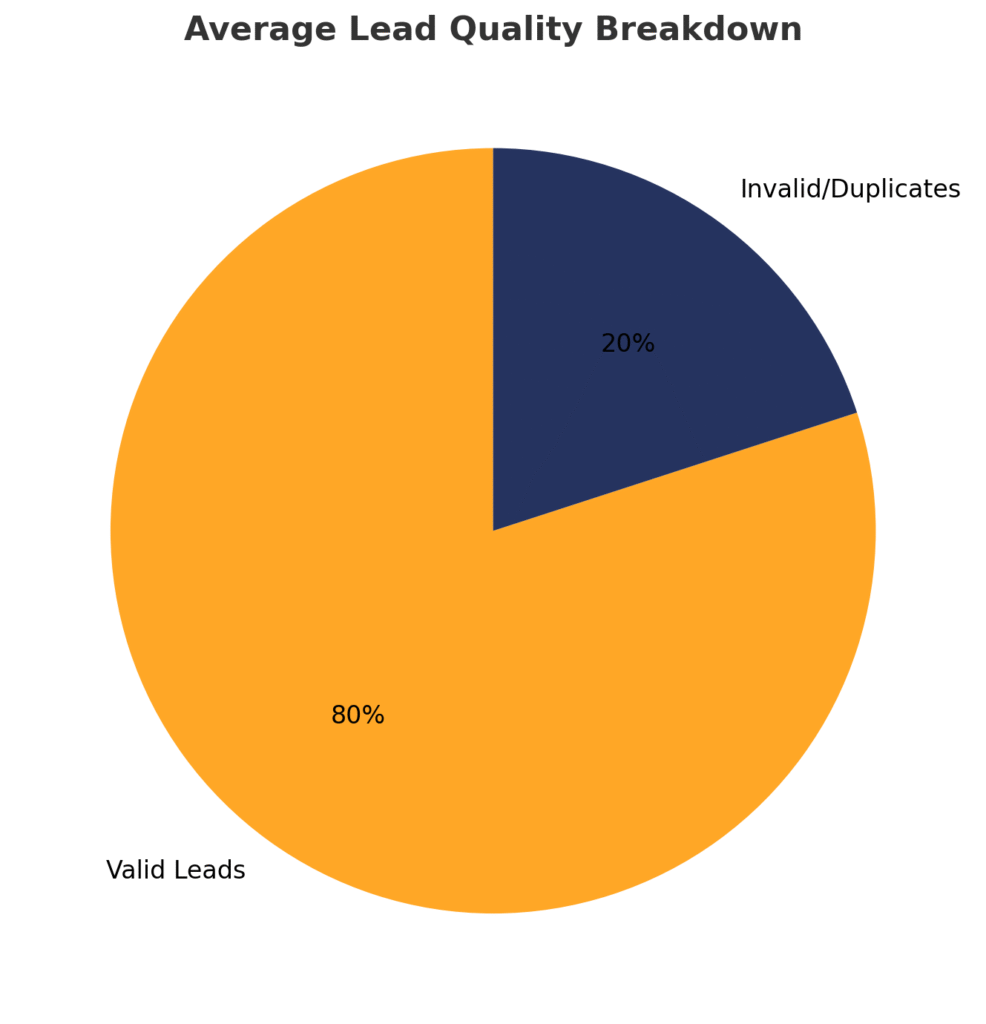
Not all leads are created equal. High-quality leads contain accurate contact information, clear intent to move, and minimal duplication — all of which increase the chance of conversion.
- According to LeadsCouncil, 15 to 20 percent of purchased leads across industries are invalid, unresponsive, or duplicates
- Movers report up to 1 in 5 leads requiring a refund or credit from the provider due to bad phone numbers or fake submissions (FTC Complaints Database)
- Verified homeowner data, requested move date, and accurate ZIPs consistently increase conversion potential
- Movers who verify and score leads before follow-up reduce wasted time and improve booking rates
- Quality control features like IP tracking, CAPTCHA, and multi-source validation are increasingly standard among premium lead providers
ROI and Cost Per Booked Move (CPBM)
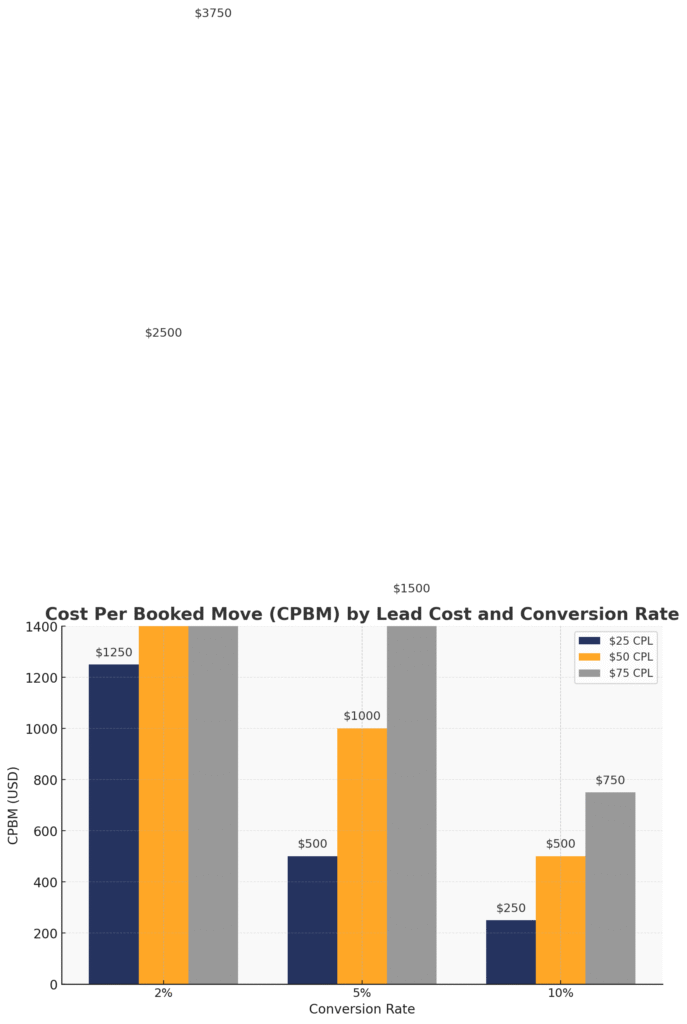
Evaluating return on investment is essential for any mover buying leads. Cost per booking is a more reliable metric than cost per lead, especially when conversion rates are low.
- The formula for CPBM is: Cost Per Lead ÷ Conversion Rate
- Example: $50 lead with a 5 percent conversion rate results in $1,000 per booked customer
- A HubSpot report found that only 13 percent of marketers are confident in their lead-to-sale ROI tracking
- Top-performing movers track CPL, CPBM, and customer lifetime value weekly or monthly
- Industry advisors recommend optimizing for cost per acquisition, not just lead volume or clicks (Small Business Administration)
Industry Challenges with Lead Providers
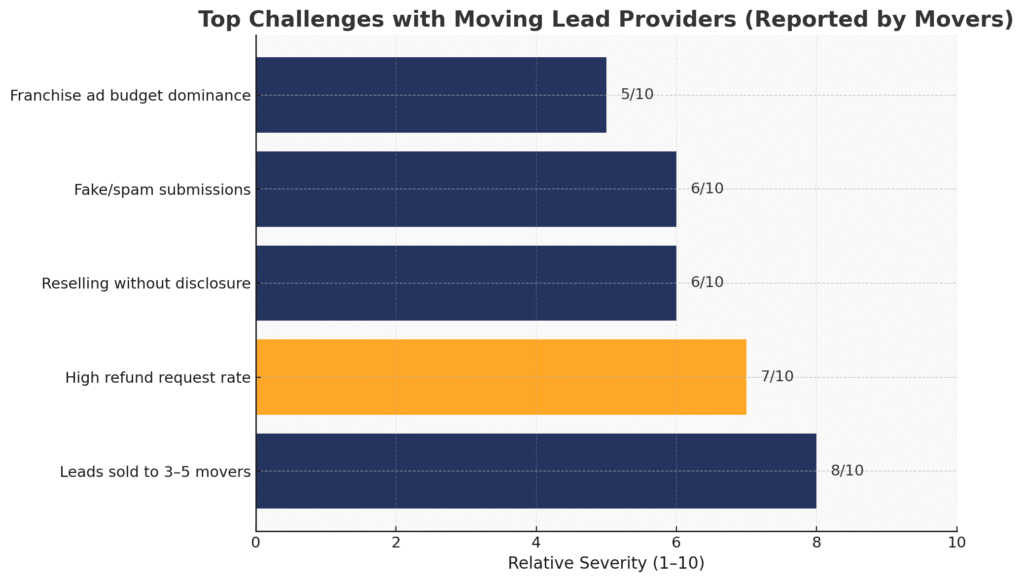
Despite their usefulness, moving lead platforms present a number of recurring issues. Movers face problems ranging from duplicate leads to poor refund policies and aggressive reselling practices.
- Shared leads are often sold to 3 to 5 different companies, increasing competition and customer fatigue (MoovSoon)
- Lead reselling without disclosure is a frequent complaint in FTC consumer reports
- Movers report refund request rates of 15 to 25 percent during peak seasons for bad or unreachable leads (ConsumerAffairs)
- Many providers lack real-time validation, leading to fake or spam form submissions
- Larger franchises with bigger ad budgets often dominate first-contact, reducing ROI for smaller operators
Future Trends in Lead Buying (2025)
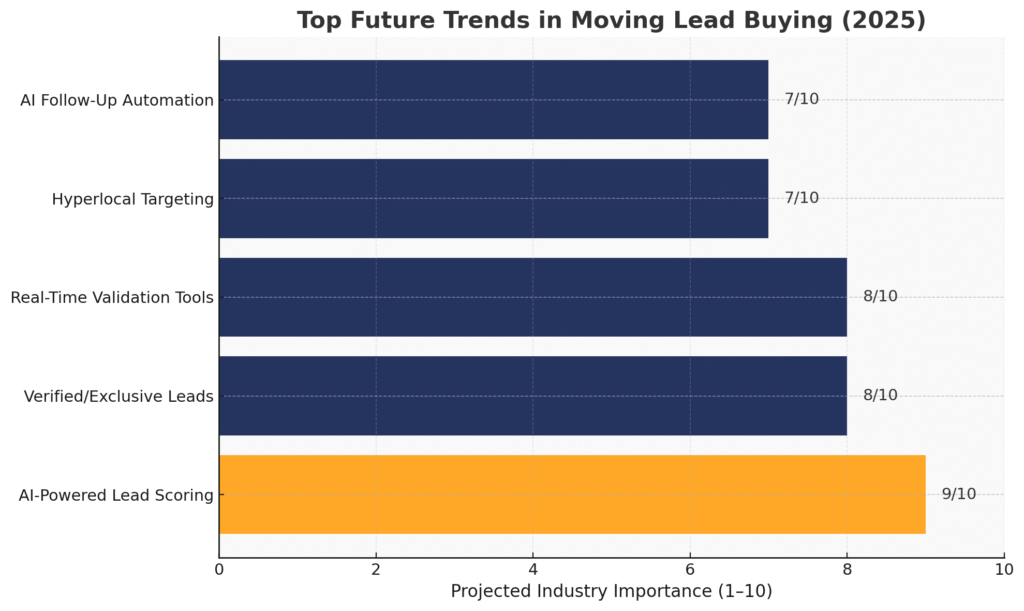
The moving lead industry is evolving toward automation, exclusivity, and smarter qualification. Movers embracing personalization and tech integration are expected to outperform.
- Lead scoring tools using AI and behavioral data are becoming mainstream, especially in CRMs like Zoho and HubSpot
- Verified and exclusive leads are now the most sought-after product among moving companies, according to SmartMoving
- Providers are investing in multi-step form verification and real-time API filters to improve lead quality
- There is a growing shift toward hyperlocal and vertical-specific leads, rather than broad aggregator lists
- AI-driven follow-up tools like Podium and Voiso are helping movers respond faster and convert more consistently
Final Thoughts
Moving lead providers remain a vital source of growth for relocation companies, but performance depends heavily on how leads are selected, handled, and followed up. As the cost of acquiring leads rises and consumer expectations increase, the most successful movers will be those who combine speed, smart targeting, and accurate ROI tracking.
Movers who benchmark against industry norms, prioritize lead quality over quantity, and invest in fast, consistent communication will outperform competitors in 2025. Whether you buy shared leads, exclusive leads, or both, the key is knowing your numbers, cost per booked move, conversion rate, and time to contact.

